Applications
Velo3D Works to Overcome Barriers to Allow Aerospace Companies to Integrate Metal Additive Manufacturing
When we discuss industries using additive manufacturing, one that always comes to mind is aerospace. Since the advent of 3D printing technologies, the sector has strived to adopt and integrate AM thanks to benefits like weight optimization and cost reduction.…
- 3 min read
- Applications
- Six more stories
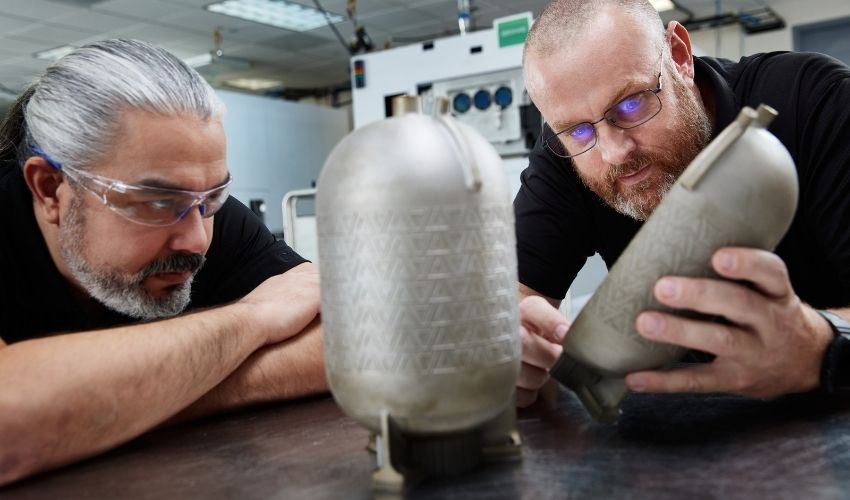
When we discuss industries using additive manufacturing, one that always comes to mind is aerospace. Since the advent of 3D printing technologies, the sector has strived to adopt and integrate AM thanks to benefits like weight optimization and cost reduction. Indeed, in a recent report, Fortune Business Insights estimated that the combined Aerospace and Defense AM market will be worth $13.01 Billion by 2028. However, despite the exponential growth in the industry, there are still many obstacles preventing entry into the metal AM market for aerospace companies.
Though 3D printing is often portrayed as a miracle solution for different industries, the truth of the matter is that there are still barriers that make adopting the technology difficult. When qualification and certification come into play, like for a part that might need to fly, this gets even more complicated and often parts are only created after significant research and development and testing. We took a closer look at a whitepaper from Velo3D to understand what the barriers still are in the industry and how the company proposes to solve them with its own end-to-end metal AM solution.
Barriers to Aerospace Adoption of Metal AM
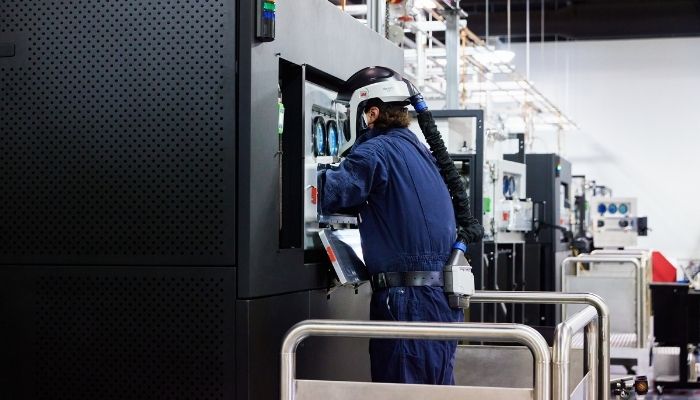
Compared to simpler 3D printing technologies, metal additive manufacturing by its nature involves much tighter control over the process. These in turn can be a barrier to entry for many in the industry. Take for example the question of inert gases, otherwise known as noble gases. Metal 3D printing requires closed build chambers filled with these gases to ensure quality parts. They are crucial for ensuring that oxygen does not enter and cause embrittlement or other undesirable metallurgical conditions.
More from the desk
Six other notes from the rest of the bench.
 PrintersBigRep’s latest funding round has reached “Double Digit” millionsThe German start-up, BigRep, which specializes in large-format 3D printers, has announced that their latest funding round has reached the “Double digit” millions. Helping to reach the double digit amount is the family owned company, Koehler, the venture capital company…
 GuidesTop 10 of the best TEDxTalks on 3D printingA great way to present innovative ideas in technology, entertainment or design is the TED Talks conferences, a popular series that brings together experts to discuss the latest topics from different industries and fields. Since 2009, many of the talks…
 MaterialsSilica aerogel, the most insulating of all 3D printing materialsThere is a lot going on with 3D printing materials! Recently, a team of researchers has succeeded in 3D printing with silica aerogel, the most insulating material of all. Known for being rather brittle, this material is often reinforced with…
 NewsHow to Make Your Own 3D-Printed Squid Game MaskNetflix’s Squid Game series has taken over the public consciousness and every corner of the internet. The Korean drama tells the story of a group of financially indebted people who risk their lives in a survival competition for the chance…
 NewsH (Earring); the 3D printed hearing aid jewelleryWhen it comes to relieving the daily lives of people with disabilities, 3D technologies can be useful. It offer the possibility of creating products adapted to each individual and sometimes to completely unpack the person concerned. In any case, this is the feeling…
 GuidesREGEMAT 3D, leader in medical additive manufacturing for nearly 10 yearsREGEMAT 3D is a company based in Granada, Spain, specialised in medical additive manufacturing for nearly 10 years. It is undoubtedly one of the pioneering companies in the field of bioprinting in Spain, promoting research and the use of these…