Materials
Silica aerogel, the most insulating of all 3D printing materials
There is a lot going on with 3D printing materials! Recently, a team of researchers has succeeded in 3D printing with silica aerogel, the most insulating material of all. Known for being rather brittle, this material is often reinforced with…
- 3 min read
- Materials
- Six more stories
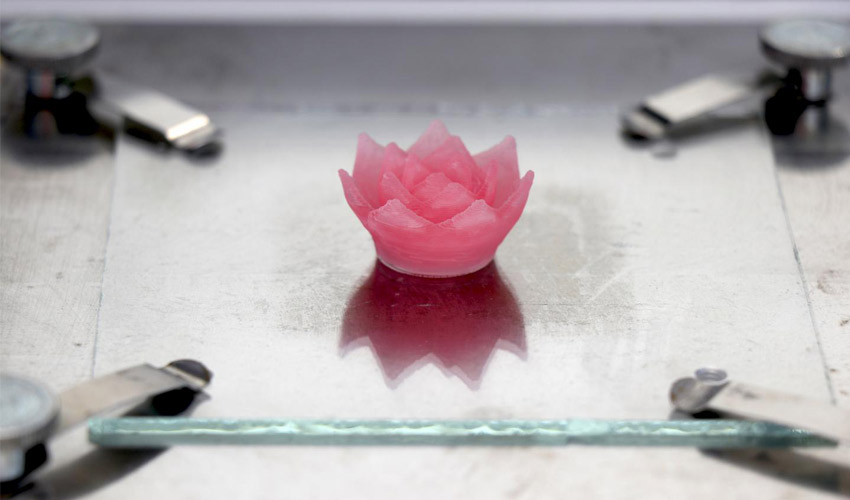
There is a lot going on with 3D printing materials! Recently, a team of researchers has succeeded in 3D printing with silica aerogel, the most insulating material of all. Known for being rather brittle, this material is often reinforced with fibers and used for rather large-scale applications – a part that is too small, for example, would tend to break. That’s why silica aerogel was rarely used in 3D printing, at least not in small-scale applications as the risk of failure is too high. This is was until the EMPA team in Switzerland, led by Shanyu Zhao, Gilberto Siqueira, Wim Malfait and Matthias Koebel, has succeeded in producing stable microstructures from silica aerogel using a 3D printer.
Silica aerogel is a kind of light, porous foam that offers very high thermal insulation – it is believed to be the best insulation available on the market today. This material is composed of a very light amorphous silica structure with more than 95% air in its pores, which gives it an unprecedented lightness. While these properties are interesting for a number of applications, let’s not forget that it is a very fragile material that is difficult to saw, mill or even 3D print. Yet that’s what the EMPA team did: they 3D printed structures as thin as a tenth of a millimeter!
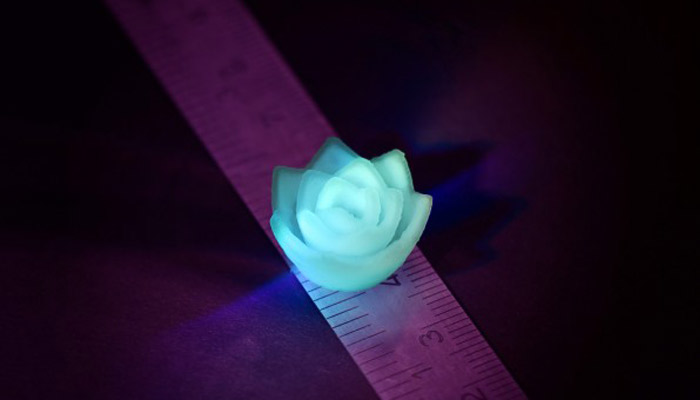
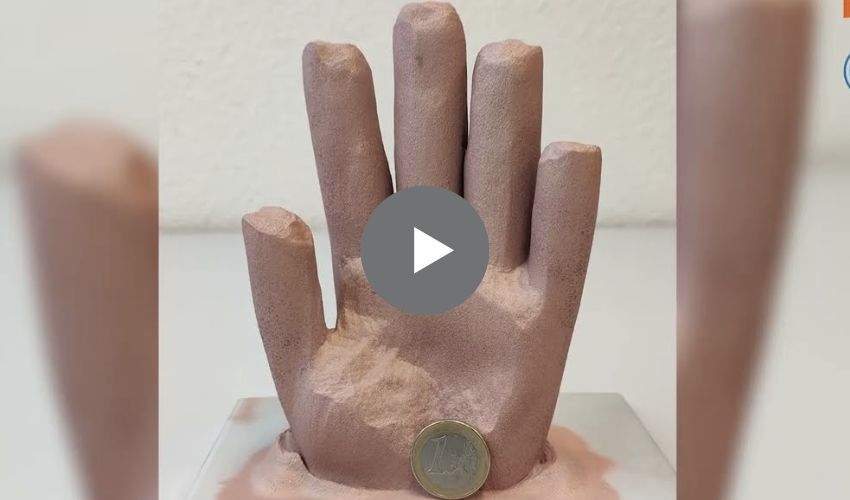
Fine miniature pieces 3D printed with aerogel. (Image credits: EMPA)
The team remains fairly discreet about the printing process itself, but they say they used a silica ink from which the aerogel is created. One could therefore imagine a process similar to those used in extrusion-based bio-printing where the bio-ink is deposited layer by layer. Only here instead of cells we have silica ink. Patent pending, this method would allow to precisely adjust the flow and solidification properties of the ink, thus offering the possibility to print self-supporting structures and very thin membranes. In order to test this printing method, the Swiss researchers have additively manufactured a lotus flower: it has hydrophobic properties and low density that allow it to float on the surface of the water.
More from the desk
Six other notes from the rest of the bench.
 NewsTOP 5 videos of the week: Furniture, the great beyond and more!A new selection of the best 3D printing videos of the week, just for you! Find our TOP 5 videos of the week below and tell us what your favorite video is in a comment or on our Facebook and Twitter page.…
 NewsASTM & AMERICA MAKES release AM data management guideStandards organization ASTM International collaborated with America Makes to compile a strategic guide for additive manufacturing data management, which was recently released under the name “Strategic Guide for Additive Manufacturing Data Management and Schema“ . The guide identi
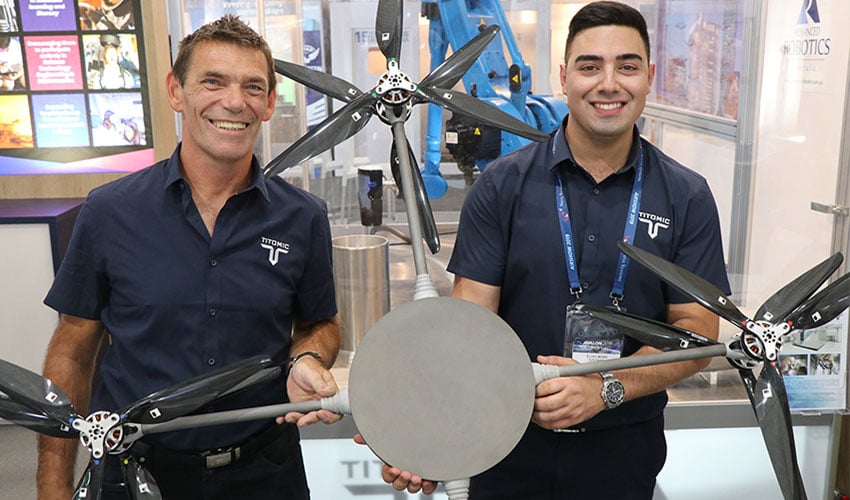 NewsTitomic 3D prints the largest titanium droneTitomic is an Australian manufacturer of 3D metal printers that recently unveiled a 3D printed titanium drone, the largest on the market according to the company. And for good reason, this one is 1.8 metres in diameter! It was designed…
 NewsTop 5: How Cold Spray Technology Offers Faster Additive ManufacturingHello everyone, and welcome to our top 5 videos of the week! As always, we have an exciting and educational select of 3D printing video content for you. This week’s range from cold spray technology for additive manufacturing, an interview…
 NewsTop 5 Videos: 3D Printed Salmon on the Menu With Revo FoodsWelcome to another week’s top five videos where we showcase the most exciting and recent 3D printing content on the web. From the emerging 3D printed food market, Revo Foods takes us into the future of sustainable seafood with their…
 News3D Printed Electronic Skin Could Open the Way for Human-Machine InteractionThe skin is the largest human organ and the largest sensory connection to the rest of the world due to its more than 1,000 nerve endings. This makes it not just incredibly important to humans as they interact with their…