News
UpNano introduces new micro-scale 3D printing technology
UpNano is a young company based in Vienna that has recently developed a high-resolution micro-scale 3D printing technology. Based on a 2-photon polymerization process (2PP), the new technique is capable of producing plastic parts with a volume ranging from 100…
- 3 min read
- News
- Six more stories
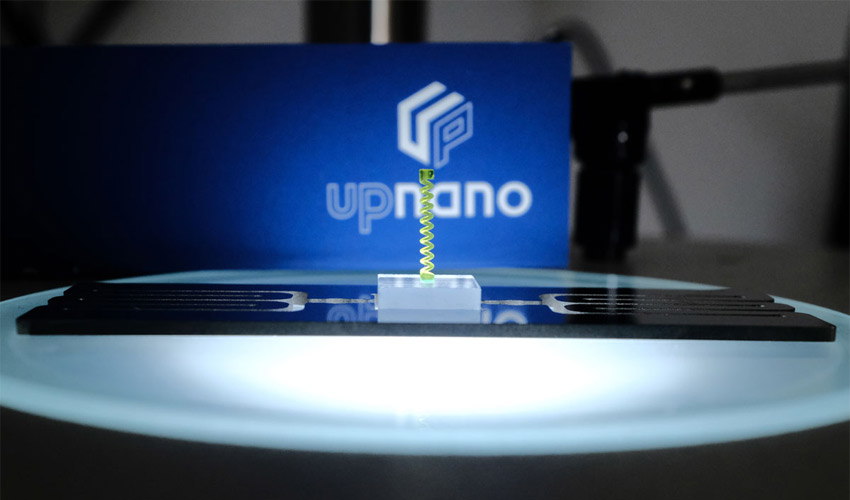
UpNano is a young company based in Vienna that has recently developed a high-resolution micro-scale 3D printing technology. Based on a 2-photon polymerization process (2PP), the new technique is capable of producing plastic parts with a volume ranging from 100 to 1012 cubic micrometers in just a few minutes. It is based on a high-power laser, a widely optimized optical path and algorithms capable of smart-scanning the printing surface. The Austrian startup can thus create very small parts, ranging from several micrometers to a few centimeters, without sacrificing resolution: the details are precise and finely worked out.
As a spin-off from the Vienna University of Technology, UpNano intends to revolutionize the field of 3D micro-scale printing, a process that makes it possible to create parts on a microscopic scale. This process is widely used in the electronics industry to design high-performance miniature components, but also in the medical sector. The Austrian company offers a 2PP process capable of reaching twelve orders of magnitude. It has developed a machine called NanoOne that can manufacture parts with sizes ranging from micrometers to centimeters, with a super precise nano-resolution. The most interesting thing is undoubtedly the speed at which UpNano was able to achieves this – it only takes a few minutes to complete such a micro-print.

Image credits: UpNano
UpNano micro-scale 3D printing
UpNano’s patented technology is based on an optimized optical path and a series of smart algorithms, allowing the full power of the laser to be used – up to 1 Watt, which is much more than what their competition typically uses. It is this power that provides the machine with sufficient energy to go faster in its printing process, especially in adaptive resolution mode. A weaker laser would have resulted in a lower throughput and therefore a much lower speed. Bernhard Küenburg, CEO of UpNano, commented: “The benefit of this innovation is most notable in the meso-range. The NanoOne system offers significantly faster production times than other systems. Add our patented adaptive resolution technology to this and you end up with a capability to print centimeter large objects with a micrometer resolution in short production cycles.“
More from the desk
Six other notes from the rest of the bench.
 NewsTAM and World Housing’s 3D Printed Village to End HomelessnessWorld Housing has been fighting homelessness since 2013, seeking sustainable and viable solutions to ensure that everyone can have a roof over their heads. It recently formed a partnership with Twente Additive Manufacturing (TAM), a Dutch manufacturer of 3D concrete…
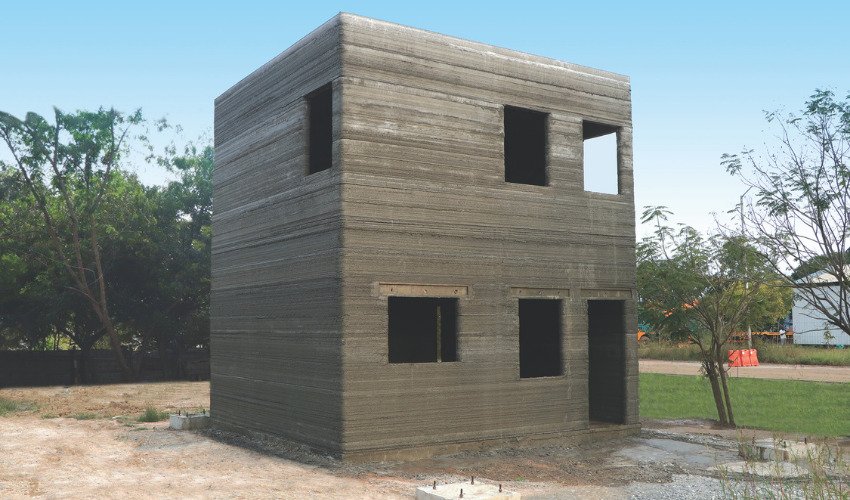 NewsCOBOD printer used for India’s first 2-Story 3D printed buildingL&T Construction has announced that it has developed India’s first 3D printed two-story building. The building was created using a COBOD printer and is the second Indian 3D printed house, the first was a single storey house also built by…
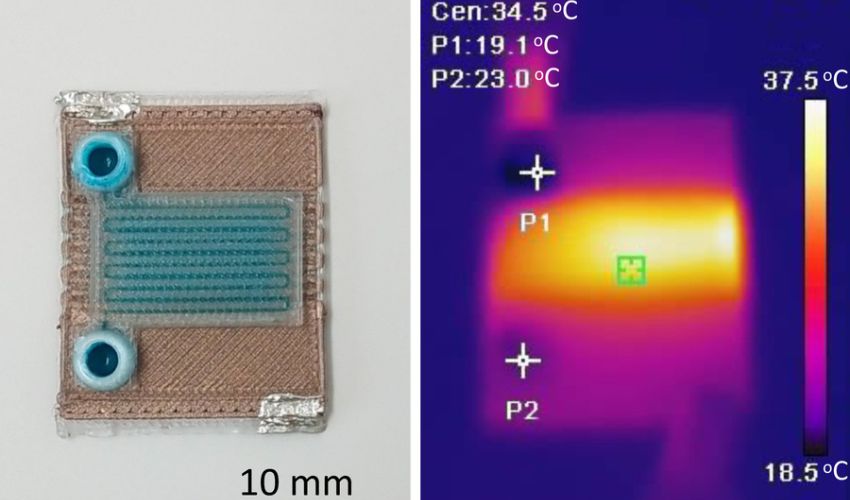 ApplicationsMIT Researchers Use 3D Printing to Create a Self-Heating Microfluidic DeviceYou don’t have to be an engineer with extensive technical knowledge to come into contact with microfluidics and their applications. The aim of microfluidic systems is to control small quantities of liquids in tiny networks and channels, and to discuss…
 NewsTop 3D Printing Applications Showcased at Formnext 2021While we were at Formnext last week, we saw many incredible innovations and machines. Though it was clear that sustainability and industrialization were key trends at the event, there were many other applications shown including toys, those for the food…
 ApplicationsApplication of the Month: A New 3D Printing Material to Create Bone GraftsAs research into 3D printing materials progresses, more and more innovative projects are emerging in a multitude of sectors. This time, we want to highlight a medical application linked to additive manufacturing that was carried out by researchers at the…
 GuidesSimpath 3D Prints Highly Realistic Trachea ModelsAs we know, 3D printing has profoundly transformed the medical field, making it possible to produce customized models ranging from anatomical replicas to fully patient-specific implants. This is where the young startup Simpath comes in. Since its founding in 2023,…