News
COBOD printer used for India’s first 2-Story 3D printed building
L&T Construction has announced that it has developed India’s first 3D printed two-story building. The building was created using a COBOD printer and is the second Indian 3D printed house, the first was a single storey house also built by…
- 3 min read
- News
- Six more stories
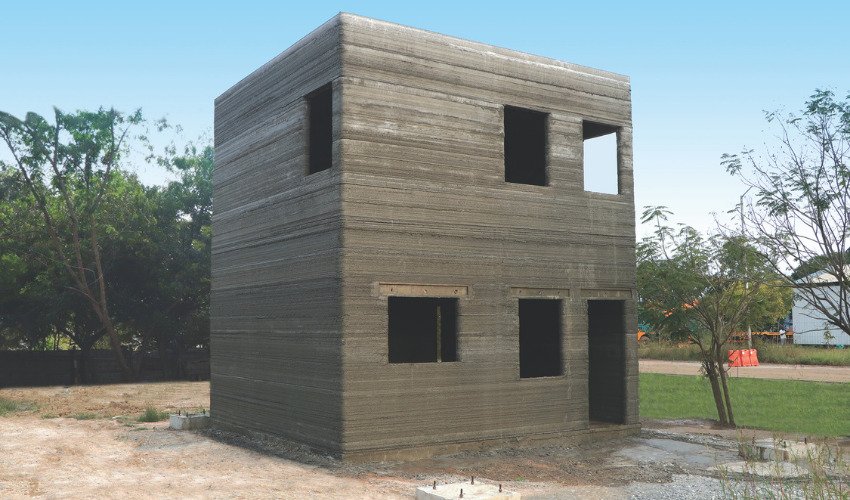
L&T Construction has announced that it has developed India’s first 3D printed two-story building. The building was created using a COBOD printer and is the second Indian 3D printed house, the first was a single storey house also built by L&T Construction with a COBOD printer. The building is fully compliant with Indian building codes and was made with a 3D printable concrete mix, developed by L&T construction’s in-house team. Additive manufacturing (AM) is becoming increasingly prevalent in the construction sector, with more and more companies looking using 3D printing for faster and cheaper construction projects.
COBOD and 3D printed buildings
Over the past few years we have seen incredible advancements in 3D printing in the construction sector including the first 3D printed house in one piece, the world’s first 3D printed community, and even the development of a 3D printed house to live on Mars. COBOD especially is known for its work in 3D printing in the construction industry. The Danish manufacturer has been involved in a number of projects worldwide. This includes the first 3D printed building in Europe, a small 3D printed office hotel in Copenhagen named the BOD. Additionally, this past year alone, they were involved in printing the first two-story and three-story 3D printed buildings in Europe and the first 3D printed buildings in Africa. COBOD’s founder, Henrik Lund-Nielsen, was even chosen as one of our most influential personalities of additive manufacturing in 2020.
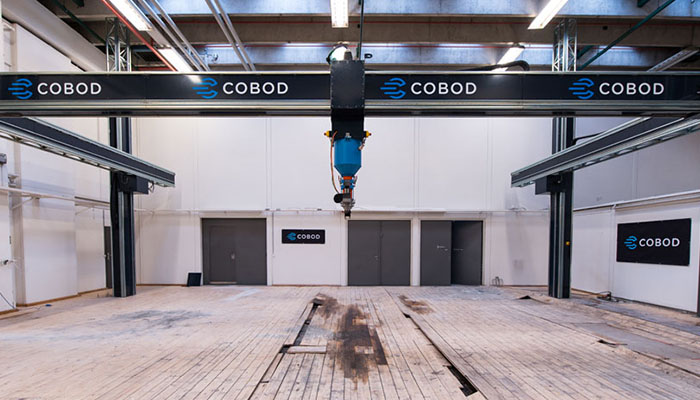
COBOD’s 3D printer the BOD2
The Project
The project is notable for its use of conventional concrete in in 3D printing process, COBOD mentions in its press release that up to this point, most 3D printed buildings have been made with ready mix mortars, except for the previously mentioned BOD which was also created using real concrete. Ready mix mortars are both more expensive and weaker than regular concrete, making the use of concrete in this project a significant milestone in the additive manufacturing construction sector. Nelson commented, “L&T Construction’s project marks a huge step forward for our industry, on a global scale. Not only is the project showing that more and more conventional construction companies are adapting 3D printing, but the 3D printing of a real concrete made by L&T themselves is significant, as this helps to drive down the cost even further.”
More from the desk
Six other notes from the rest of the bench.
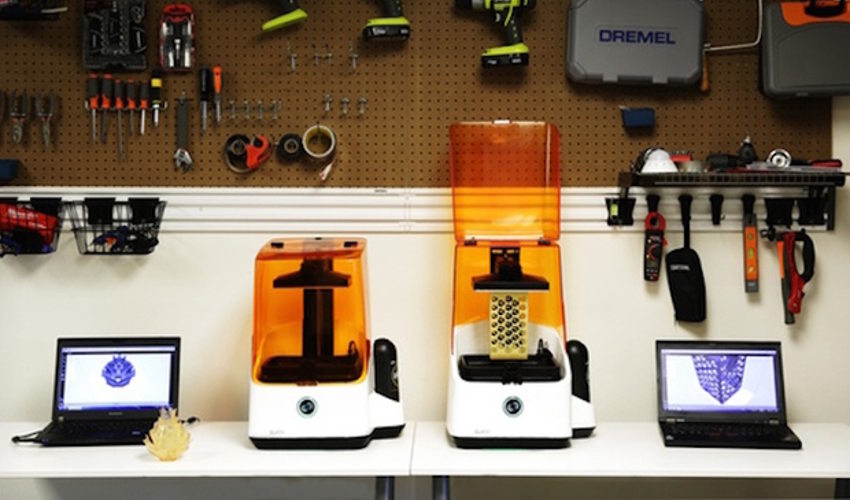 PrintersAre UniZ 3D Printers the Fastest 3D Printers Ever?UniZ are an American additive manufacturing startup from San Diego which opened its doors back in 2014. The starting team was composed of engineers, entrepreneurs, and designers. Since then, UniZ have released their currently available SLASH and SLASH+ UDP 3D…
 ApplicationsAutonomous In-Space Manufacturing Moves Closer to RealityBased in Massachusetts, COSM Advanced Manufacturing Systems announced that it will begin working on the final development of electron beam metal 3D printing systems for a variety of future in-space, lunar and Martian applications. The work is funded by a…
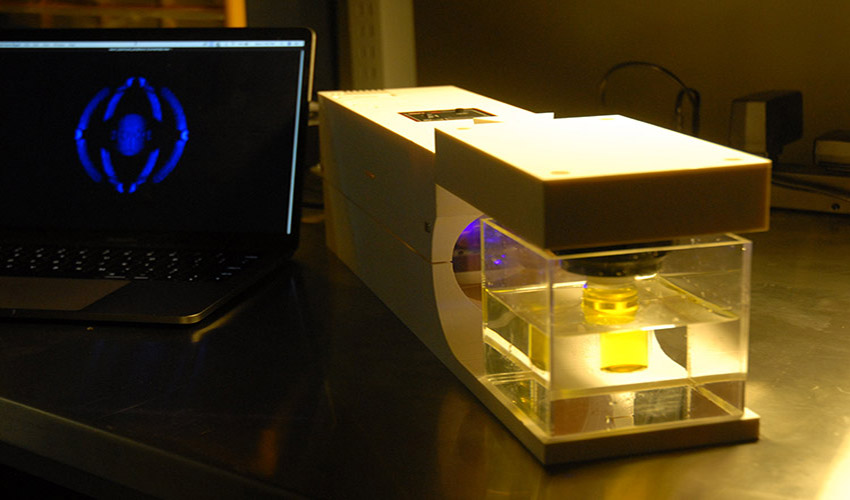 PrintersNew 3D Printing Process Solidifies Objects with Rays of LightResearchers at the University of California, Berkeley, developed a new 3D printer that uses a special light-sensitive resin that solidifies into objects in a matter of minutes. The researchers nicknamed their machine the “Replicator” after the Star Trek device that…
 ApplicationsUsing Cancer Cells And Computer Modeling, Researchers Have Optimized 3D BioprintingResearchers in a multi-university collaboration between the University of Waterloo, Canada, University of Swansea, and University of St Andrews, both UK, have conducted experiments on 3D bioprinted cancer cells over a period of 11 days, to compare to results from…
 Applications3D Printed Thrusters to be used for NASA’s First Voyage to the Moon’s South PoleAgile Space Industries, a company known for its additively manufactured propulsion technologies, has been selected by Astrobotic’s Griffin Mission One (GM1) team to develop 3D printed thrusters and axial engines for the Griffin lunar lander. The Griffin lunar lander will…
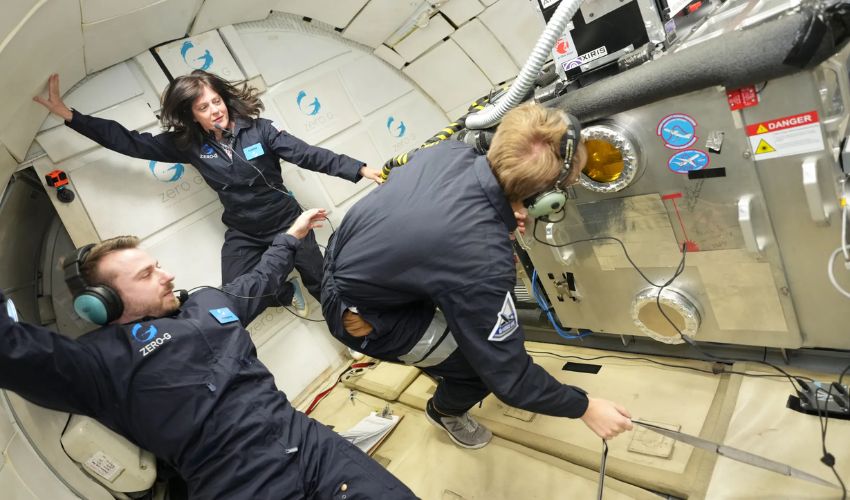 ApplicationsNASA Studies Laser Beam Welding for In-Space ManufacturingNASA has been exploring the power of additive manufacturing since the late 1990s. Initially, they were 3D printing with plastics, and in the early 2000s, they began using metal for prototypes. By the 2010s, NASA was 3D printing rocket engines.…