Applications
MIT Researchers Use 3D Printing to Create a Self-Heating Microfluidic Device
You don’t have to be an engineer with extensive technical knowledge to come into contact with microfluidics and their applications. The aim of microfluidic systems is to control small quantities of liquids in tiny networks and channels, and to discuss…
- 3 min read
- Applications
- Six more stories
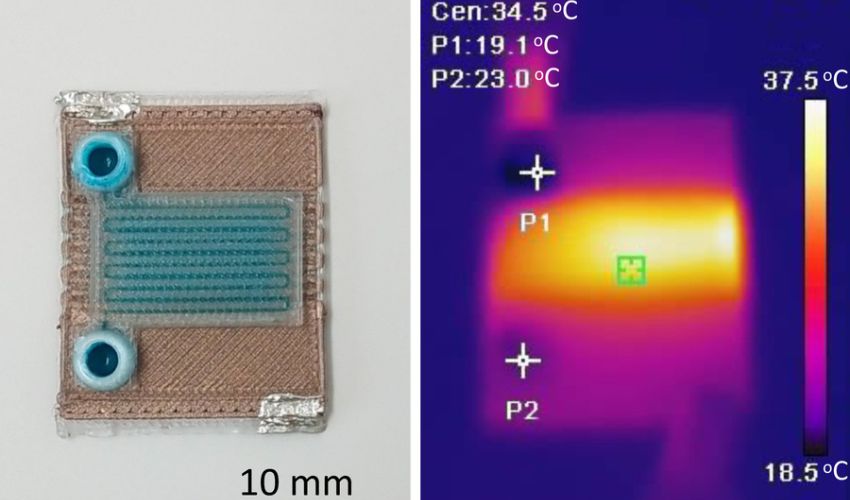
You don’t have to be an engineer with extensive technical knowledge to come into contact with microfluidics and their applications. The aim of microfluidic systems is to control small quantities of liquids in tiny networks and channels, and to discuss and analyze their effects. Furthermore, microfluidic components are used in a wide range of applications, for example in medical technology, biotechnology, process and sensor technology and also in consumer goods. For example, microfluidics are used to detect diseases in blood and fluid samples. A prominent example from the recent past, which we have probably all experienced at one time or another, is do-it-yourself Covid-19 tests.
However, the challenge with microfluidic applications is that some chemical reactions only take place at certain temperatures and thus require more complex microfluidic devices. These are often manufactured in clean rooms and contain heating elements made of gold and platinum. The manufacturing process is therefore expensive, complicated and difficult to scale up. This is where a research project at MIT (Massachusetts Institute for Technology) comes in, where scientists have been working on the development of a 3D-printed, self-heating microfluidic device, as announced in a press release yesterday.
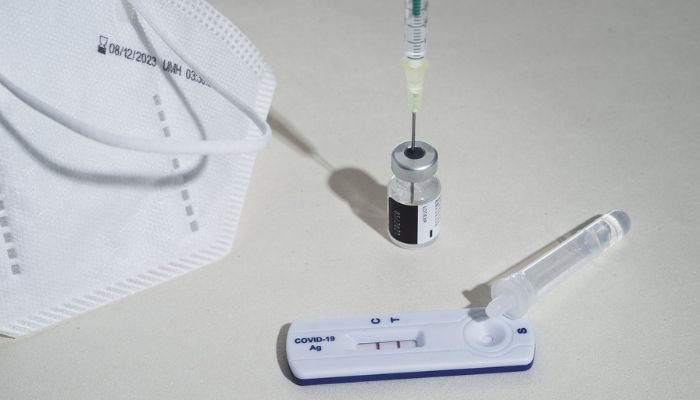
Covid self-tests are a prominent example of microfluidic applications (photo credits: Pixabay)
The research group, led by principal scientist in MIT’s Microsystems Technology Laboratories (MTL) Luis Fernando Velásquez-García, used 3D printing to produce a self-heating microfluidic device that can transport liquids and trigger chemical reactions. The mini-reactor can analyze substances and detect diseases. As the device was produced in a single print run, it offers forward-looking prospects for the cost-effective production of precise measuring instruments for the early detection of diseases. This is particularly interesting for developing countries, where there is often no optimal laboratory environment.
More from the desk
Six other notes from the rest of the bench.
 ApplicationsProject Chaos: when an ultracar meets 3D printingSpyros Panopoulos is a Greek racing car enthusiast who has given his name to his company: he recently unveiled the new project he has been working on for the past two years. Project Chaos is a ultracar with very high…
 PrintersAmazon to Ban the Sale of 3D Printers by 2023At 3Dnatives, we like April Fools’ Day! So this article was just a little joke for the occasion, Amazon remains supportive of 3D printing development! You have almost certainly heard of Amazon. The American online retailer currently makes more than…
 NewsWhat Is Tolerance in 3D Printing?When most people think of tolerance, what comes to mind is the ability to accept or tolerate somebody or something. However, there is another meaning when it comes to manufacturing and instrumentation, where tolerance is defined as the limit of…
 ApplicationsDirect Sound 3D Printing Could Print Implants Inside Your BodyConcordia University researchers developed a new platform technology that uses ultrasonic waves to create complex and precise objects. The researchers have succeeded in using sound to solidify liquid into plastic. This so-called direct sound 3D printing could make it possible&hel
 NewsUNDP Turns to 3D Printing to Build in ColombiaWe have heard it time and time again, one of the biggest crises facing different regions in the world is the lack of housing in different areas. Whether in the US, India, the EU or anywhere else, many countries are…
 News3D Printing with Light: it’s 100 times fasterAt the University of Michigan, researchers have developed a new 3D printing method which is 100 times faster than normal. The paper published in the journal Science Advances described the new process; it promises faster and more efficient small-scale manufacturing…