Applications
Application of the Month: A New 3D Printing Material to Create Bone Grafts
As research into 3D printing materials progresses, more and more innovative projects are emerging in a multitude of sectors. This time, we want to highlight a medical application linked to additive manufacturing that was carried out by researchers at the…
- 3 min read
- Applications
- Six more stories

As research into 3D printing materials progresses, more and more innovative projects are emerging in a multitude of sectors. This time, we want to highlight a medical application linked to additive manufacturing that was carried out by researchers at the University of Waterloo. The team has created an innovative material that mimics the properties of bone tissue and promises to revolutionize the treatment of patients undergoing reconstructive surgery and bone repair. The new material, a biopolymer nanocomposite, can be used in resin 3D printers to manufacture customized bone grafts tailored to the needs of individual patients.
Currently, major surgical reconstructions rely on metal implants and donated bone. However, these often don’t fit the patient’s anatomy perfectly, and can be rejected by the recipient’s body. This is why many medical centers and hospitals are turning to 3D printing. The capacity of 3D printing materials offers an alternative that could reduce the need for metal implants, lower the risk of infection and improve graft acceptance by the patient’s body.
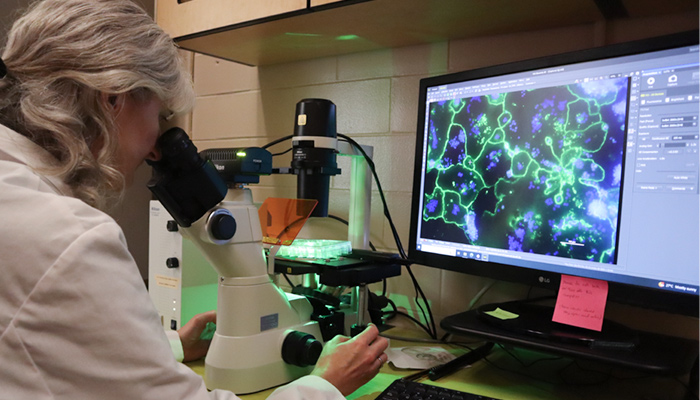
Dr. Maud Gorbet observes osteoclasts (cells that eat and resorb bone) in a 3D-printed nanocomposite material.
Improved Bone Grafts Thanks to 3D Printing
The material developed by the researchers incorporates nanoparticles that mimic the mineral composition of bone, reinforcing the biopolymer. The ultimate goal is for the patient’s own bone cells to grow and replace the nanocomposite with “new” bone, allowing the material to be eliminated naturally from the body.
More from the desk
Six other notes from the rest of the bench.
 ApplicationsDaimler Truck & Buses: Making Additive Manufacturing a Strategy for the FutureAdditive manufacturing is becoming an increasingly popular production method in the automotive and transportation sectors. Many automotive manufacturers have already firmly anchored 3D technologies in their corporate structure, and the railway industry is also increasingly relyin
 NewsMiss Universe Singapore Wears 3D Printed Outfit, Paying Homage to the CountryJanuary 15th saw the finale of Miss Universe, an international beauty pageant which draws 15 million viewers annually. In the pageant, women compete in a number of categories and clothing styles, and are then ranked on their looks and personalities.…
 ApplicationsLocal Motors receives $1bn for ‘Olli,’ the 3D Printed Autonomous BusLocal Motors are an American company based in Arizona, known for 3D printing a variety of vehicles over the years. A few days ago, they announced investments of $1bn in the launch of their 3D printed autonomous vehicle, the ‘Olli’.…
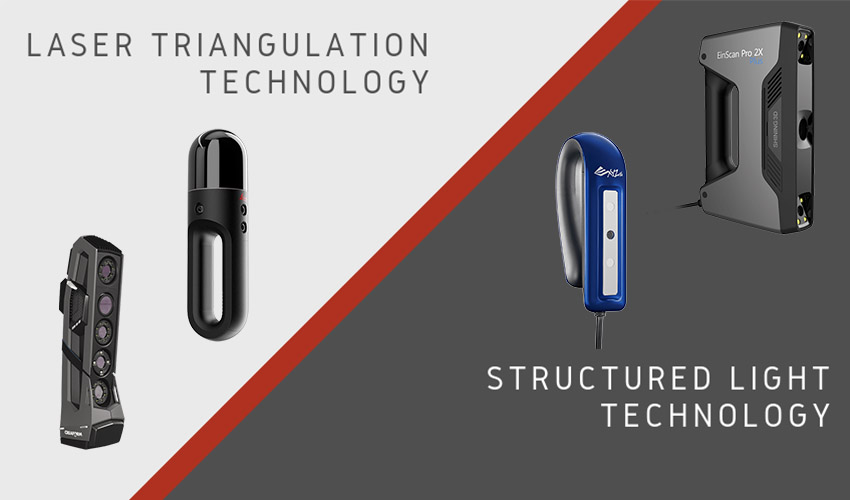 PrintersLaser Scanner vs Structured Light Scanner: which should you choose?In the 3D printing workflow, 3D scanners are very often an essential step to facilitate the modeling of an object. They make it possible to collect data on the shape and sometimes depending on the 3D scanner, the appearance (such…
 SoftwareStratasys Unveils its New Data Security Platform, ProtectAM, for Government and Defense ApplicationsIn recent years, the U.S. government and military have increasingly used 3D printing for a variety of projects. However, one question that has plagued the use of AM in these industries has been whether there are cybersecurity concerns related to…
 NewsTop 5: IKEA Interviews Will Feature 3D Printed MeatballsIt’s Sunday! Which means that it is also time for our latest round of top 5 3D printing videos from the week. First, we will start with the latest recruitment video from IKEA which has a surprising guest: 3D printed,…