News
University of North Dakota to 3D Print Nuclear Reactor Components
Additive manufacturing is known for producing complex parts that are subject to many safety and efficiency requirements. In the case of nuclear reactors, the importance of detail is paramount, and 3D printing has proven itself in the past. For example,…
- 3 min read
- News
- Six more stories

Additive manufacturing is known for producing complex parts that are subject to many safety and efficiency requirements. In the case of nuclear reactors, the importance of detail is paramount, and 3D printing has proven itself in the past. For example, Oak Ridge National Laboratory (ORNL) already has a number of projects combining the two, for example installing 3D printed parts at an Alabaman nuclear plant in 2021. Moreover, this in and of itself, builds upon their own work in 2020 when they designed the first ever 3D printed nuclear. it should be noted as well that for the creation of these parts, metal 3D printing seems to be the most popular and reliable method.
Now, at the University of North Dakota (UND), Roy Sougata, a mechanical engineering professor has received funding to research new solutions for fabricating components and integrating them into nuclear reactors. Nearly $250,000 was awarded to him by the National Science Foundation to study how additive manufacturing processes can be harnessed to design these parts.
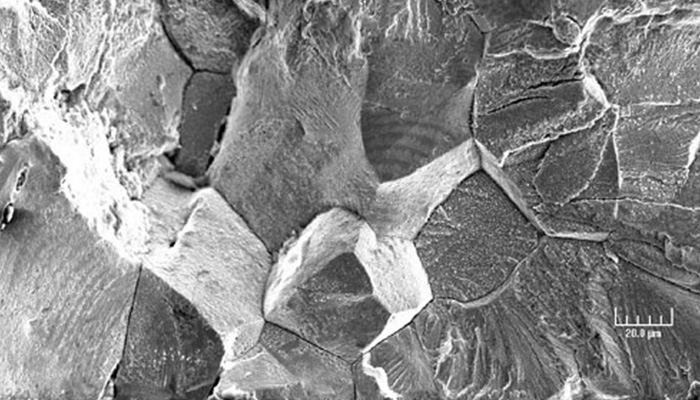
Austenitic steel will be used as the main material (photo credits: Dr K. Natesan)
3D Printed Nuclear Reactors Made of Reinforced Steel
To make these 3D printed nuclear reactor components, Roy Sougata and his team of researchers will use austenitic steel. The metal alloy is reinforced with nitrogen, and will be used as the primary raw material in the construction process. For the moment, no information has been given about the 3D printer used. The idea is to see if these 3D printed components are more efficient than those designed in the traditional way. Sougata expanded, “Different research groups are trying to make the components using additive manufacturing. Conventionally, these components are made through casting or wrought-iron forging, but you cannot tweak the mechanical properties or the microstructure properly. In additive manufacturing, we have lot more grip on that.”
More from the desk
Six other notes from the rest of the bench.
 NewsNational Renewable Energy Laboratory Improves Recyclability of 3D-Printed Wind Turbine BladesA National Renewable Energy Laboratory (NREL) research team is testing the production of modernized wind turbine blades with highly-engineered, 3D-printed designs that use a thermoplastic resin system. Wind turbines are promoted for their ability to decrease humanity’s coll
 NewsStringing in 3D Printing: What Is It and How Do You Fix It?When it comes to 3D printing, as with any manufacturing process, it goes without saying that users will not always be completely satisfied with the results. It can often happen that, due to different circumstances, the 3D printed part does…
 NewsFishy Filaments Is Making 3D Printed Lights Out Of Fishing NetsWould you be willing to decorate your house with fishing nets? Well it would not exactly be displaying nets on your walls, but rather hanging 3D printed lights made from these recycled scraps. This is one of the products now…
 Guides#3DStartup: 3D Architech 3D Prints Micro-Scale Gel-Based Metal Parts3D printing continues to be a key tool for many industries, enabling the creation of parts with complex geometries and advanced materials. In the case of metals, advances in this technology have opened up new possibilities in a multitude of…
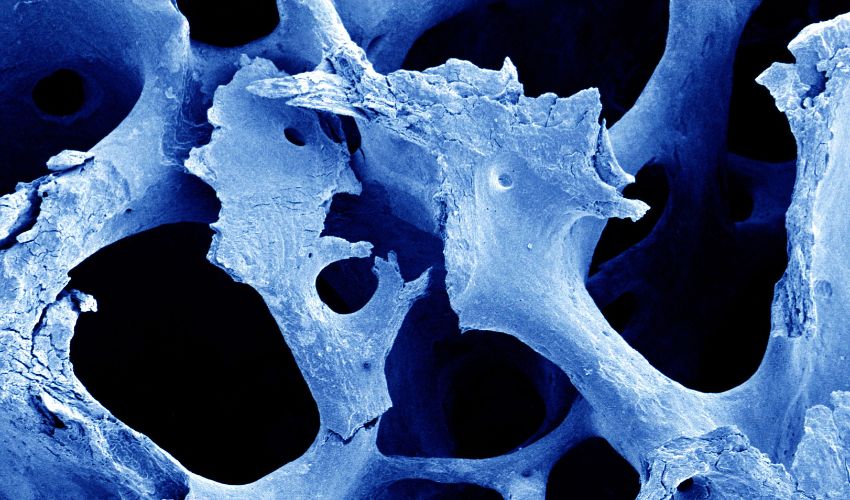 ApplicationsSmart Scaffolds for Strong Bones: The Potential of 3D/4D Bio-Piezoelectric PrintingIn recent years, the marriage of bioengineering and 3D printing has brought remarkable advancements to the field of medicine. One area where these technologies hold immense potential is bone regeneration. Human bones possess a unique property known as piezoelectricity, enabling&h
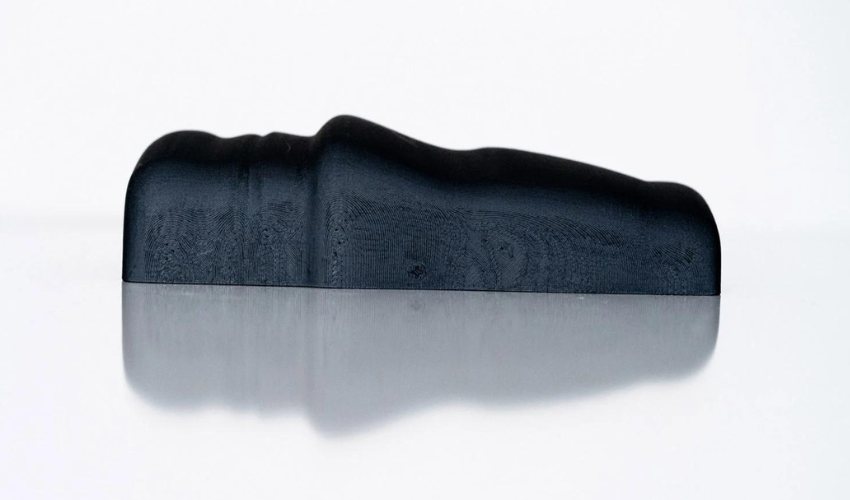 Applications3D Printed Freedom Payload Drives New Era of Space-Based Data StorageThe ever-growing demand for data storage compels innovation, forcing us to look beyond Earth’s atmosphere for solutions. In a recent partnership, Lonestar Data Holdings Inc. and the renowned Danish architectural firm Bjarke Ingels Group (also known as BIG) have introduced&h