News
National Renewable Energy Laboratory Improves Recyclability of 3D-Printed Wind Turbine Blades
A National Renewable Energy Laboratory (NREL) research team is testing the production of modernized wind turbine blades with highly-engineered, 3D-printed designs that use a thermoplastic resin system. Wind turbines are promoted for their ability to decrease humanity’s coll
- 3 min read
- News
- Six more stories

A National Renewable Energy Laboratory (NREL) research team is testing the production of modernized wind turbine blades with highly-engineered, 3D-printed designs that use a thermoplastic resin system. Wind turbines are promoted for their ability to decrease humanity’s collective carbon footprint and environmental impact. In recent years, the benefits of additive manufacturing have been explored by this sector of the energy industry since when it comes to renewable energy, the paradox of wasteful production remains an area of continuous research and innovation. It has become such a topic of interest that earlier this year, the United States Department of Energy even provided universities and industry leaders with funding to develop 3D-printed composite wind blade molds and end-use blade components.
Existing wind turbine designs rely on thermoset resin systems like epoxies, polyesters and vinyl esters, polymers. “Once you produce a blade with a thermoset resin system, you cannot reverse the process,” explained NREL team lead, Senior Wind Technology Engineer, Derek Berry, “That [also] makes the blade difficult to recycle.” The NREL team worked with several institutions to develop systems that utilize thermoplastics, as opposed to thermoset materials, thermoplastics can be heated to separate the original polymers, enabling what is called end-of-life (EOL) recyclability.
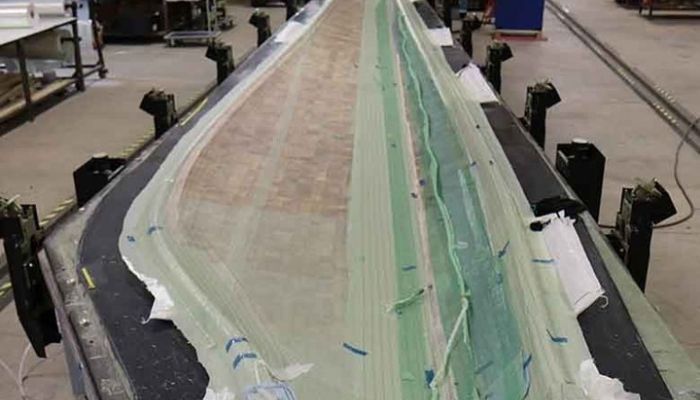
A 13-meter thermoplastic blade 3D-printed at the Composites Manufacturing Education and Technology Facility (CoMET) by an NREL research team. (Photo Credit: Ryan Beach, NREL)
3D-Printed Wind Turbine Blades
According to research from the United States Environmental Protection Agency (EPA), the average lifespan of a wind turbine is roughly 20 years. By using 3D printing technology for the manufacture of thermoplastic blades, this significantly improves the recyclability of the blades. Furthermore, 3D printing substantially reduces the weight and cost of a turbine blade by at least 10%, and production cycle time by 15%.
More from the desk
Six other notes from the rest of the bench.
 News3D Printed Facade Becomes Eye-Catching Part of Amsterdam Shopping StreetIn the Netherlands, traditional craftsmanship has met innovative technology in an unexpected place. Rotterdam-based studio RAP has taken on the task of designing a façade for a boutique in Amsterdam. And this is not just any boutique, but a luxury…
 NewsCould Okara Be a New Material for Food 3D Printing?Cuisine has always been creative and original, constantly reinventing itself to satisfy our taste buds. This is why many chefs and amateurs imagine unusual recipes, based on foods you might not expect. This is the case for a team of…
 MaterialsDon’t Miss the Free Virtual Event ADDITIV PolymersThe moment you have all been waiting for is nearly here! ADDITIV Polymers World will be taking place in a few days on Thursday, October 5th, 2023 from 9:00 AM – 1:30 PM EDT (3:00 – 7:30 PM CEST). This…
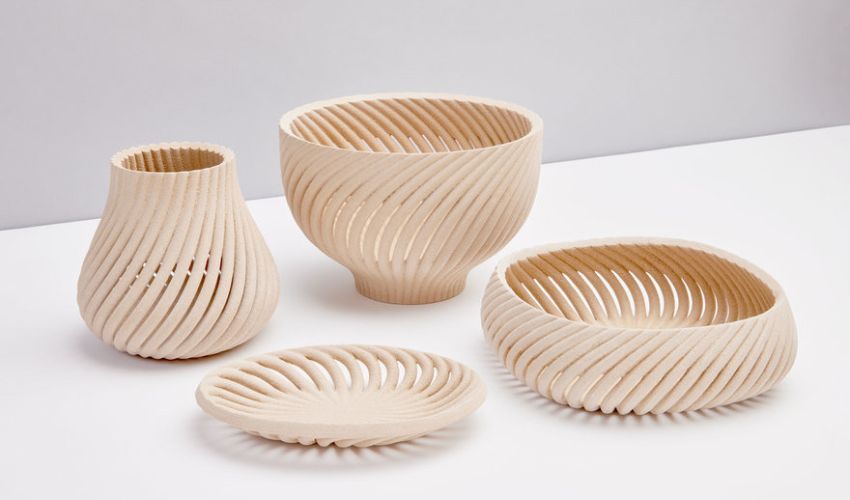 NewsForust 3D’s Accessory Line Gives New Life to Wood WasteUS-based Forust 3D was founded with a mission to make high-volume wood 3D printing affordable, reliable and sustainable. To do this, it leverages the speed, precision and quality of the binder jetting process to produce strong, lightweight wood components. Two…
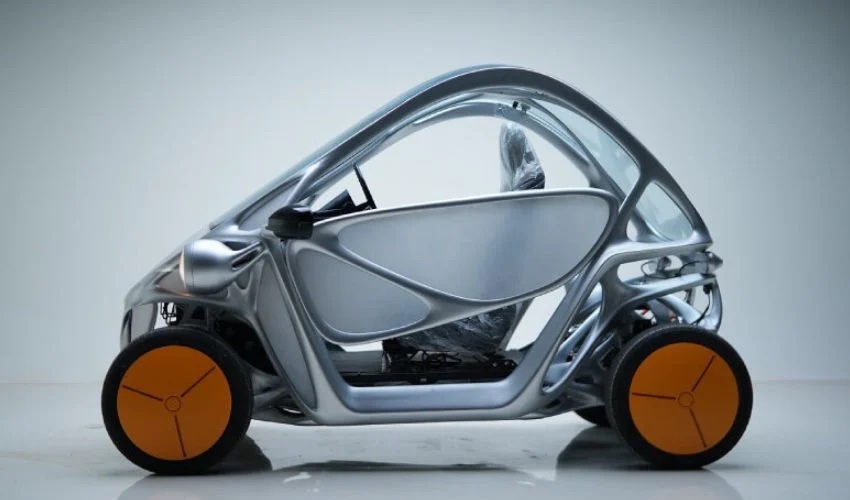 Applications3D-Printed Car “Robo-EV” Uses AI to Detect the Driver’s Mood and Provide Targeted AssistanceAI technologies are in almost all industries and are playing an increasingly important role in our lives. In the automotive sector in particular, artificial intelligence is driving progress, accelerating processes, improving safety and enabling the development of intelligent vehi
 ApplicationsHow is Additive Manufacturing Being Adopted in Defense?When it comes to the military, flexibility and innovation are key in ensuring the success of operations in all corners of the globe. Indeed, when we think of military personnel one of the underlying characteristics of their actions is rapidity,…