Materials
All You Need to Know About ULTEM/PEI for 3D Printing
In recent years, the use of high-performance thermoplastics has become increasingly important in the 3D printing industry, as the technology moves away from rapid prototyping to the production of finished parts. As a result, the requirements for 3D printing materials…
- 3 min read
- Materials
- Six more stories
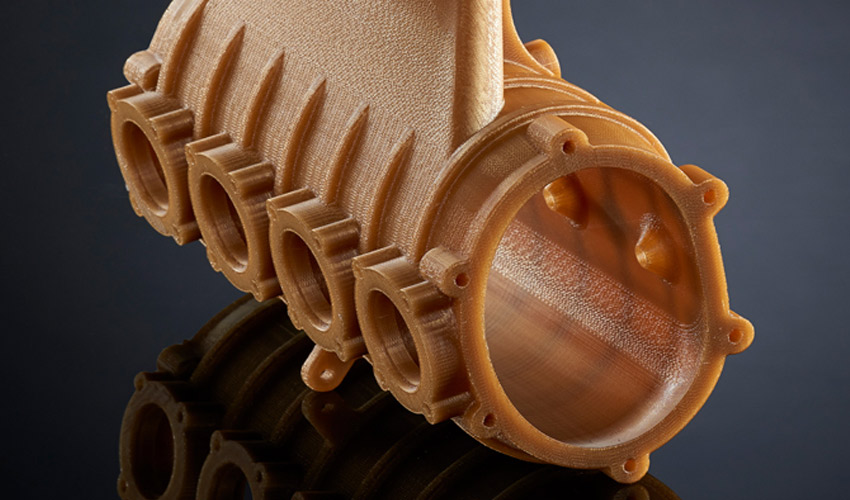
In recent years, the use of high-performance thermoplastics has become increasingly important in the 3D printing industry, as the technology moves away from rapid prototyping to the production of finished parts. As a result, the requirements for 3D printing materials have increased and high performance thermoplastics are becoming more and more common. Their properties make them an economical alternative to certain metals and are valued by many sectors such as aerospace and medical. Within this family are Polyaryletherketone (PAEK) which can withstand high temperatures and which you may be familiar with from PEEK and PEKK. There is a much cheaper alternative, Polyetherimide (PEI), an amorphous material better known by its trade name ULTEM®. Available as a filament for FDM 3D printers, it is compatible with certain machines, including those of Stratasys. Let’s go back over the main characteristics of ULTEM.
PEI was developed in the 1980s by Joseph G. Wirth and was marketed by General Electric’s Plastics Division under the name ULTEM. In 2007, the company sold its plastics business to Saudi Basic Industries Corporation (SABIC), which thus recovered the associated patent. Although ULTEM® was embraced by many industrialists thanks to its mechanical properties, it only became suitable for mass production with the development of high-performance FDM/FFF printers; the extruder of the machine must be heated up to 350°C in order to melt the thermoplastic.
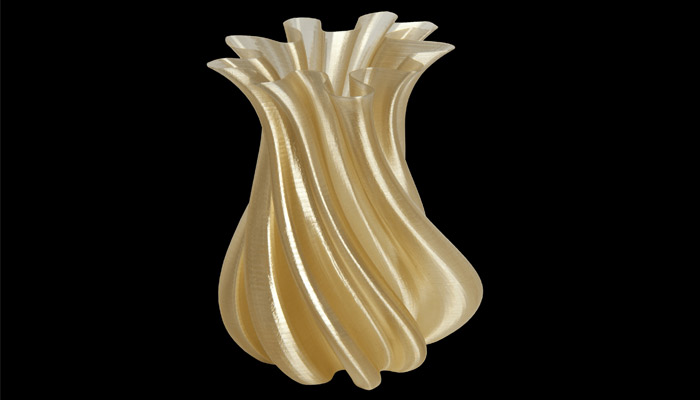
Photo credits : GEWO3D
Production and Characteristics of ULTEM/PEI
ULTEM® is a group of thermoplastic materials derived from Polyetherimide (PEI). Notably, ULTEM exhibits exceptional flame retardancy, characterized by high resistance to flames, minimal smoke generation, and low toxicity. These properties are validated by excellent performance in Flame, Smoke, Toxicity (FST) tests. Additionally, ULTEM demonstrates remarkable resistance to elevated temperatures, boasting a relative thermal index (RTI) of up to 180°C. The material is distinguished by its superior strength, rigidity, dimensional stability, creep resistance, and chemical resistance. Its various formulations offer a high weight-to-strength ratio, allowing them to potentially replace certain metals while maintaining excellent machinability.
More from the desk
Six other notes from the rest of the bench.
 ApplicationsDepartment of Energy Seeks to Advance 3D Printed ToolingThe U.S. Department of Energy (DOE) has awarded $3 Million to polySpectra and Fortify, along with National Renewable Energy Laboratory, MPI Systems, RePliForm Inc, and Oak Ridge National Laboratory (ORNL). This funding will be used for the development of durable,…
 Materials6K Additive & Freemelt Partner On Refractory Metal 3D Printing Powders6K Additive is a division of 6K Inc. and a global leader in the production of sustainable advanced materials for additive manufacturing. Recently, the company announced the commercial availability of refractory AM metal powders including tungsten, rhenium, and niobium-based powde
 NewsTop 5 Videos: The 3Dnatives Tour of 3DEXPERIENCE World 2023Hello everyone and welcome back to our top 5 3D printing videos of the week! As always, we have an exciting selection for you, starting with a 3Dnatives original from 3DEXPERIENCE World! Our team had a wander round to find…
 NewsTop 5 Videos: A 3D Platform for Creating RobotsThis week we are introducing you to LaserFactory. This manufacturing solution uses a laser beam machine to create robots, drones and other types of electronic devices, completely autonomously. This is an industry 4.0 system that may well in the future…
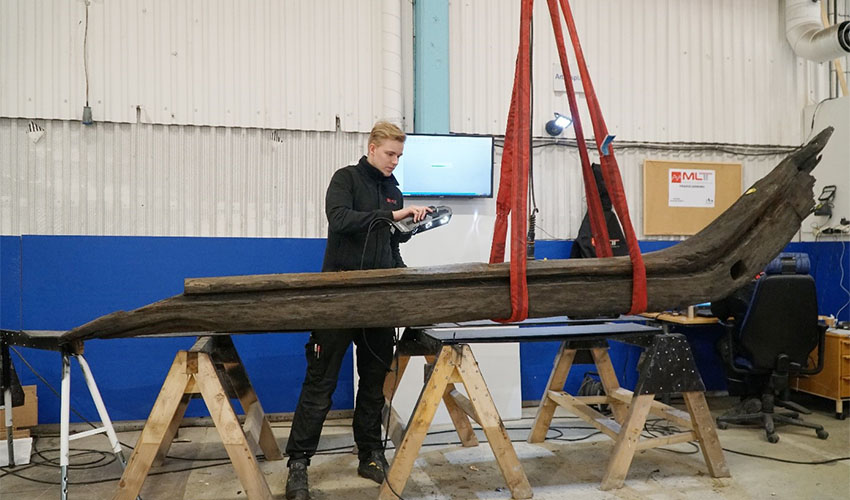 PrintersReconstructing A 19th Century Ship in Australia Using 3D TechnologyWhile additive manufacturing offers the possibility of producing and repairing all sorts of parts, it can also be used to reconstruct old models, whatever they may be. And the Silentworld Foundation, an Australian non-profit organization focused on marine archaeology and…
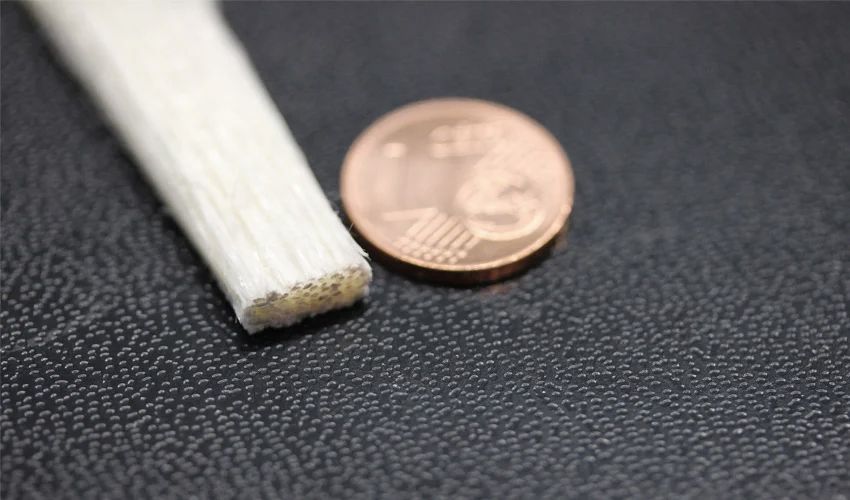 MaterialsCould Cellulose Fibers Be Used As Reinforcement Material for Composite 3D Printing?The German Institute of Textile and Fiber Research recently launched a research project to develop an innovative 3D printing method for composite materials. The goal is to produce components reinforced with bio-based and sustainable fibers such as cellulose fibers. The…