Materials
Could Cellulose Fibers Be Used As Reinforcement Material for Composite 3D Printing?
The German Institute of Textile and Fiber Research recently launched a research project to develop an innovative 3D printing method for composite materials. The goal is to produce components reinforced with bio-based and sustainable fibers such as cellulose fibers. The…
- 3 min read
- Materials
- Six more stories
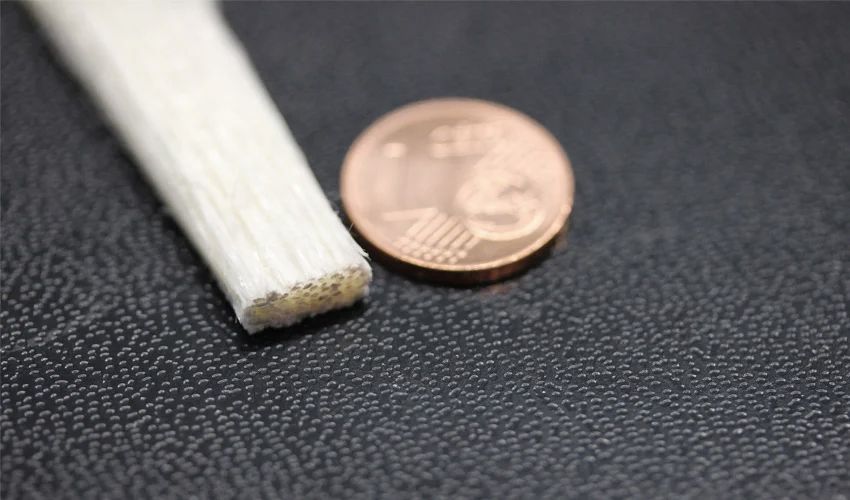
The German Institute of Textile and Fiber Research recently launched a research project to develop an innovative 3D printing method for composite materials. The goal is to produce components reinforced with bio-based and sustainable fibers such as cellulose fibers. The project team has collaborated with machine manufacturer Arburg to develop a print head that can extrude continuous cellulose fibers embedded in a cellulose-based matrix. The project, funded by Germany’s Federal Ministry of Education and Research, would make it possible to draw on a material that is very abundant today and design more durable parts that take full advantage of composite 3D printing.
The research project is an example of how we can take inspiration from nature and combine it with additive manufacturing. In our case, we are talking about additive manufacturing with composites. Without perhaps knowing it, we are surrounded by composites: Wood, plants, spider silk, or even skin. These natural fibers offer very interesting properties, whether in terms of strength or even lightness. So why not use them for 3D printing?
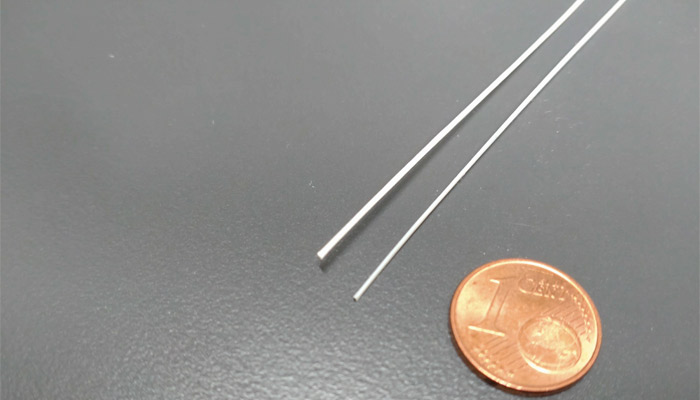
Cellulose fibers produced by pultrusion ( a portmanteau of pull and extrusion; as opposed to extrusion, which pushes the material, pultrusion pulls the material)
The biggest challenge is temperature management. This is because natural fibers – such as cellulose fibers – are very sensitive to high temperatures, which precludes the possibility of working with a PLA- or ABS-type plastic matrix, since the thermoplastic must be heated sufficiently to be applied layer by layer. So the team had to think of both a new matrix and a 3D printing process with the cellulose that would meet those temperature constraints.
More from the desk
Six other notes from the rest of the bench.
 NewsThe Best 3D Printing Videos From 20242024 was an extraordinary year for 3D printing, with breakthroughs revolutionizing fields as diverse as medicine, automotive and aerospace. In this article, we’ve put together a selection of our favorite videos of the year, where creativity and technology collide to…
 ApplicationsUnited States Marines Use AM for New Vehicle Maintenance ToolOnce again the American military is turning to additive manufacturing (AM) for innovative applications to help them in the field. This time, Marine Corps System Command’s (MCSC) Advanced Manufacturing Operations Cell (AMOC) has helped to develop a 3D printed metal…
 Materials#3DExpress: The First Emission-Free Steel Powder for 3D PrintingEvery week, we offer you an overview of the latest news from the field of additive manufacturing. In this #3DExpress, learn more about the world’s first emission-free steel powder from SSAB. Next, we tell you Sintratec, which is gaining a…
 NewsVELO3D to Go Public in Second Half of 2021It has been an extremely busy year for the additive manufacturing industry. Though it’s only the end of March, already we have seen some major acquisitions as well as a number of companies going public. This despite the fact that…
 GuidesRAYSHAPE Talks its Continued International Expansion and Resin 3D PrintingSince its creation in the 1980s, resin 3D printing has experienced significant growth worldwide. The technology continues to advance rapidly, enabling the manufacture of prototypes and end-use parts that are remarkable for their precision and high level of detail. One…
 ApplicationsThe First 3D-Printed Microneedle for Hearing Loss TreatmentThe inner ear, especially the cochlea, remains one of the most challenging areas to address in medicine due to its intricate anatomy and limited accessibility. This presents significant hurdles in treating hearing loss (including hyperacusis) and other inner ear disorders.&hellip