Applications
Department of Energy Seeks to Advance 3D Printed Tooling
The U.S. Department of Energy (DOE) has awarded $3 Million to polySpectra and Fortify, along with National Renewable Energy Laboratory, MPI Systems, RePliForm Inc, and Oak Ridge National Laboratory (ORNL). This funding will be used for the development of durable,…
- 3 min read
- Applications
- Six more stories

The U.S. Department of Energy (DOE) has awarded $3 Million to polySpectra and Fortify, along with National Renewable Energy Laboratory, MPI Systems, RePliForm Inc, and Oak Ridge National Laboratory (ORNL). This funding will be used for the development of durable, direct 3D printed tooling that can be used for automotive lightweighting using Cyclic Olefin Resin-based composites. The project is in line with the DOE’s overall goals to decarbonize the U.S. industrial sector, advance clean energy manufacturing and improve America’s economic competitiveness and workforce diversity.
As climate change becomes a bigger concern, decarbonization and clean energy manufacturing are quickly moving past the status of buzzwords to real needs in industry. The DOE, especially through the ORNL has been a forerunner for this, researching the many different ways that technologies, especially additive manufacturing, can be used to make cleaner energy. This latest investment shows their confidence in the technology when it comes to tooling. Namely, they are hoping Fortify, a provider of 3D printers for advanced photopolymer composites, and polySpectra, a supplier of highly durable photopolymer resins will be able to make advancements in the arenas of cost, durability and of course sustainability by combining additive manufacturing with resin-based composites.
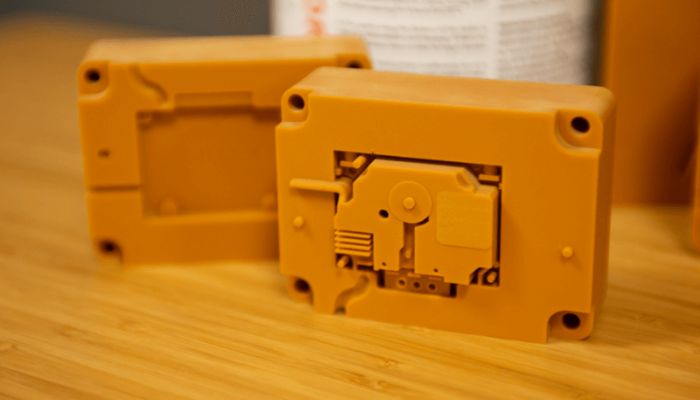
Fortify already has significant experience in the arena of 3D printed tooling. The company combines 3D printed molds with injection molding for robust solutions (photo credits: Fortify)
Raymond Weitekamp, polySpectra founder and principal investigator for the award, expanded, “Olefin-based thermoset composites have been used for many decades in extremely demanding applications such as wind turbine blades and fuel cell components, because they are among the most durable materials on the planet. Under this research grant, we will leverage Nobel-winning chemistry to directly 3D-print these robust composite Cyclic Olefin Resins. The goal of the DOE project is to bring unprecedented materials durability to additive manufacturing, which will provide the industry with immense leverage for the decarbonization and reshoring of the US manufacturing sector.”
More from the desk
Six other notes from the rest of the bench.
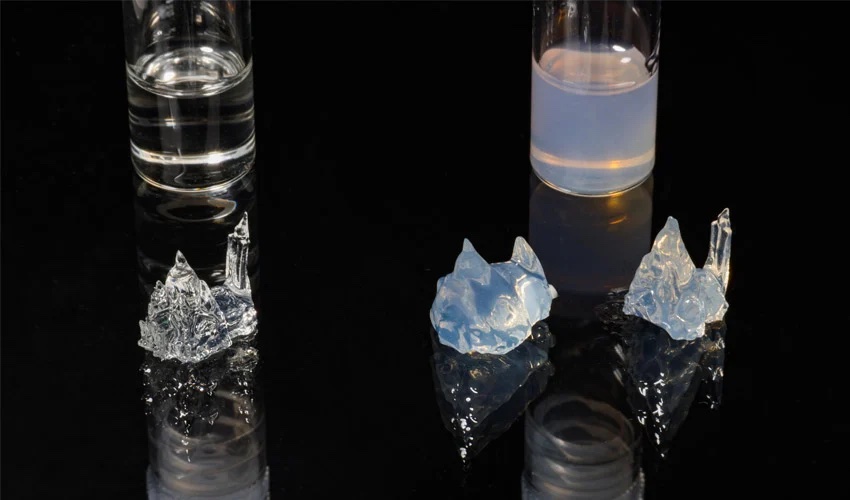 MaterialsEngineers Have Developed an Ultra-Fast Opaque Resin 3D Printing ProcessAt EPFL in Switzerland, engineers from the Laboratory of Applied Photonic Devices (LAPD) have developed a resin 3D printer capable of designing objects in a few seconds. Based on a volumetric printing technology, it can produce parts with an opaque…
 NewsThe Role of Construction 3D Printing in Humanitarian AidOver the last few decades construction using 3D printing has taken the world by storm. Additive manufacturing has enabled construction companies to build at unprecedented speeds, while minimising waste and labour. Furthermore, with 3D printing, the cost of construction is…
 NewsWEBINAR: Proven on the Production Floor: Why the Raplas PR 700 Works in a Real Manufacturing EnvironmentFor manufacturers considering an investment in industrial 3D printing, the transition from laboratory testing to high-stakes manufacturing can be a significant hurdle. While prototypes may perform well in controlled environments, scaling production often brings new challenges, su
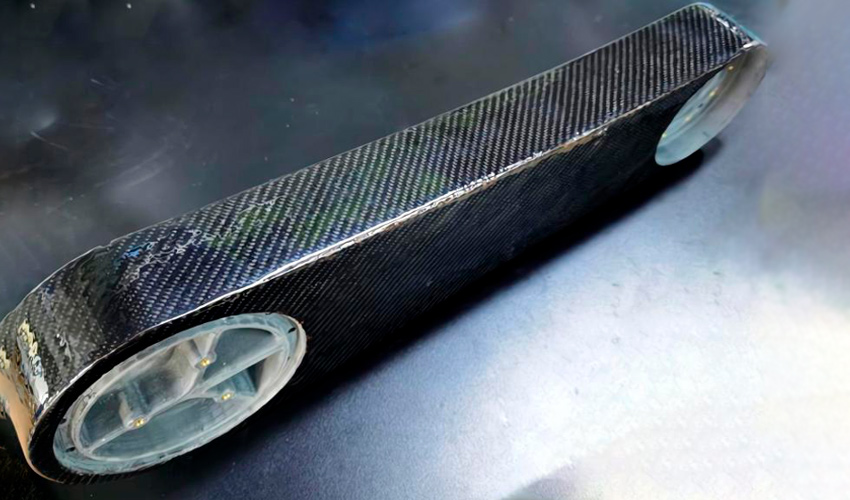 ApplicationsComposite 3D Printing Unlocks Applications in Aerospace and Robotics in ChinaThough much focus has been put on 3D printing with polymers and metals in recent years, there is one material family that has shown immense growth in the additive manufacturing sphere: composites. As strong as metal and as light as…
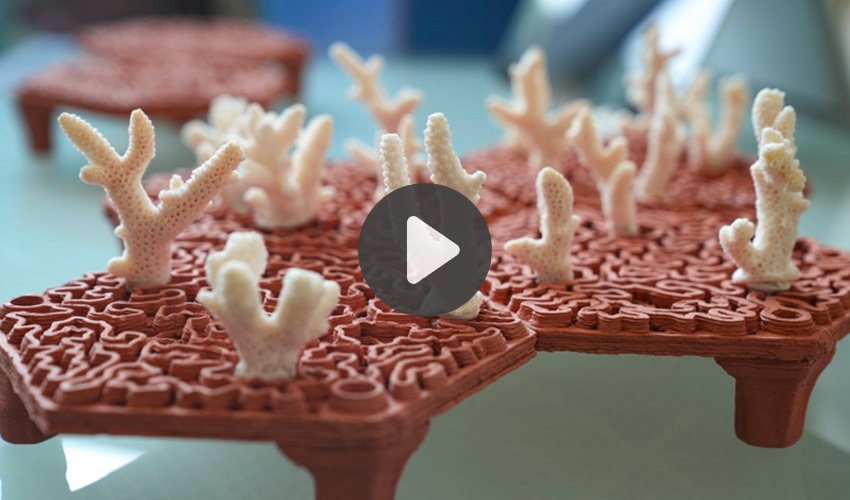 NewsTop 5 Videos: 3D Printed Coral Reefs Promote Marine BiodiversityWelcome to this week’s top 5 most compelling 3D printing videos. We kick off this week’s edition with our very own video, covering how some companies are fighting to prevent the extinction of coral reefs through 3D printing technology. Moving…
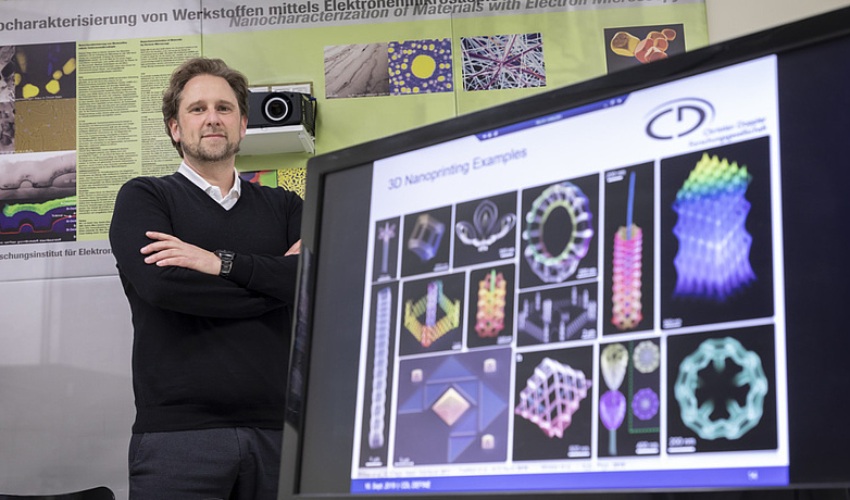 ApplicationsTU Graz Achieves Breakthrough in 3D Printed Optically Active NanostructuresResearchers Harald Plank, Verena Reisecker, and David Kuhness from Graz University of Technology have achieved a significant breakthrough in the production of 3D nanostructures, ensuring their precise shape and size to attain desired optical properties. The key to this success&he