Applications
UK Government to Support Advanced Manufacturing with New Modern Industrial Strategy
On June 23, the United Kingdom launched its Modern Industrial Strategy for 2025—a ten-year blueprint aimed at driving investment into the industries of the future. Designed to accelerate business growth and provide long-term stability, the strategy seeks to make it…
- 3 min read
- Applications
- Six more stories
On June 23, the United Kingdom launched its Modern Industrial Strategy for 2025—a ten-year blueprint aimed at driving investment into the industries of the future. Designed to accelerate business growth and provide long-term stability, the strategy seeks to make it faster and easier for companies to invest with confidence. At its core are eight high-potential sectors they’re calling the IS-8: advanced manufacturing, clean energy, creative industries, defense, digital and technology, financial services, life sciences and professional and business services. What unites these diverse sectors? According to the UK government, they represent the greatest opportunities for sustainable growth.
As a part of the Modern Industrial Strategy, each of these sectors has a bespoke plan for attracting investment, enabling growth and creating high-quality, well-paid jobs. Five of those plans have been published so far, including the “Advanced Manufacturing Sector Plan.” In this document, Sarah Jones MP, Minister of State for Industry, highlighted the strengths of the advanced manufacturing industry. She testified that it is the backbone of the UK’s economy, directly supporting around 760,000 jobs and contributing more than £82 billion gross value added to the UK economy every year.

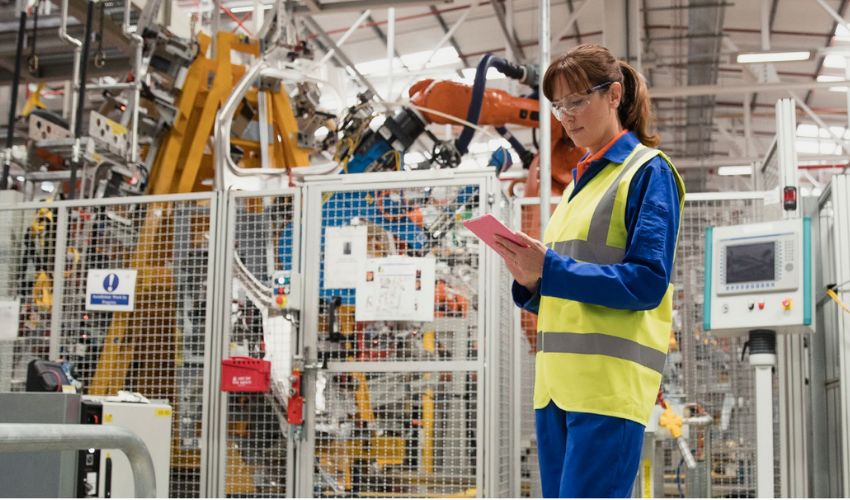
The Modern Industrial Strategy will encourage the AM industry to grow. (Photo Credits: UK Government)
Advanced Manufacturing Sector Plan
To further enhance the advanced manufacturing sector, it will be backed with up to £4.3 billion in funding, including up to £2.8 billion in research and design over the next five years. The idea is to unlock the combined strength of the UK’s public finance institutions, including £4 billion from the British Business Bank’s Industrial Strategy Growth Capital and £27.8 billion from the National Wealth Fund for future priorities.
More from the desk
Six other notes from the rest of the bench.
 ApplicationsToyota Hyper-F Concept Car Debuts with 3D Printed PartsIn the automotive industry, innovative approaches and exceptional features are essential to stand out from the competition. Advancements in development methods, materials, and design are key factors in this race. Toyota’s customization and development department is continua
 MaterialsResearchers Succeed in 3D Printing One of the Strongest Stainless Steels on the MarketSteel is a metal prized for its resistance to corrosion and is used by many sectors in the 3D printing industry. As is stainless steel which is actually an inox, an alloy made of iron, chromium, and a little carbon.…
 ApplicationsApplication of the Month: The First 3D Printed Monolithic CatamaranThe maritime industry has undergone a major transformation in recent years thanks to the adoption of innovative technologies such as additive manufacturing. This production method enables ships and naval components to be created with unprecedented efficiency and sustainability. B
 NewsReverse Engineering Helps Ford to Revive Michigan Central StationAlready a veteran in the technology, Ford has been using additive manufacturing for many years. While the automaker usually applies 3D printing to design parts for cars, this time the American company used 3D technologies to renovate the Michigan Central…
 MaterialsA New Bronze-Steel Alloy Has Been Developed Thanks to 3D PrintingA group of researchers at the Skolkovo Institute of Science and Technology, or Skoltech, say they have developed a new bronze-steel alloy using additive manufacturing. They turned to direct laser deposition to produce different parts composed of these two metals,…
 ApplicationsBerria Bike and Mausa 3D Unveil 3D-Printed E-Bike PrototypeThe use of additive manufacturing as a tool for developing and testing new products has become increasingly more popular within high-demand and well-established industrial sectors. Recently, much of this new testing has been used within the bicycle sector. More specifically,&hell