Applications
The University of Florida 3D prints medical device implants using silicone
The University of Florida (UF) is making headlines again today for their latest developments in 3D printed medical device implants. Created at UF, this new advancement boasts “quicker implantation of devices that are stronger, less expensive, more flexible and more comfortable&he
- 3 min read
- Applications
- Six more stories

The University of Florida (UF) is making headlines again today for their latest developments in 3D printed medical device implants. Created at UF, this new advancement boasts “quicker implantation of devices that are stronger, less expensive, more flexible and more comfortable than anything currently available.”
This development in medical device implants is thanks to a project under Thomas Angelini, an associate professor of mechanical and aerospace and his team of fellow UF researchers. For the last several years, Angelini and his time have been working on a project on printable organs and tissues. But, it was only a discovery made two years ago in manufacturing soft materials using 3D printing and miscroscopic hydrogel particles, that they were able to make the headway need to have the results that they are seeing today.
The printing process in action
This unique method directly manipulates liquid silicone rather than using injection molding to create a specific shape. In order to accomplish this, the team of researchers 3D printed the silicone into a supporting material that is similar to that of a jelly-type block; an idea that came about during the team’s ongoing research on tissue engineering.
More from the desk
Six other notes from the rest of the bench.
 NewsCan bio-printing tumour cells, become a treatment against cancer?A student from the University of Waikato in New Zealand, Shalini Guleria, is now seeking to identify the best treatment for all breast cancer patients. She turned to bio-printing to 3D print tumour cells. It would be possible to collect cells in a…
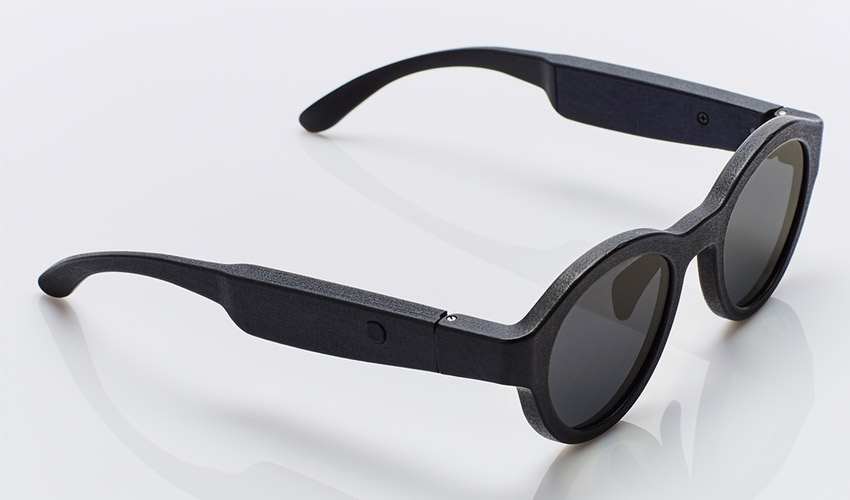 News3D Printed Smart Glasses to Help Dyslexic ChildrenAbeye is a young French company supported by Atol Les Opticiens. The medtech startup manufactures electronic glasses intended to improve everyone’s well-being. After the success of its first pair, Spectalert, which detects falls in the elderly, Abeye is now launching&hellip
 MaterialsMIT Uses Artificial Intelligence To Automate 3D Printing Materials Discovery ProcessArtificial Intelligence, and more specifically, machine learning, is finding its way through various applications in the additive manufacturing industry. This time, researchers from MIT have applied the data-driven nature of machine learning to automate the process of discovering
 MaterialsResearchers reproduce the surface of a human tongue thanks to 3D printingResearchers at the University of Leeds, in collaboration with Edinburgh University, have 3D printed soft synthetic surfaces with the same texture as a human tongue. Made of silicone, they could mimic the topology, elasticity and wettability of this complex organ.…
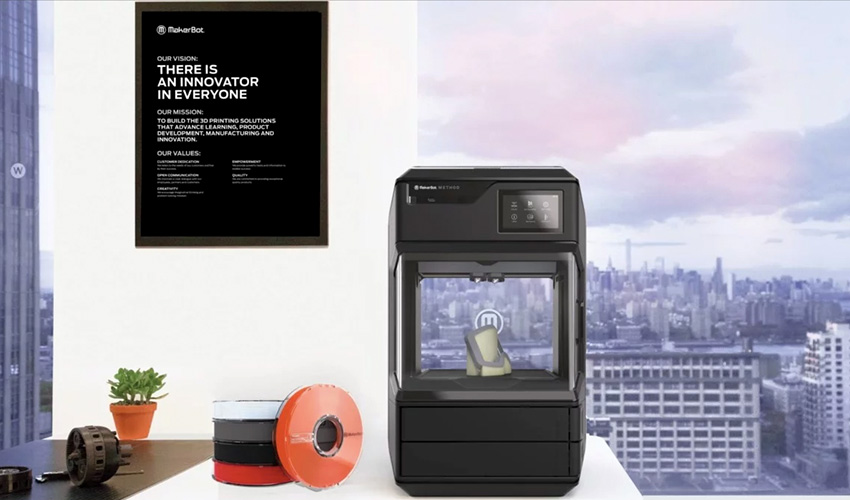 PrintersMakerBot announces its return with the Makerbot MethodThe manufacturer MakerBot has launched its new FDM 3D printer; the Method. A machine mixed between an industrial solution and desktop 3D printer. The American company, founded in 2009 and bought by the giant Stratasys in 2013, has not launched new products in recent years.&hellip
 NewsOptomec’s 3D-Printed Electronics Solution Boosts 5G Signals By 100%Analysis from Bank of America posits that wireless infrastructure deployment cycles have traditionally lasted just about a decade. Meaning we are approaching 3 years into the current cycle, leaving more than seven years of 5G investment opportunities ahead. The use…