Materials
MIT Uses Artificial Intelligence To Automate 3D Printing Materials Discovery Process
Artificial Intelligence, and more specifically, machine learning, is finding its way through various applications in the additive manufacturing industry. This time, researchers from MIT have applied the data-driven nature of machine learning to automate the process of discovering
- 3 min read
- Materials
- Six more stories
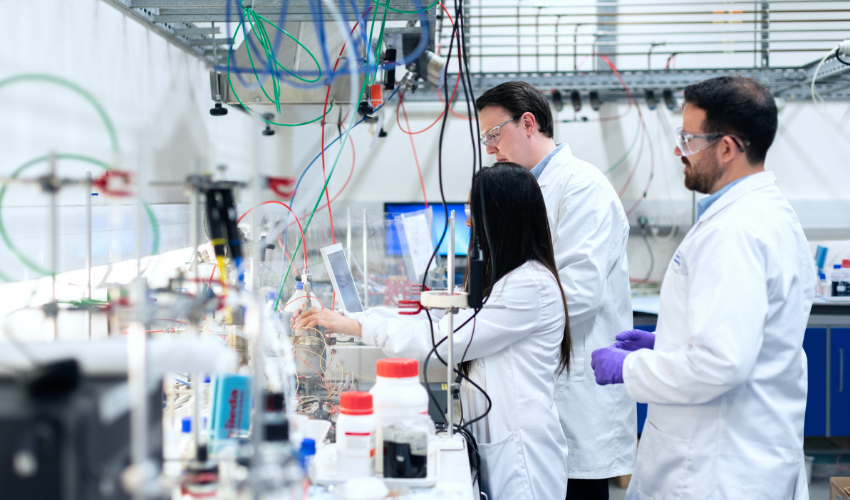
Artificial Intelligence, and more specifically, machine learning, is finding its way through various applications in the additive manufacturing industry. This time, researchers from MIT have applied the data-driven nature of machine learning to automate the process of discovering new 3D printing materials. With machine learning, material performance factors such as toughness and compression strength were optimized using an algorithm that quickly outperformed conventional methods of 3D printing material formulation. As a result of this study, the researchers created a free, open-source materials optimization platform called AutoOED, allowing other researchers to conduct their own material optimization.
The algorithm was able to suggest novel chemical formulations that a human likely may not have considered. “Materials development is still very much a manual process. A chemist goes into a lab, mixes ingredients by hand, makes samples, tests them, and comes to a final formulation. But rather than having a chemist who can only do a couple of iterations over a span of days, our system can do hundreds of iterations over the same time span,” explained Mike Foshey, co-lead author of the paper and mechanical engineer and project manager in the Computational Design and Fabrication Group (CDFG) of the Computer Science and Artificial Intelligence Laboratory (CSAIL).
3D Printing Materials
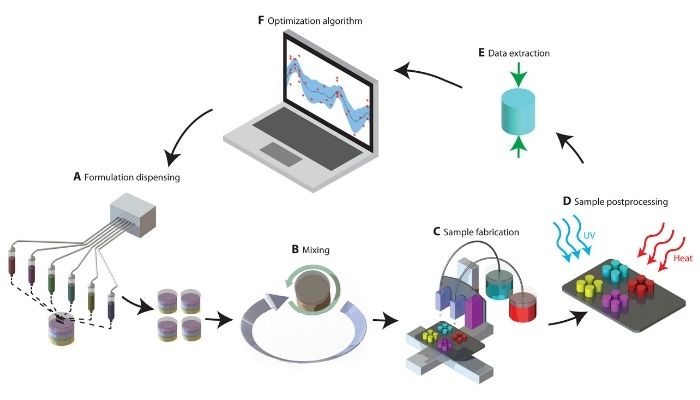
Six chemicals were identified to use in the formulations then the algorithm’s objective was set to uncover the best-performing material, controlled for toughness, stiffness, and strength. In terms of automating the materials discovery process, using this methodology from MIT, the dispensing, mixing, 3D printing, post-processing, and testing steps can be completed without human input. However, manual labor would be needed to transfer materials between the different steps in the sample fabrication pipeline — though, Foshey believes robots could be incorporated to eliminate human labor in future versions of this system. After testing 120 formulations, the study resulted in 12 optimized formulations — with the researchers concluding that their research methodology could be generalized for application to other material design systems, enabling automated discovery in other materialssciences.
More from the desk
Six other notes from the rest of the bench.
 Printers3DM on Developing a Faster, More Optimized SLS 3D Printing In Order to Scale Up Production3D printing has come a long way since its origins in the 1980s. Though originally used almost exclusively for rapid prototyping, over the past few years we have seen additive manufacturing technologies rapidly industrialize and be used for end-use parts…
 PrintersHP Metal Jet; HP’s new metal 3D printing technologyEarlier this year the American company HP announced; it will indeed embark on the field of metal additive manufacturing. An announcement confirmed at the IMTS Chicago show. The manufacturer, now one of the largest resellers of professional 3D printers on…
 NewsTiffany & Co. Incorporates a 3D Printed Façade on Iconic StoreIf you plan to travel to Singapore, you can not miss this work of architecture. Located at Singapore’s international airport, in Changi, well-known luxury brand Tiffany & Co. has integrated a one-of-a-kind façade that is as iconic as the brand…
 Guides#Working3D: Six Questions for a Prosthodontist Using 3D PrintingOnce again, it is time for our #Working3D series, where we take a closer look at different professions in the additive manufacturing sector. This time, we wanted to focus on a position that relates to dental 3D printing. This sector…
 News3DExpress: Shapeways Declares BankruptcyIt has been a particularly interesting week for additive manufacturing. Between the end of RAPID + TCT and the huge announcements that we saw (including Nano Dimension’s intention to acquire Desktop Metal in the coming months), there was so much…
 NewsNew Sinter-Free Process Can Make Nanometer-Sized, 3D Printed Glass StructuresA new 3D printing process for quartz glass developed at the Karlsruhe Institute of Technology (KIT) is currently causing quite a stir. The team around Dr. Jens Bauer has succeeded in producing a variety of nanometer-scale quartz glass structures by…