Materials
Researchers reproduce the surface of a human tongue thanks to 3D printing
Researchers at the University of Leeds, in collaboration with Edinburgh University, have 3D printed soft synthetic surfaces with the same texture as a human tongue. Made of silicone, they could mimic the topology, elasticity and wettability of this complex organ.…
- 3 min read
- Materials
- Six more stories
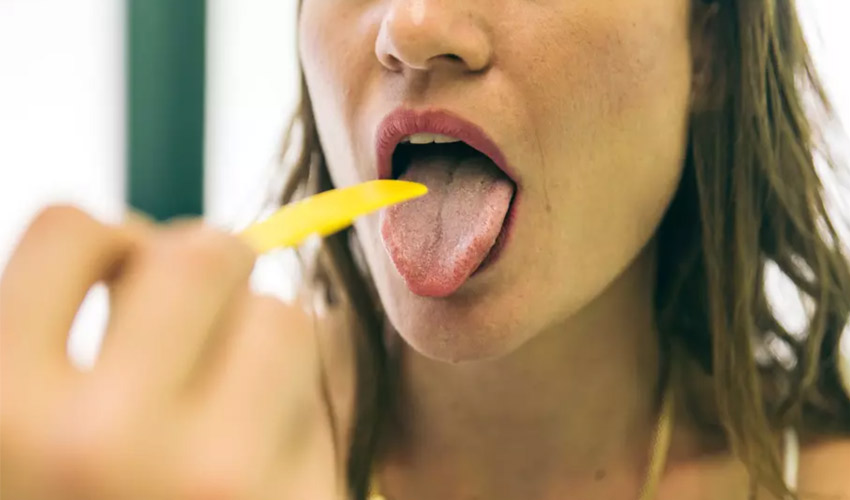
Researchers at the University of Leeds, in collaboration with Edinburgh University, have 3D printed soft synthetic surfaces with the same texture as a human tongue. Made of silicone, they could mimic the topology, elasticity and wettability of this complex organ. An innovation that could open up new possibilities in terms of testing the properties of food, pharmaceuticals and also help to better understand certain reactions (such as dry mouth) without having to do it on a human being.
The tongue is a complex organ composed of several muscles, highly vascularised and capable of transmitting taste thanks to its many taste buds. These cover the whole of the tongue, and allow us to perceive five tastes: sweet, salty, sour, bitter, umami, the rest being perceived by the sense of smell. These papillae give the tongue a very special surface, which is not easy to reproduce. However, researchers at the University of Leeds have taken up the challenge and opted for 3D printing.
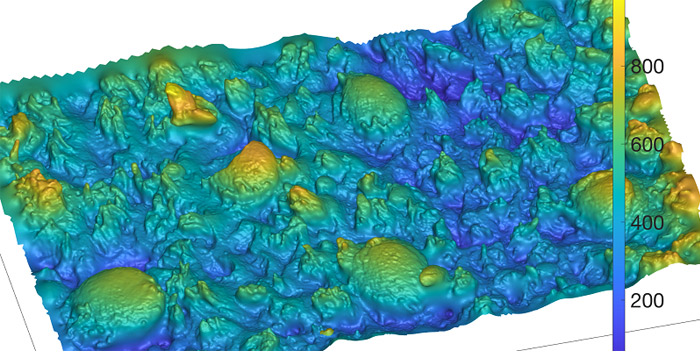
The structure of the human tongue is complex | Credits: Anwesha Sarkar
Dr. Efren Andablo-Reyes, Director of Research, explains: “Recreating the surface of an average human tongue comes with unique architectural challenges. Hundreds of small bud-like structures called papillae give the tongue its characteristic rough texture which, combined with the soft nature of the fabrics, creates a mechanically complicated landscape. We have sought to reproduce the important mechanical characteristics of the human tongue (i.e. the pleasant perception of the oral sensation and adequate lubrication for swallowing) in a surface that is easy to use in the laboratory to reproduce the conditions of oral treatment.”
More from the desk
Six other notes from the rest of the bench.
 News3D Daily Show #2: Materials at the Heart of InnovationThe second day of Formnext 2021 has come to an end and we wanted to give you another opportunity to follow the news of the largest international trade show for additive manufacturing with us. Today, the second day broke records…
 GuidesStartup Süß & Friends Reinvents Everyday Objects With 3D PrintingHave you ever heard of Süß & friends? The young German company stands out in the world of 3D printing thanks to its unusual name and but also its creativity, as attested by the jury of the 3D Pioneers Challenge …
 MaterialsFilaret is Recycling Cigarette Butts Into 3D Printing FilamentsfiFilaret, an Estonian startup that makes sustainable 3D printing materials, is working with the Estonian government to turn cigarettes discarded on the country’s beaches into filament. According to local authorities in Tallinn, the capital of Estonia, cigarette butts are o
 NewsTop 5 Videos: India’s First 3D Printed BridgeWelcome to our compilation of this week’s most compelling 3D printing highlights. This week’s edition begins with an exciting showcase from IIT Hyderabad, unveiling India’s first 3D printed bridge. Next up, AI Waves Channel provides an in-depth look at how&helli
 News#3DQuiz: Have You Been Following the Latest Additive Manufacturing News?From new 3D printing processes and improved materials to unconventional application possibilities and company mergers – the world of additive manufacturing never sleeps, as we all know. And there was a lot going on in the last quarter as well!…
 NewsThe Role of Construction 3D Printing in Humanitarian AidOver the last few decades construction using 3D printing has taken the world by storm. Additive manufacturing has enabled construction companies to build at unprecedented speeds, while minimising waste and labour. Furthermore, with 3D printing, the cost of construction is…