News
How Veterinary Medicine Benefits From Additive Manufacturing
They are considered man’s best friend and occupy a large place in our hearts and sometimes on our sofa: we are talking of course about animals, specifically pets. Since the beginning of time, humans have lived together with animals and…
- 3 min read
- News
- Six more stories
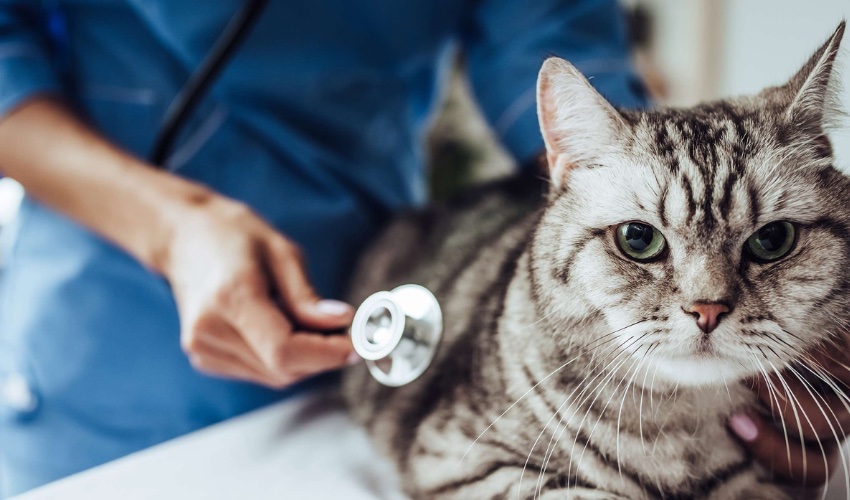
They are considered man’s best friend and occupy a large place in our hearts and sometimes on our sofa: we are talking of course about animals, specifically pets. Since the beginning of time, humans have lived together with animals and this continues to this day. The most popular types of animals are dogs, cats, fish and birds, and the number of animals in a household of 2016 compared to 2020 has increased significantly. While there were 76.8 million dogs and 58.4 million cats adopted around the globe in 2016, this figure rose to 83.7 million dogs and 60 million cats just four years later. This increase can be attributed in no small part to the Corona Pandemic that began at that time and the associated worldwide lockdowns, as home office arrangements allowed workers in particular to spend more time with a pet. However, not only have the numbers of pets increased, but additive manufacturing has also enabled the creation of all the treatments and applications necessary for veterinary medicine for our animal friends.
It is no secret that additive manufacturing has been shown to have benefits in a number of sectors, including veterinary medicine. Considering that veterinary medicine is a large and growing part of the economy, it is easy to see why additive manufacturing is being used there. In the United States of America alone, more than around 120,000 veterinarians are currently practicing their profession to help animals with various medical conditions and conditions. It is little wonder, then, that as the number of pets increases, so does the value of the industry as a whole. According to a report from Grand View Research, Inc., the global market for veterinary activities is expected to reach $114.4 billion by 2028. Now, however, there are not only veterinarians who are looking after the well-being of our animals with the use of 3D printing, but commercial companies are also diligently developing new applications so that they too are able to help animals. But what are the limitations and possibilities of 3D printing in this area and what is the typical process and implementation?
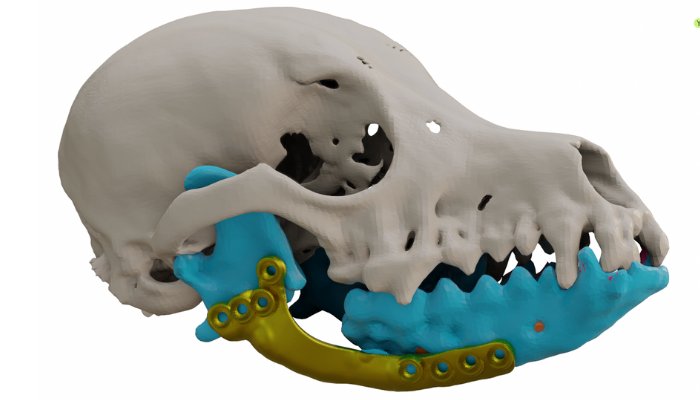
The use of additive manufacturing is becoming increasingly common in the veterinary medicine market. Here, you can see the design of a prosthetic for a dog’s lower jaw (photo credits: Dr. Johnny Uday).
The Use of Additive Manufacturing by Veterinarians
No pet owner is pleased when to take their animal friend to the nearest veterinary practice. In addition to nasty health surprises, however, there are often other horror stories, such as enormous costs, long waiting times for prostheses or orthoses (among other necessary treatments) or simply the fact that it is not possible to individualize veterinary products for one’s own animal. Thankfully, with 3D printing many of these issues can be addressed. Furthermore, innovations in material developments have enabled the development of even more materials meeting various needs in the sector. Thus, the materials enable many benefits such as reduced costs, shortened waiting times and also a high degree of customization. However, innovative approaches can also shape and simplify the individual steps an animal patient goes through when visiting a veterinarian who uses additive manufacturing. As a rule, materials such as PEEK, PEKK and, for surgical activities, dental plastics such as nylon, PLA and PVA, for example, find their application among AM-using veterinarians.
More from the desk
Six other notes from the rest of the bench.
 NewsHyper FFF™ from Raise3D: A Solution to Increase the Speed of the FFF Process Without Sacrificing AccuracyA few days ago, the manufacturer Raise3D announced an important upgrade for its FDM 3D printers, more specifically for its Pro3 Series (Pro3 and Pro3 Plus). Named the Hyper Speed Upgrade Kit (or HUK3), the solution is designed to significantly…
 NewsAprecia and Nanoform Join Forces to Advance 3D Printed NanomedicinesNanoform, a company specialising innovative nanoparticle medicine, and Aprecia, a 3D printing pharmaceutical company, have announced that they intend to collaborate in an endeavor to advance 3D printed nanomedicines. Taking advantage of the synergies between their respective tech
 NewsMetal AM to generate $228 billion worth of components over the coming decadeOne of the industry’s leading providers of analysis and consulting services for the AM market – SmarTech Analysis – has just published a new report on the state of metal additive manufacturing. This report focuses on the production opportunities for…
 ApplicationsMini Electric Pacesetter, A Partially 3D printed Formula E Safety CarThe MINI Electric Pacesetter (built in the image of the MINI Cooper from John Cooper Works, or JCW) has become the new safety car for the ABB FIA Formula E World Championship races. This new vehicle embodies the manufacturer’s desire…
 SoftwareAll You Need to Know about the CraftWare Pro SlicerThere are countless slicers on the market for additive manufacturing – accordingly, it can be difficult to know each one in detail. But some stand out from the rest. For example, you may have already heard of the 3D printing…
 NewsFormnext 2024, Moving Towards a More Stagnant Market?Yet another Formnext closed its doors last Friday at Messe Frankfurt. For four days, the entire additive manufacturing community gathered in the show’s four halls, in search of the latest innovations, trends and applications. Naturally, the 3Dnatives teams were on…