News
Top 5 Videos: 10 Dates that Changed 3D Printing
This week we found the top 5 videos about 3D printing and the way additive manufacturing is changing production. The technology has infiltrated many sectors, from medical to automotive: check our selection of the week to keep up with the innovations! If you enjoy these, you&helli
- 3 min read
- News
- Six more stories
This week we found the top 5 videos about 3D printing and the way additive manufacturing is changing production. The technology has infiltrated many sectors, from medical to automotive: check our selection of the week to keep up with the innovations! If you enjoy these, you can view even more 3D printing videos on our Youtube channel. Hope you’ll enjoy and have a great Sunday!
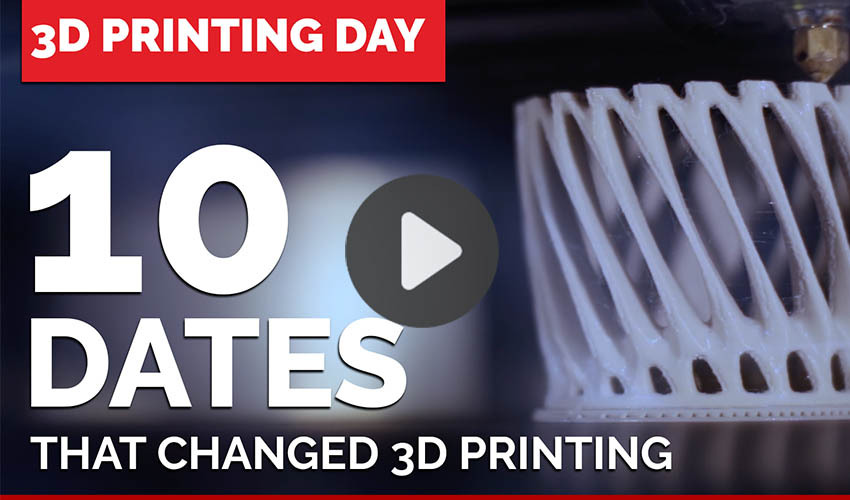
TOP 1: 3D Printing Day: 10 Dates that Changed 3D Printing
This week, on the 3rd of December, we celebrated international 3D printing day! Charles Hull developed the first 3D printing technology, stereolithography, only compatible with photosensitive thermoset polymers, in order to facilitate the production of prototypes. Not long after, Hull printed the first ever 3D printed object, an eye wash cup. Today, after over three decades of rapid growth, development and innovation, 3D printers are capable of far more, from printing houses, parts for cars and rockets, meat alternatives, to a miniature functioning human heart. 3D printing is changing the way products are manufactured worldwide: minimising waste; maximising sustainability; and permitting mass customisation to cater to specific consumer needs. Additive manufacturing has had, and will continue to have, an unprecedented impact on medicine, transport, commerce, and society as a whole. Watch our compilation of 10 of the most important moments that changed 3D printing.
Top 2: AM Micro-robots: the 3D Lithography Research Revolutionising Medicine
These 3D printed micro-robots are so small that they can manoeuvre through our blood vessels and deliver medications to certain points in the body. Researchers have been pursuing this goal for years. Scientists at the Swiss Federal Institute of Technology (ETH) in Zurich finally succeeded using a new manufacturing technique, underpinned by the expertise of ETH Professor Salvador Pané’s work. Using 3D lithography, a high-precision 3D printing technique that produces complex objects on the micrometre level, the scientists are able to print metal and plastic with such precision that the two materials are interlocked as closely as links in a chain. These micro-robots will one day revolutionise the field of medicine.
More from the desk
Six other notes from the rest of the bench.
 ApplicationsThe Lamborghini Sián FKP 37 offers the most customisations everThe Lamborghini Sián FKP 37 has arrived, and it’s the brand’s first supercapacitor-based hybrid V12. Lamborghini has been using additive manufacturing for prototyping purposes for a while now. Quite recently, the company adopted Carbon’s 3D printing technology, Digital Light Synt
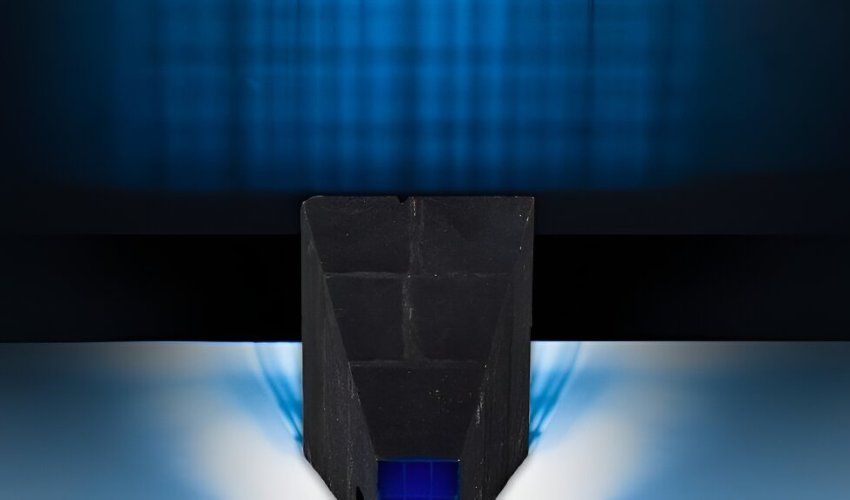 Materials3D Printing Innovates Neutron Science With “Frankenstein-Design” CollimatorIn the industry of neutron science, unlocking the secrets of materials at the atomic level hinges on precise tools. Researchers at Oak Ridge National Laboratory (ORNL) have achieved a breakthrough in this domain by developing a novel approach to designing…
 Software3DEXPERIENCE World 2025: What Impact Will AI and Robotics Have on Humanity?3DEXPERIENCE World 2025, the event organized by Dassault Systèmes that brings together thousands of professionals, designers, engineers, makers and creatives each year, has ended. This year it was held in Houston, Texas, February 23-26. 3DEXPERIENCE World is an opportunity to&hel
 NewsPreserving Palm Leaf Wisdom With 3D PrintingAs recent examples have shown, 3D printing and scanning technologies are becoming widespread and essential tools for preserving cultural works and items of historical significance. Among many of the benefits afforded by 3D printing, the inexpensive means to print a…
 NewsCould a 3D Printed Device Be the Answer to More Powerful Cell Phones and WIFI?3D printing is already being used in incredible ways all over the globe. From bioprinting to 3D printing in construction, it seems that the applications for additive manufacturing are almost limitless. Now, researchers a team of engineers and scientists from…
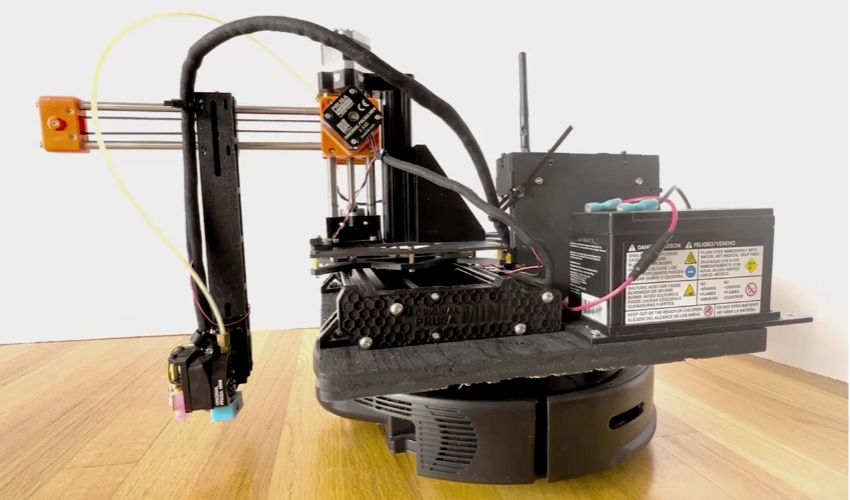 PrintersMobiPrint: The Autonomous 3D Printer That Could Revolutionize AccessibilityAll 3D printers, despite the diversity of technology, must be anchored in one place to print. They can, of course, be transported from place to place, but always by humans: none of them have a mechanism that allows them to…