Materials
3D Printing Innovates Neutron Science With “Frankenstein-Design” Collimator
In the industry of neutron science, unlocking the secrets of materials at the atomic level hinges on precise tools. Researchers at Oak Ridge National Laboratory (ORNL) have achieved a breakthrough in this domain by developing a novel approach to designing…
- 3 min read
- Materials
- Six more stories
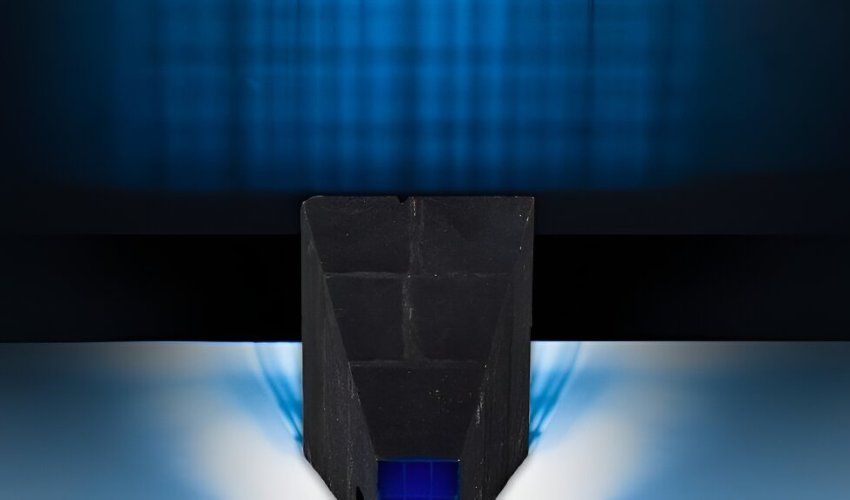
In the industry of neutron science, unlocking the secrets of materials at the atomic level hinges on precise tools. Researchers at Oak Ridge National Laboratory (ORNL) have achieved a breakthrough in this domain by developing a novel approach to designing neutron collimators through 3D printing. These crucial components enable neutron collimation, a critical step in neutron scattering experiments, which allows scientists to study materials at the atomic scale. This new method leverages advanced 3D printing techniques to create highly precise, multi-part collimators, overcoming limitations encountered with traditional single-piece designs.
Traditionally, the challenge of crafting a one-piece collimator has been met with significant hurdles. However, a team of experts led by Fahima Islam, a neutron scientist at ORNL’s Spallation Neutron Source, discovered a novel solution through what they refer to as a “Frankenstein design” strategy. Rather than trying to produce one large monolithic structure, the team instead opted to 3D print multiple components that could then be easily assembled into a cohesive collimator.
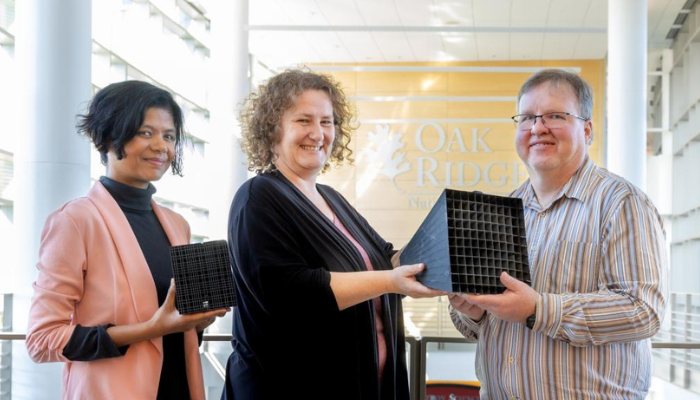
The team behind the “Frankenstein Design” collimator: Fahima Islam, Bianca Haberl and Garrett Granroth
Collimators, similar in function to specialized funnels, are crucial in guiding and filtering neutrons towards detectors, thereby minimizing unwanted interference during experiments. Neutrons that fail to interact with the sample material or scatter off surfaces can distort data, requiring precise collimation to isolate the desired signals. A fully customizable, 3D printed collimator can offer the improved accuracy needed. Speaking on the effect of the unfiltered neutrons, Islam stated, “These unwanted neutrons produce undesirable signatures in the data, which is why we were working to produce a 3D printed collimator that could be custom designed to filter out these unwelcome background features during different types of neutron scattering experiments.”
More from the desk
Six other notes from the rest of the bench.
 ApplicationsWake Forest researchers create lab model of the human bodyUsing bioprinting techniques, researchers at the Wake Forest Institute for Regenerative Medicine have developed a miniature lab model of the human body. This model contains miniaturized human organs such as the heart, lungs and liver, and will be used to…
 NewsIn Seoul, 3D Printing Has Been Used to Create a Carbon-Neutral City Model Called Habitat One3D printing is one of the best allies of our planet to preserve its fauna and flora in many aspects. We have seen how marine ecosystems have been reconstructed to help preserve others as well as the creation of things…
 NewsInfraredTags, Invisible Barcodes Embedded in 3D Printed ObjectsAt MIT, a fourth-year doctoral student in the Department of Electrical Engineering and Computer Science has developed a method to “lock” information into a physical object. Using 3D printing and a camera that uses the infrared (IR) range, he can…
 GuidesPawsthesis: The Project 3D Printing Leg Prostheses for DogsAdditive manufacturing is becoming increasingly popular. This is evident in the widening array of areas in which it is used. In addition to dominant sectors such as the automotive industry or aerospace , 3D printing technologies are now increasingly being used in smaller…
 News3D Printing and Agriculture: New Frontiers in FarmingAgriculture is constantly evolving. Throughout history, the sector has taken advantage of technological advances that have mainly increased productivity and improved food quality. However, agriculture is facing new challenges, such as climate change and strong demand for products
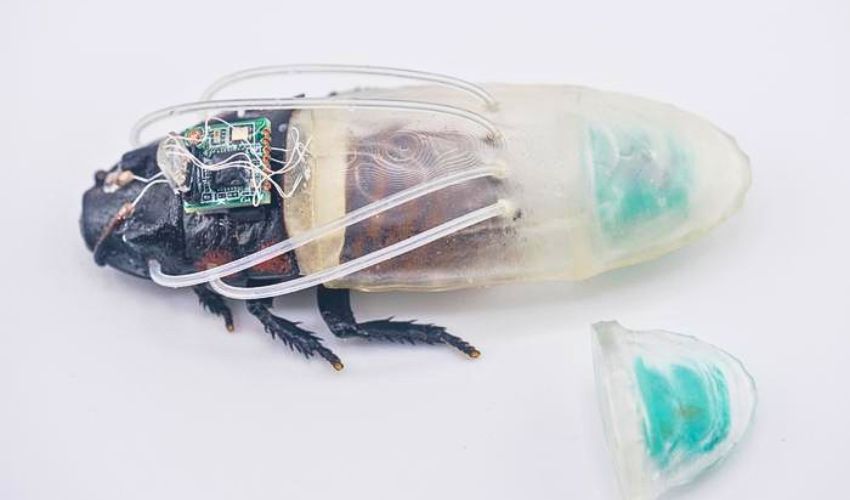 News3D-Printed Suit Lets Cyborg Cockroaches Dive UnderwaterCockroaches are usually the last creatures anyone wants to encounter. But researchers at Nanyang Technological University and Waseda University have turned them into unlikely rescue tools, fitting living insects with 3D-printed underwater suits that let them navigate flooded envi