Applications
TISSIUM receives FDA approval for its polymerizable vascular sealant
TISSIUM was founded in 2013 to address one of the most persistent medical challenges since the inception of medical procedures: to reconstruct damaged tissue. The medtech company developed a proprietary technology, called biomorphic programmable polymers, to transform the way tis
- 3 min read
- Applications
- Six more stories
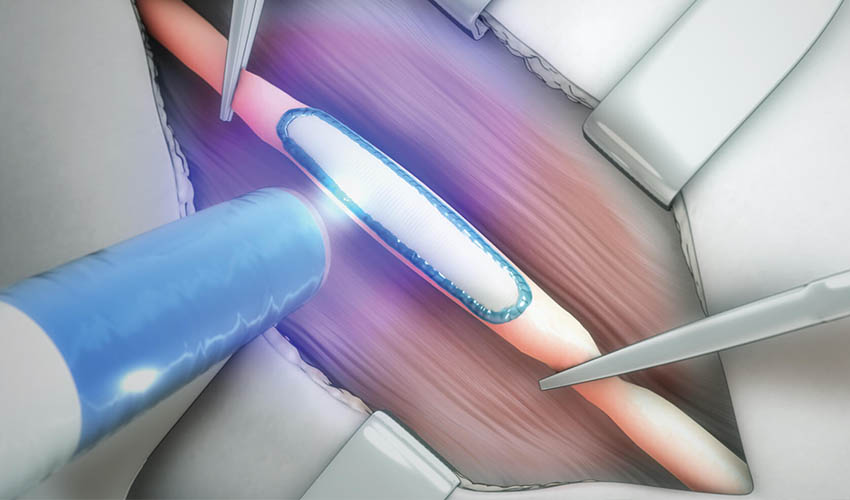
TISSIUM was founded in 2013 to address one of the most persistent medical challenges since the inception of medical procedures: to reconstruct damaged tissue. The medtech company developed a proprietary technology, called biomorphic programmable polymers, to transform the way tissues are repaired, leading to the restoration of their natural function. The technology was initially developed at MIT, Brigham and Women’s Hospital, and Harvard Medical School. Recently, the company received approval from the U.S. Food and Drug Administration (FDA) for its Investigational Device Exemption application for its vascular sealant.
The company’s biomorphic programmable polymer technology can work similarly to other bioprinting technologies as it enables the layer by layer construction of 3D structures, but also the repair of damaged tissue. TISSIUM uses naturally occurring compounds such as glycerol and sebacic acid in its pre-polymer mixture. The high-viscosity of the pre-polymer allows it to be precisely applied to tissues, with little displacement from other body fluids. Using a blue-light, the pre-polymer is activated so that the resulting bond is both adhesive and elastic, allowing the polymer to comply with the underlying tissue while remaining strongly adhered, essentially acting as tissue itself. TISSIUM is also capable of using the pre-polymer as a resin to build high-resolution 3D printed devices or to load it with drugs before being added to the body.
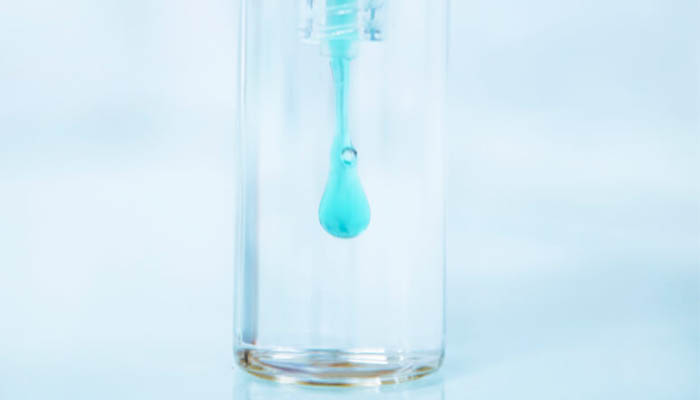
The pre-polymer is not displaced by other bodily fluids when applied to tissue | Image via TISSIUM
In the particular case of its vascular sealant, TISSIUM explains that it is designed to address the issue of quickly achieving hemostasis (process to prevent bleeding) following peripheral vascular surgeries. It also offers biocompatibility and a simple preparation and application process for surgeons. In this application, the configuration of TISSIUM’s polymer complements sutures as a sealant for a fully effective surgical closure.
More from the desk
Six other notes from the rest of the bench.
 SoftwareYeggi, The Search Engine to Find 3D FilesIn 3D printing, it all starts with a 3D file sent to the 3D printer. Creating such a file can be difficult for a user who has no experience in modeling. That’s why they can go through platforms and marketplaces…
 NewsDeloitte’s 3D Printing Predictions For 2019The consulting and audit company, Deloitte, has published its 2019 predictions for the additive manufacturing industry. Deloitte publishes these annually in its Technology, Media and Telecommunications Predictions which concern the general trends for digital technologies. Deloitt
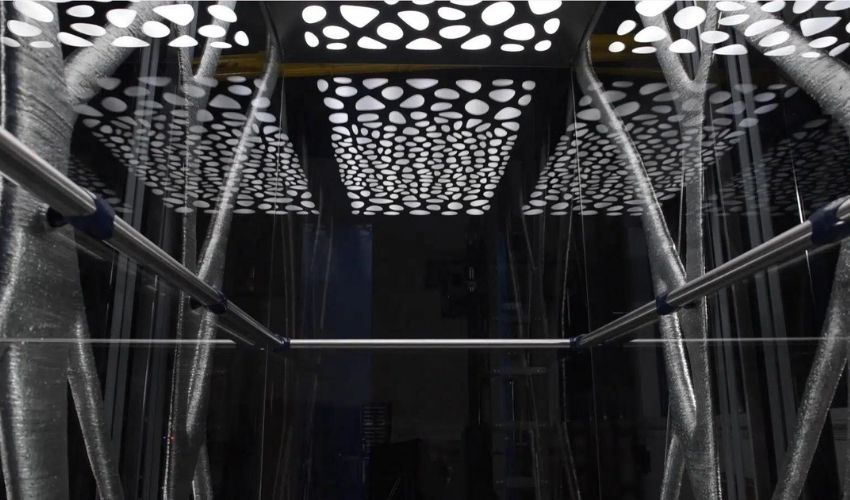 NewsMX3D and Schindler Have Used 3D Printing to Design an ElevatorWhat began in 1857 in the Haughwout department store in New York has become an indispensable part of our lives: the passenger elevator. However, we realize that although we are in one almost every day, it rarely leaves a lasting…
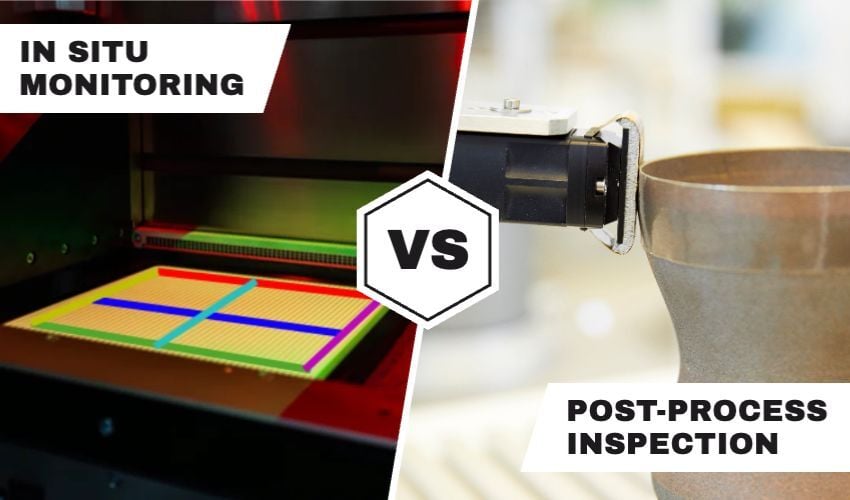 NewsIn-Situ Monitoring vs. Post-Process Inspection: Which Method Better Ensures Quality in Additive Manufacturing?When metal parts are produced using additive manufacturing for demanding industries such as aerospace, medical, and automotive, failure is not an option, and simply having the printer complete a job is not enough. Manufacturers need to be sure there are…
 Applications3D Printed E-Ring Can Monitor Glucose Levels on a PhoneResearchers from the National and Kapodistrian University of Athens have developed a 3D printed electrochemical ring (e-ring) that enables diabetics to monitor their glucose levels from a smartphone. This allows the user to monitor their blood sugar levels just by…
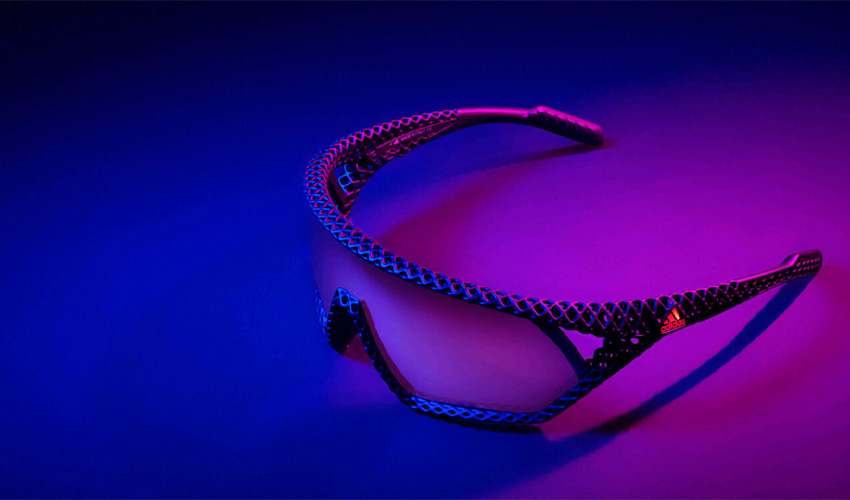 NewsAdidas Limited-Edition 3D Printed SunglassesIf you follow 3D printing news closely, you are probably well aware that Adidas, like many other big sports brands, uses additive manufacturing to produce various sporting gear and accessories. For instance, the 4D Fusio sneakers, the FUTURECRAFT.STRUNG and the ALPHAEDGE…