Applications
3D Printed E-Ring Can Monitor Glucose Levels on a Phone
Researchers from the National and Kapodistrian University of Athens have developed a 3D printed electrochemical ring (e-ring) that enables diabetics to monitor their glucose levels from a smartphone. This allows the user to monitor their blood sugar levels just by…
- 3 min read
- Applications
- Six more stories

Researchers from the National and Kapodistrian University of Athens have developed a 3D printed electrochemical ring (e-ring) that enables diabetics to monitor their glucose levels from a smartphone. This allows the user to monitor their blood sugar levels just by connecting the ring to their smartphone, without the hassle that accompanies traditionally blood-sample based methods. This follows a wider increasing demand for patient-friendly and noninvasive methods, particularly wearable sensors which monitor glucose through sweat. The researchers’ endeavor to create a user-oriented solution, is reflected throughout the process as well as in their finalized product itself.
Typically, glucose levels are monitored using a blood glucose meter or a continuous glucose monitor by pricking a finger. This method can be painful which in turn can act as a deterrent, causing infrequent monitoring. This can result in an increased risk of hyperglycemia or hypoglycemia, respectively referring to too high and too low blood sugar levels. The 3D printed e-ring, however, relies on sweat to noninvasively detect glucose levels, thus encouraging more frequent monitoring. Moreover, the researchers’ focus on user friendliness is evident in their effort to develop an accessible solution. Not only can the 3D printed e-ring be connected to most Android smartphones, but it can also be 3D printed using a commercial dual-extrusion 3D printer.
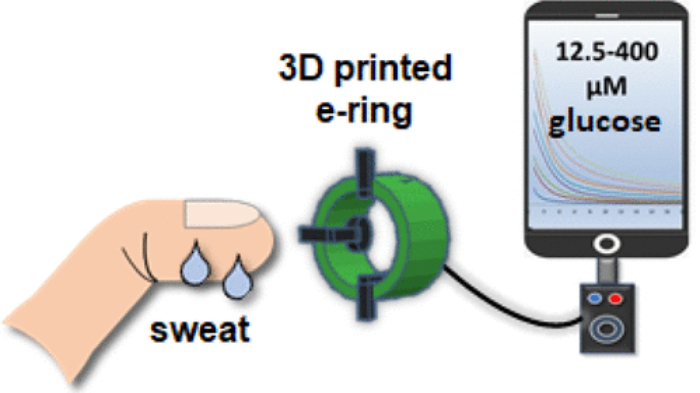
The e-ring can be connected to most Android smartphones to monitor glucose levels. (Photo Credit: American Chemical Society)
The researchers produced four prototypes using Thermoplastic Polyurethanes (TPUs) and carbon-based polylactide (PLA). Each prototype comprises three carbon-based plastic electrodes fabricated using a conductive filament. The electrodes are integrated at the inner side of a plastic ring, fabricated using non-conductive filament. The 3D printed e-ring is an amperometric device which detects ions in a solution, in this case human sweat, based on electric current or changes in electric current. The e-ring was modified with an electrodeposited gold film so that it could then be fitted to a miniature potentiostat (electrical hardware used to control three-electrode cells). The potentiostat is addressable to a smartphone with which users are able to monitor their glucose levels.
More from the desk
Six other notes from the rest of the bench.
 NewsWhat do we know about the deal between the US Air Force and Essentium?Founded in 2013, Essentium provides industrial 3D printing solutions aiming to disrupt conventional manufacturing. Recently, the Texas-based company has announced that they signed a multi-year contract with the United States Air Force. The government agency has been interested in
 NewsXerox Officially Sells Elem Additive SolutionsIt has been a tumultuous year so far in the 3D printing world. There have been constant discussions of potential mergers and acquisition, for example the uncertainty surrounding Stratasys with Desktop Metal, Nano Dimension (though it has officially pulled out…
 NewsSavorEat Partners With Sodexo to Distribute its 3D Printed Meat Alternative in American UniversitiesIsraeli startup SavorEat, which specializes in developing alternatives to meat via 3D printing, has announced a partnership with Sodexo to offer gluten-free, kosher and vegan products to American universities. To be more precise, the American subsidiary of the multinational, Sode
 GuidesWhat’s Next For Fabrica Group After Acquisition by Nano Dimension?Never has it been clearer that the field of additive manufacturing never sleeps. Though many countries have still been struggling with lockdowns and resurgences of COVID-19, AM manufacturers have stayed busy. This is evident especially in the numerous acquisitions and…
 NewsVenture Orbital Systems Inaugurates the First French Production Site for Rocket LaunchersIn Reims, France, a region perhaps best known for their champagne, Venture Orbital Systems (VOS), a start-up specializing in the development of micro space launchers and rocket engines, has launched the first French production site for rocket launchers. Additionally, the…
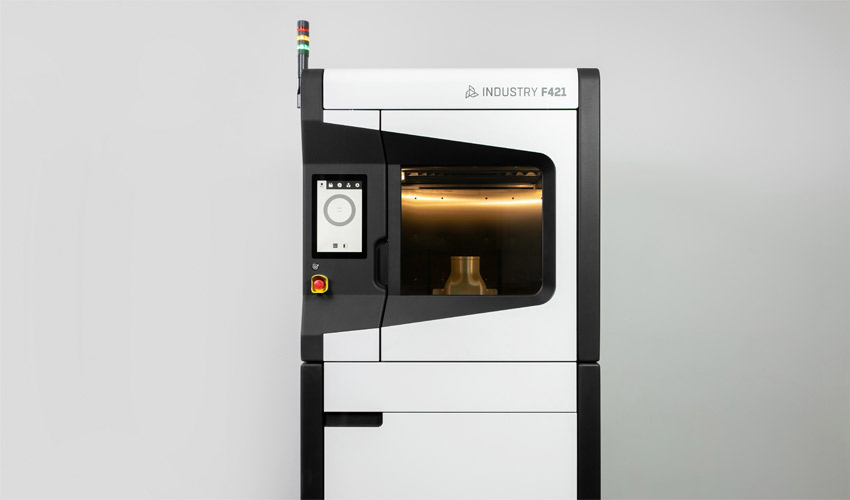 Printers3DGence Focuses on Reliable and Repeatable High-Performance 3D PrintingEuropean manufacturer 3DGence has announced the launch of a new industrial FFF machine which is compatible with high performance materials. Called INDUSTRY F421, it joins the already proven range of printers from the company and seeks to meet the needs…