Materials
Topology Optimization for 3D printing
Additive manufacturing, in contrast to traditional machining techniques, makes it possible to produce parts with complex geometries whose total weight can be optimized using a numerical method called topology optimization. This method also maximizes the mechanical strength of the
- 3 min read
- Materials
- Six more stories
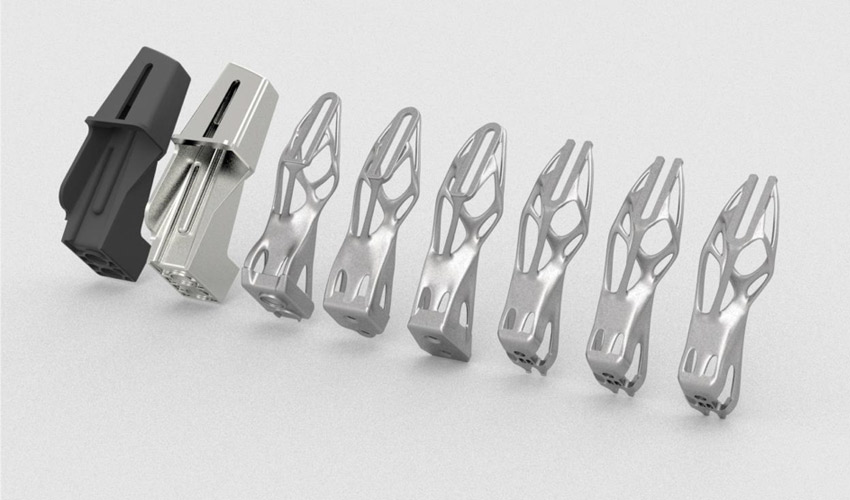
Additive manufacturing, in contrast to traditional machining techniques, makes it possible to produce parts with complex geometries whose total weight can be optimized using a numerical method called topology optimization. This method also maximizes the mechanical strength of the part created. Topology optimization is part of numerical design which allows to find, thanks to mathematical formulas, the optimal material distribution in a given volume subjected to more or less important mechanical constraints.
Topology optimization therefore consists of removing the material that is not subject to stress, using dedicated software. Among the most well-known solutions are Ansys Discovery, Tosca from Dassault Systèmes, Within Labs from Autodesk, Inspire from SolidThinking, Netfabb and Simufact Additive.
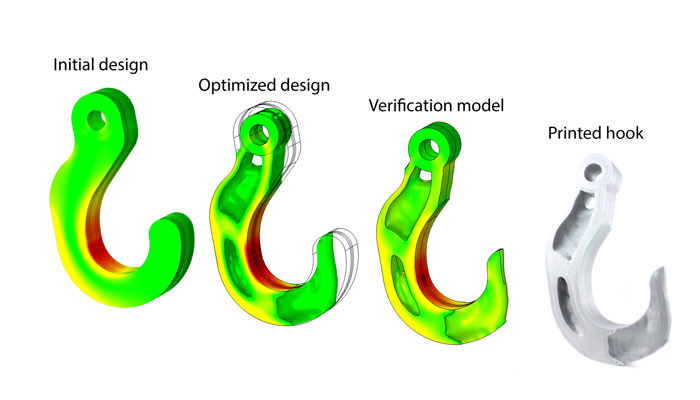
The design process via topology optimization
Topology optimization: how does it work?
Conventional numerical design processes involve applying loads to a part that has already been manufactured and evaluating where it weakens. Engineers must then alter the design until the part meets the given mechanical constraints. With topology optimization, the logic is different: the mechanical loads represent input data that will allow the software to propose a new geometry for the part. Therefore, there should be less iterations made to the design of the part, considerably reducing design and manufacturing lead times.
More from the desk
Six other notes from the rest of the bench.
 Guides#3Dstartup: Azul 3D and its ultra-fast large format resin 3D printerResin 3D printing processes are now among the most widely used in the additive manufacturing market, offering high precision and resolution. One of the challenges this process still faces, however, is the limited size of the build plate and printing…
 MaterialsResearchers Use New Compound, MXene, and 3D Printing to Improve Satellite Communication3D printing is gaining ground in many areas, including aerospace and defense. Already, additive manufacturing has been used to produce parts for Boeing’s combat helicopters and satellite antennas in space. In addition, research projects on the subject of 3D printing…
 PrintersBCN3D Has Launched its New 3D Printer Cloud Management TechnologyEarlier this year, leading FDM printer manufacturer BCN3D acquired 3D printing cloud software management platform AstroPrint. Now, building on that acquired cloud technology, the Barcelona-based company is launching a new cloud platform, that will allow the centralization of remo
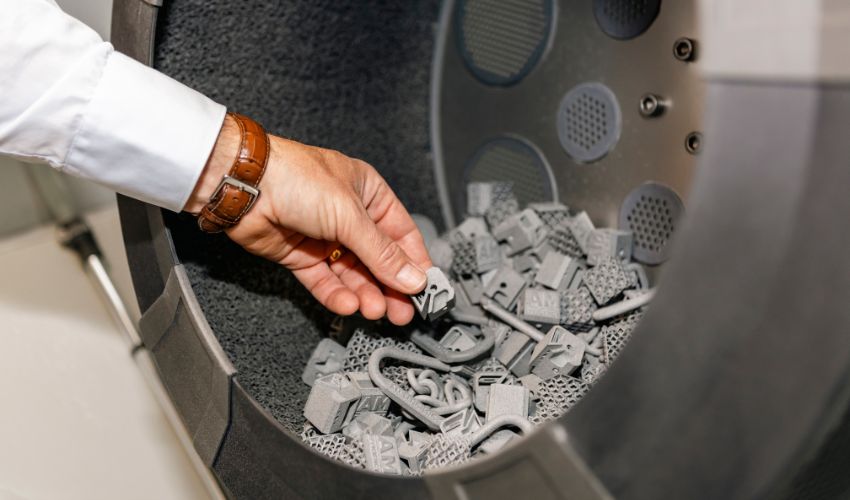 GuidesAM Efficiency on the Critical Importance of Post-Processing for Powder-Based 3D PrintingWe all know the steps of 3D printing: design, slicing, 3D printing and then? Although it is a critical stage, the last step, post-processing, or all the different processes and methods that are used after the printing of a part…
 NewsForma Foods Uses 3D Printing to Create Plant-Based Alternatives to MeatWe’ve already touched on the concept of 3D-printed meat through various pioneering companies in the sector, such as Redefine Meat and Steakholder Foods. Today, we turn our attention to start-up Forma Foods, which uses 3D printing to create plant-based alternatives…
 News#3DQUIZ: Do you really know what happened in 2018?We are reaching the end of the year! And we at 3Dnatives are interested in knowing how much you actually caught on to in 2018. Therefor we created a small quiz to test your 3D printing knowledge. Checking if you…