Applications
AMS mini, a 3D printed device capable of eliminating airborne viruses
The seriousness of the current health situation has led many companies to seek and develop initiatives to curb the spread of the virus as much as possible. Winsun is a perfect example of this, with the creation of small 3D…
- 3 min read
- Applications
- Six more stories
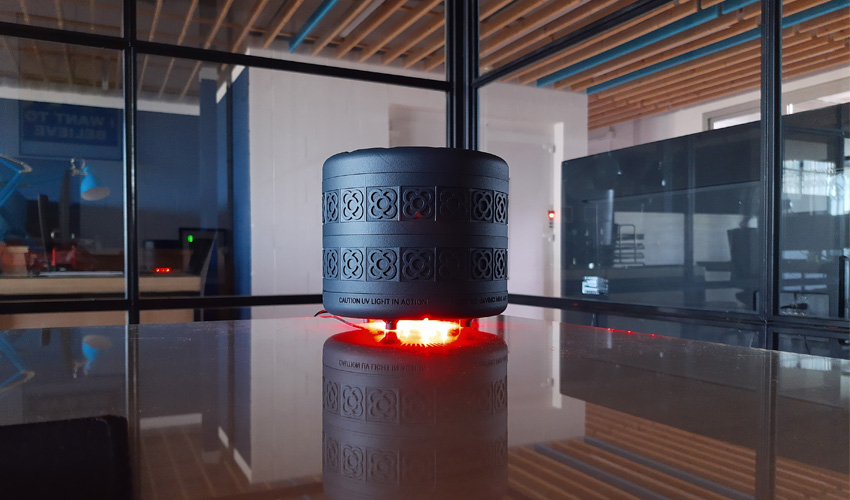
The seriousness of the current health situation has led many companies to seek and develop initiatives to curb the spread of the virus as much as possible. Winsun is a perfect example of this, with the creation of small 3D printed isolation rooms to stop the coronavirus pandemic. The industrial engineering company FICEP S3 has also used additive manufacturing to design a device capable of sterilizing the air to rid it of bacteria and micro-organisms that may exist, including airborne droplets that may contain the COVID-19 virus. Called AMS mini, it is compact enough to be applied in many spaces such as hotels, offices, factories, laboratories or even hospitals.
FICEP S3 is a Spanish company created by a group of engineers with extensive experience in the industrial world, whose aim is to obtain solutions and innovations through the use of the latest technologies. Initially, this modular air management device was designed to dry paint; it has been adapted in a more compact format to respond to the health crisis. The AMS mini project was achieved in part through additive manufacturing, specifically through HP Multi Jet Fusion technology and the use nylon (PA12). The company FICEP S3 also states that it is working on another project with the company KUVA to develop a respirator accessible to sub-Saharan countries.
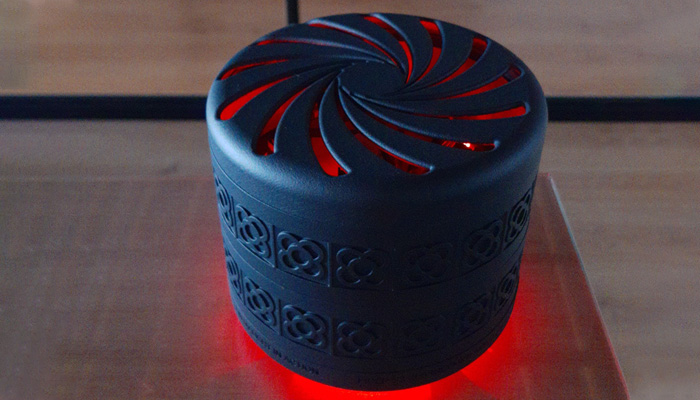
The AMS mini device is capable of cleaning the air
Operation of the AMS mini and elimination of COVID-19
This invention could reduce the expansion of COVID-19 which, although transmitted in most cases by the projection of droplets from sneezing for example, scientists believe it remains in the air for some time in special cases. According to the World Health Organization (WHO), there are indeed specific circumstances in which droplets containing coronavirus particles can remain in the air for up to three hours on average after being expelled. Aerosols are particles less than 5 micrometers in diameter that result from the evaporation of larger droplets. They can remain suspended in the air depending on the heat and humidity of the environment and can be transmitted over distances of more than one metre.
More from the desk
Six other notes from the rest of the bench.
 NewsDesktop Metal Launches Industry-Focused ETEC 3D Printing BrandIt has been a little over a year since Desktop Metal (DM) acquired leading DLP printer manufacturer, EnvisionTEC. And in honor of the anniversary, or perhaps just coincidental timing, DM has now announced the launch of ETEC, a new brand…
 NewsTop 5 Videos: DyeMansion launch chess pieces with Pantone colorsThis week we’ve chosen five more interesting videos about 3D printing and additive manufacturing. This includes industry success stories from Matsuura’s Additive Manufacturing facility to 3M’s 3D printed PTFE. Up next are chess pieces which DyeMansion 3D printed
 MaterialsFABULOUS Sets Course for the USA with Certified, Food-Safe 3D-Printing MaterialsIt is no secret that 3D printing is becoming more and more popular and is expanding its field of application to diverse areas. Already established in the verticals of aerospace, the automotive sector and the medical field, additive manufacturing is…
 PrintersBMF Has Released its Highest-Resolution Micro-Scale 3D Printer, microArch S230As summer winds down and school gets back into session, so are companies kicking it back into gear. After a restful break, 3D printing companies have signalled the start of September with a flurry of news. Among these, Boston Micro…
 NewsWEBINAR: Hybrid Manufacturing – Transforming the Future of Machine ShopsThe market for the various manufacturing methods is large and constantly changing. What is clear, however, is that additive manufacturing is becoming increasingly popular due to the numerous advantages it offers. The technology can also complement traditional manufacturing method
 PrintersBCN3D Has Launched its New 3D Printer Cloud Management TechnologyEarlier this year, leading FDM printer manufacturer BCN3D acquired 3D printing cloud software management platform AstroPrint. Now, building on that acquired cloud technology, the Barcelona-based company is launching a new cloud platform, that will allow the centralization of remo