Printers
Stratasys introduces Digital Anatomy 3D printer, enabling live-tissue feel and biomechanical realism
In the medical sector, professionals have trained on cadavres, animals, and traditional or virtual models to prepare for surgery, all of which have significant limitations. Additive manufacturing has been changing the way medical professionals prepare for an important operation,
- 3 min read
- Printers
- Six more stories
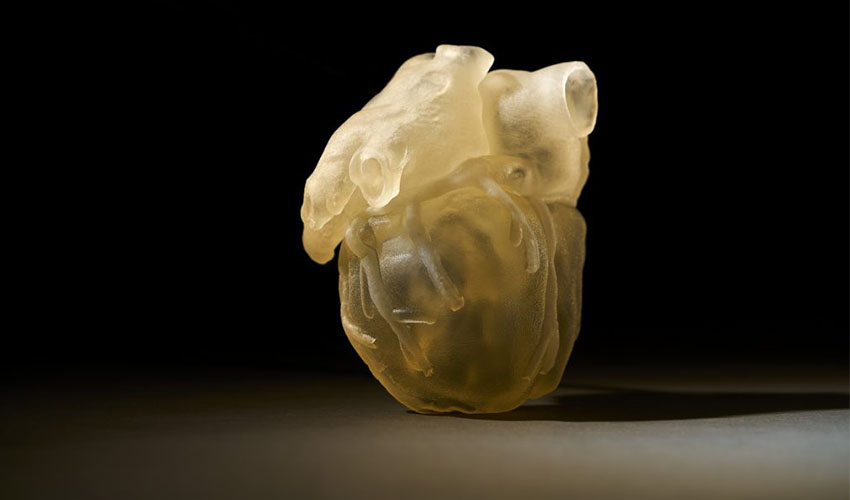
In the medical sector, professionals have trained on cadavres, animals, and traditional or virtual models to prepare for surgery, all of which have significant limitations. Additive manufacturing has been changing the way medical professionals prepare for an important operation, avoiding mistakes at the time of an important surgery is key. Instead of using models that just approximate human anatomy, they can now use 3D printed alternatives that are far more accurate. One of the leaders in the 3D printing market, Stratasys is actually further expanding its commitment to this segment of the medical field by introducing a new solution that is even more responsive.
In fact, the manufacturer’s newest solutions enables the creation of designs that replicate the feel, responsiveness and biomechanics of human anatomy in medical models. Called J750 Digital Anatomy, this 3D printer can for example recreate actual tissue response, letting the user focus on specific pathologies. Stratasys Healthcare Business Unit Head, Eyal Miller comments: “We’re giving surgeons a more realistic training environment in no-risk settings. We also anticipate this will enable medical device makers to improve how they bring products to market by performing design verification, validation, usability studies and failure analysis with these new models.”

The J750 Digital Anatomy 3D Printer defines colors, transparencies, textures and finishes, it is possible to create an anatomical model that’s as close to the real thing as possible | Image via Stratasys
In addition to the 3D printer itself, the company is launching three new materials. The TissueMatrix™, GelMatrix™, and BoneMatrix™ can be used to create cardiac, vascular, and orthopedic 3D printing applications. Moreover, a blood vessel cleaning station that removes support material from inside 3D printed blood vessels is also being released.
More from the desk
Six other notes from the rest of the bench.
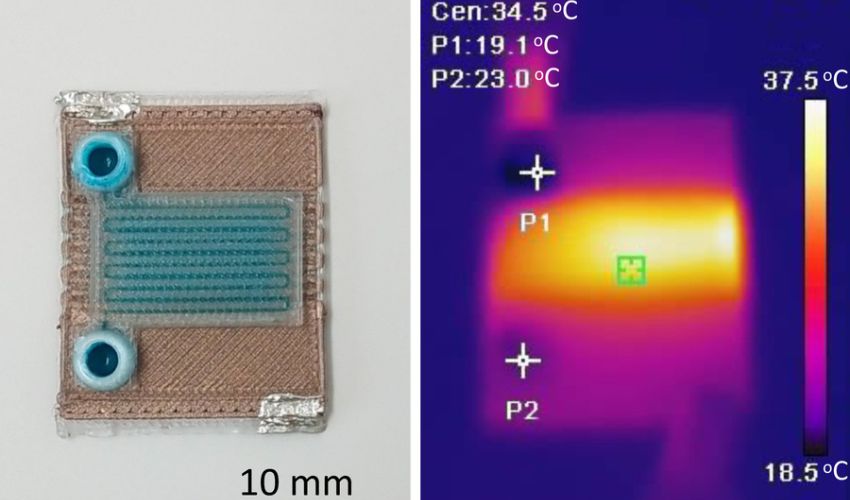 ApplicationsMIT Researchers Use 3D Printing to Create a Self-Heating Microfluidic DeviceYou don’t have to be an engineer with extensive technical knowledge to come into contact with microfluidics and their applications. The aim of microfluidic systems is to control small quantities of liquids in tiny networks and channels, and to discuss…
 MaterialsGravity Industries & Ricoh 3D Partner On Human Flight ProjectRicoh 3D has announced they are partnering once again with Gravity Industries, this time with the goal of producing Gravity’s latest human flight project, the Electric Jet Suit. Having experienced great success with Gravity’s Jet Suit over the past four…
 MaterialsThe Top Hybrid Materials to Replace Classic Filaments for your 3D PrinterThe process of 3D printing by extrusion, also known as deposition of molten material, is one of the most popular and commonly used methods in the additive manufacturing market. This is due to its ability to offer a wide range…
 NewsDesktop Metal Launches Industry-Focused ETEC 3D Printing BrandIt has been a little over a year since Desktop Metal (DM) acquired leading DLP printer manufacturer, EnvisionTEC. And in honor of the anniversary, or perhaps just coincidental timing, DM has now announced the launch of ETEC, a new brand…
 NewsWEBINAR: Revitalizing the Naval Industry with Elastomer Additive ManufacturingThe benefits of additive manufacturing in a variety of sectors are well-known. Though one industry that is perhaps less discussed but has been rapidly integrating AM thanks to its unique advantages is maritime. This is especially due to the many…
 PrintersThe American Manufacturers of FDM 3D Printers Under $5000Even as additive manufacturing continues to expand worldwide, it is undeniable that the largest market for 3D printing is the United States. Indeed, the country regularly tops the list for not just the largest installed base of 3D printers in…