Materials
Gravity Industries & Ricoh 3D Partner On Human Flight Project
Ricoh 3D has announced they are partnering once again with Gravity Industries, this time with the goal of producing Gravity’s latest human flight project, the Electric Jet Suit. Having experienced great success with Gravity’s Jet Suit over the past four…
- 3 min read
- Materials
- Six more stories

Ricoh 3D has announced they are partnering once again with Gravity Industries, this time with the goal of producing Gravity’s latest human flight project, the Electric Jet Suit. Having experienced great success with Gravity’s Jet Suit over the past four years, the companies have decided to develop an electric version of the Jet Suit which Gravity plans to debut at the 2021 Goodwood Festival of Speed. This recent endeavor is made possible thanks to Ricoh 3D’s expertise in polypropylene technology. “Thanks to polypropylene and its organic nature, people see a human who is flying when someone is in the Jet Suit. They aren’t strapped into a device or seated in a vehicle, they appear to be genuinely flying and it’s that distinction that makes all the difference,” said Sam Rogers, Gravity’s Chief Designer.
Over the past few years, Gravity Industries has taken their Jet Suit technology across the globe to 33 countries, conducting Search & Rescue trials, commercial flight training, and racing on Top Gear. Working with Ricoh 3D has demonstrated the market viability of producing human flight gear. Combining Gravity’s innovative designs with Ricoh’s flagship material, polypropylene, allowed for the Jet Suit flight experience to be comfortable and safe, yet, cost-effective to produce.

(Photo Credit — Instagram: @richardmbrowning, Founder & Chief Test Pilot at Gravity Industries )
Benefits of Using Polypropylene (PP)
Polypropylene is one of the most widely used thermoplastics in the industrial sector. Among polypropylene’s primary benefits are its low price point, lightweight, and low friction which makes its surface relatively slippery. As for performance characteristics, PP has chemical-resistant attributes, is hydrophobic, has impact resistance, and excellent electrical insulation. “The Jet Suit is a testament to the tenacity of engineering. By pushing the boundaries with both 3D printing and polypropylene, we’re showcasing what’s possible when you have the right expertise and ingenuity. 3D printed polypropylene is 90% recyclable, lightweight and flexible while still being incredibly durable–ideal for taking to the skies. Previously, it would take more than two weeks to custom build the core Suit structure out of aluminum riveting and bolt together manually. Print time is now just 24 hours, taking assembly time from two weeks to two days.”, said Mark Dickin, Head of Ricoh European 3D Printing Operations.
More from the desk
Six other notes from the rest of the bench.
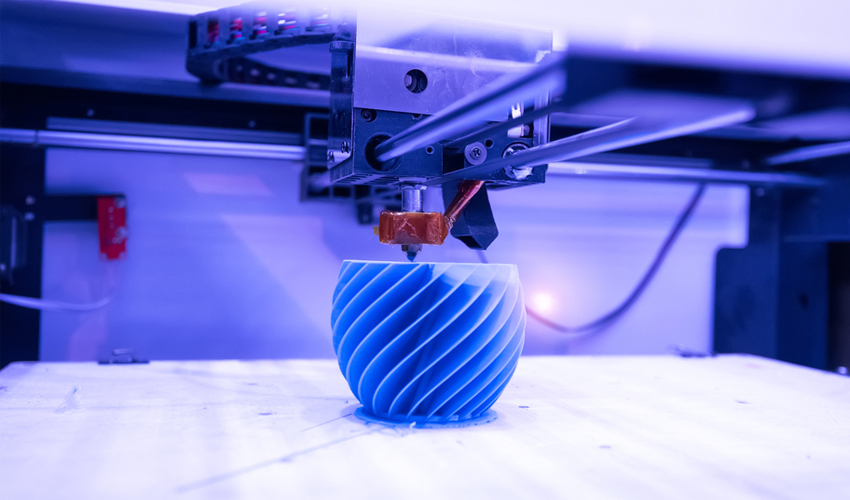 PrintersMIT Engineers make a 10X Faster FDM 3D Printer!Engineers at the Massachusetts Institute of Technology (MIT) have developed an FDM 3D printer that, with the help of a laser, prints 10 times faster than normal office machines. Though it uses a laser, it is still considered a fused deposition…
 Guides30 entrepreneurs in 3D printingWe often report on the latest research, innovations, and developments within additive manufacturing. But what about the bright minds, the entrepreneurs in 3D printing that are actually behind it? There are hardly any limits when it comes to the creative…
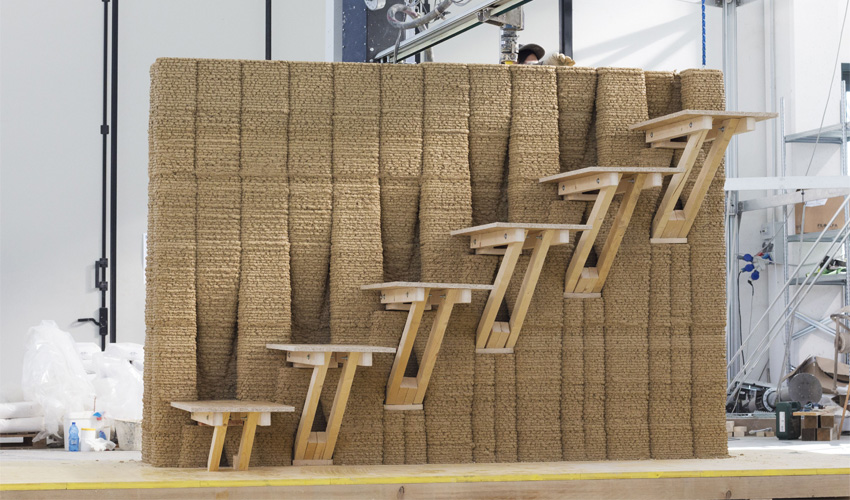 NewsWASP and IAAC create 3D printed wall with embedded staircaseThe concrete 3D printer manufacturer WASP presented its new prototype: a 3D printed wall that integrates the steps of a staircase. In collaboration with the Institute of Advanced Architecture of Catalonia (IAAC), the Italian company used its modular 3D printer…
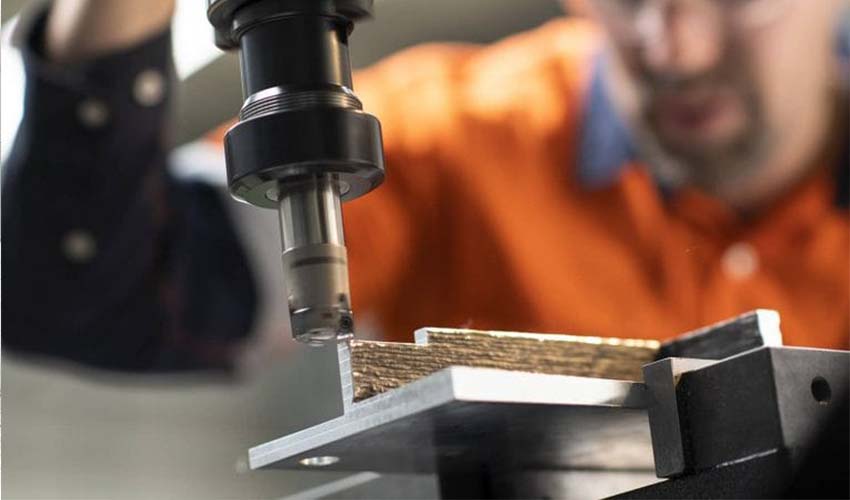 ApplicationsAML3D ships 3D printed marine propellerThe Australian company, AML3D, has shipped a Stainless Steel grade 316L propeller to 3D Printing Corporation (3DPC), a Japanese based 3D printing consultancy firm. Compared to traditional manufacturing technologies, the promise of additive manufacturing is to deliver components a
 GuidesInterview with Julia Körner: About 3D printing in design and its myths3D printing has long ceased to be used only on an industry level, quite the contrary actually. This because the areas in which the 3D technology is used, are very diverse. In addition to 3D printing in construction and architecture , the first designers showing…
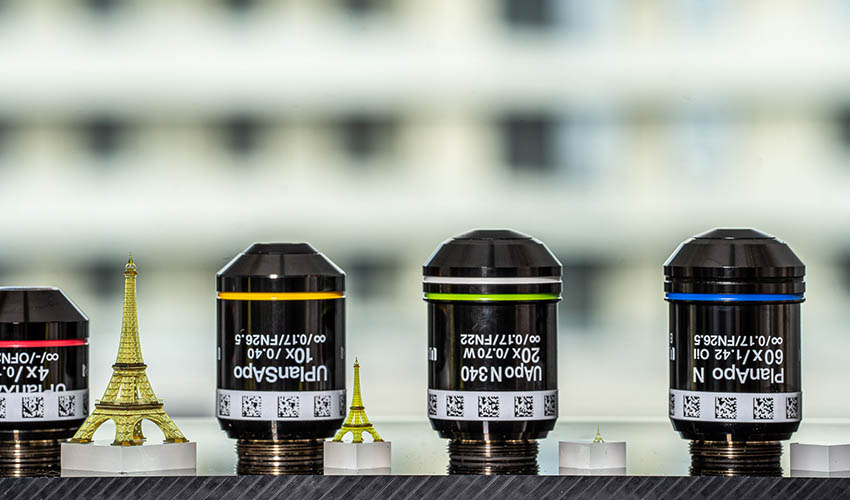 NewsUpNano develops high-resolution desktop 3D printing for micro partsUpNano is a young company based in Vienna that has recently developed a high-resolution microscale 3D printing technology. Based on the 2-photon polymerization process (2PP), the new technique is capable of producing plastic parts with a volume ranging from 100…