Materials
The Top Hybrid Materials to Replace Classic Filaments for your 3D Printer
The process of 3D printing by extrusion, also known as deposition of molten material, is one of the most popular and commonly used methods in the additive manufacturing market. This is due to its ability to offer a wide range…
- 3 min read
- Materials
- Six more stories

The process of 3D printing by extrusion, also known as deposition of molten material, is one of the most popular and commonly used methods in the additive manufacturing market. This is due to its ability to offer a wide range of material compatibility. A 3D FDM/FFF printer, including the most popular solutions, is capable of creating parts from a variety of materials, including plastics, silicone, metal, and even food paste. Filaments are often used by users, with a wide range of choices available. While most of these filaments use thermoplastics such as ABS, PLA, polycarbonate, or high-performance materials, it is important to note that there are also hybrid filaments available. These filaments can offer different results in terms of rendering, finishing, conductivity, resistance, and more. They are composed of a mixture of materials, such as marc, a combination of marc and polycarbonate, coffee grounds, wood, diamond powder, or recycled materials. Today, we invite you to discover some of these 3D printer filaments, including some available with even low-cost solutions.
1 – A Coffee-Based Filament
Manufacturer 3Dfuel has come up with a unique way to recycle coffee grounds by using them to create a new 3D printer filament with a distinct color. The filament, called Wound Up, is part of the c3composites brand and is created by blending coffee grounds with conventional PLA. As a result, it has comparable printing properties to standard PLA filaments. This innovative filament allows makers to use their love for coffee to fuel their 3D printing projects.

2 – A Conductive PLA Filament
ProtoPasta, a company that creates materials for 3D printing based in Vancouver, has created a unique filament. The filament is composed of a composite of PLA plastic that is electrically conductive, and it contains carbon particles. This makes it ideal for use in low-voltage circuits and touch devices. Additionally, the material can be combined with regular PLA in a 3D printer that has dual extrusion capabilities. According to the manufacturer, this material can run a low-voltage electronic board and print conductors for resistors up to 1K with ease.
More from the desk
Six other notes from the rest of the bench.
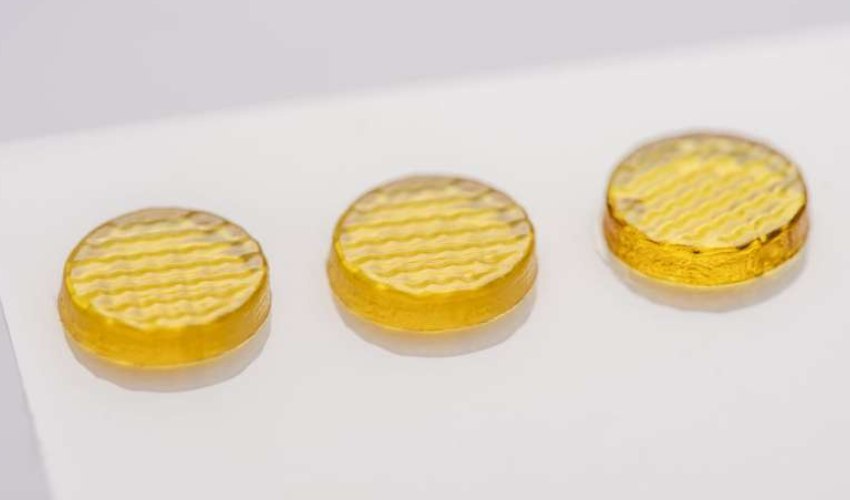 Applications3D Printing Revolutionizes Drug Delivery With Personalized TabletsResearchers at the University of Nottingham’s Centre for Additive Manufacturing have achieved a significant breakthrough in personalized healthcare through a novel 3D printing technology known as multi-material inkjet 3D printing (MM-IJ3DP). This achievement will allow for
  Guides3D Printed Medical Implants: Discover Some of the Most Innovative ProjectsThe medical sector is benefiting greatly from advances in additive manufacturing. Thanks to the ability to create unique models for each patient, personalized medicine is finally becoming a reality. Medical implants represent a particularly sensitive field, as they involve the&he
 News3D Printing Startups of the Year 2017Every month, 3Dnatives interviews 3D printing startups that are working on something innovative in the 3D printing sector. These startups range from manufacturer Markforged, to metal 3D printer manufacturer Desktop Metal, to bio-printing firm Aspect Biosystems. We summarised the
  NewsEssentium Survey shows that investments in AM are paying offIn early February, Essentium, Inc announced the results of the second in a series of findings from independent global research on the current and future use of industrial 3D printing. We previously covered the first survey published in 2019, which…
 MaterialsRecreus, taking 3D filament manufacturing to the next levelUntil a few years ago, FFF technology (Fused Filament Fabrication) had been associated with the maker community, and less so with the industrial sector. Following the evolution of FFF machines, and their materials, the technology began competing in the industrial…
 NewsTop 5 Videos of the Week: Iconic architectural designs thanks to 3D printing…This week we found the top 5 videos about 3D printing and the way additive manufacturing is shaping our society. The technology has infiltrated many sectors, from medical to automotive! Check out our selection of the week to keep up with the innovations! This week we…