Materials
What Are the Soluble Support Materials Available for 3D Printing?
Support removal can be an annoying part of post-processing in 3D printing. However, it does not have to be. If you have a dual-extruder 3D FDM 3D printer, or any other process that allows multi-material printing, you can take advantage…
- 3 min read
- Materials
- Six more stories
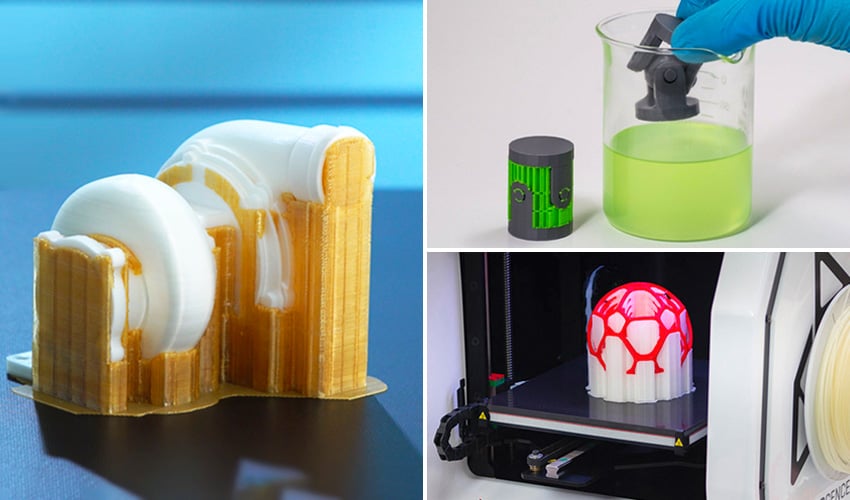
Support removal can be an annoying part of post-processing in 3D printing. However, it does not have to be. If you have a dual-extruder 3D FDM 3D printer, or any other process that allows multi-material printing, you can take advantage of soluble support materials. As their name suggests, soluble support is a material that can be used as for support structures in 3D printing and is soluble, whether in water, a chemical agent or organic agents. But what materials are out there? Find out in our list of some of the most common soluble support materials for FDM 3D printing (though many companies offer their own versions as well), separated by the medium in which they dissolve.
Water-Soluble Materials
PVA
Polyvinyl Alcohol (PVA), along with HIPS, is one of the most popular soluble support materials for intricate structures in FDM 3D printing. As would be expected, PVA’s most notable benefit lies in its water solubility, allowing for effortless removal of these supports and eliminating the necessity for harsh chemicals or time-consuming post-processing. Furthermore, PVA’s water solubility not only streamlines the printing process but also enhances design flexibility, enabling the production of more complex geometries in parts. Its compatibility with various filaments, such as PLA and Nylon, broadens its use, allowing for more visually appealing models and durable prototypes. This material operates within a temperature range of 45-60 °C, rendering a heated bed optional and eliminating the need for an enclosure. Additionally, the printing temperature for PVA falls in the range of 185-200 °C, and no special hotend is required, further emphasizing its user-friendly printing process. Despite challenges like PVA’s moisture sensitivity which calls for proper storage, PVA’s positive features, including transparency, biodegradability, non-toxicity, and ease of dissolving, establish it as a highly beneficial material for molds, decorative objects, and elaborate designs.
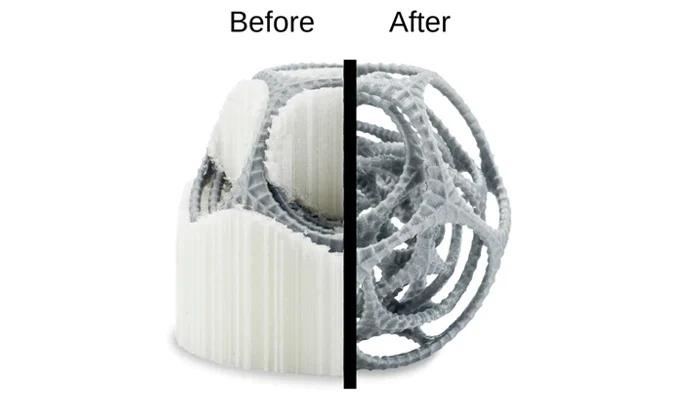
Photo Credits: UltiMaker
BVOH
Another water-soluble material used for support structures in FDM 3D printing is BVOH (Butenediol vinyl alcohol copolymer). It is particularly advantageous in cases where traditional substrates may be difficult to remove or fail to deliver the desired result. In fact, BVOH makes it very easy to remove substrates. Once you’ve printed a 3D object, all you have to do is immerse it in hot water for the support to dissolve completely, 100%. BVOH is practical for printing prototypes, such as small models and those with hard-to-reach spaces for removing supports. The material is also suitable for fine details, jewelry, decorations and complex structures. It imposes no limitations on object shapes during design. What’s more, BVOH is environmentally friendly and can often be disposed of down the drain. It can be printed on a variety of materials, including PLA, ABS, PETG, ASA and elastomeric filaments. To preserve its quality, it is advisable to protect it from humidity, light and UV rays by storing it in a dry place or using it quickly.
More from the desk
Six other notes from the rest of the bench.
 NewsTop 5 Videos: What It Takes to 3D Print an Adaptive Bike SaddleIn this week’s Top 5, the focus seems to be on applications. First, we feature an in-depth video on an adaptive 3D printed bike saddle from Fizik, distributed by New Era Cycle. The video dives into every stage of production…
 GuidesWhat Are the 3D Printing Applications in the Oil & Gas Sector?The oil & gas sector is one of the largest industries in the world as it is a critical part of the energy sector with about 4.2 billion metric tons of oil produced globally in 2021. Though due to climate…
 SoftwareShould You Use SOLIDWORKS For 3D Printing?In industrial sectors and product design, SOLIDWORKS is a CAD solution many rely on. The software has been around since the mid 90s and the latest figures estimate that there are around 9.3 million active users across 80 countries. It…
 NewsTop 5 Videos: Stargate 3D Printing Advances Terran R Rocket for Space ExplorationWelcome to our weekly roundup of the Top 5 most compelling 3D printing videos. This week’s edition kicks off with a fascinating look into Relativity Space’s use of 3D printing, employing their Stargate technology at NASA’s Stennis Space Center to…
 ApplicationsMIT Engineers 3D Print Electrospray Engine Ideal for Small SatellitesHave you heard of electrospray engines? These propulsion systems involve applying an electric field to a conductive liquid, generating a high-speed jet of tiny droplets capable of propelling a spacecraft. Such miniature motors are particularly suitable for small satellites, known
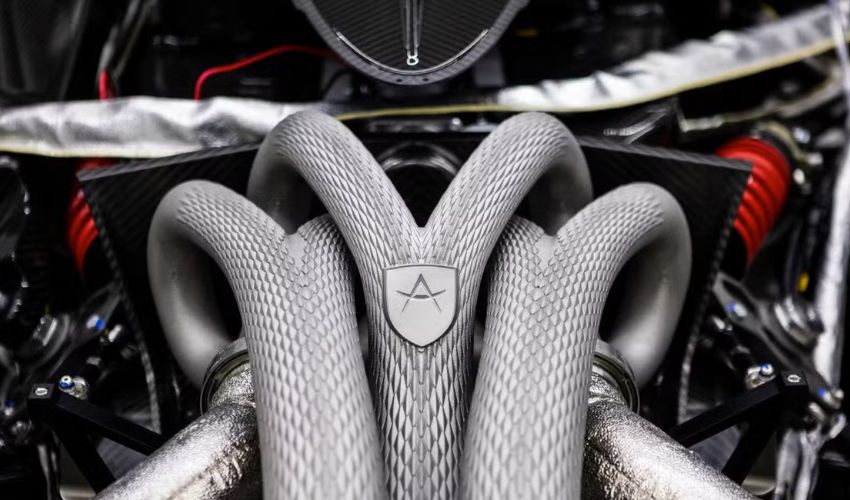 ApplicationsSee the 3D Printed, Dragon-Skin Exhaust Pipes from Apollo AutomobilThe German hypercar manufacturer Apollo Automobil recently revealed that its new Apollo EVO supercar has a stunning feature: tucked under the hood, there’s “dragon skin” exhaust pipes that were made possible thanks to additive manufacturing. The impressive part