Software
Should You Use SOLIDWORKS For 3D Printing?
In industrial sectors and product design, SOLIDWORKS is a CAD solution many rely on. The software has been around since the mid 90s and the latest figures estimate that there are around 9.3 million active users across 80 countries. It…
- 3 min read
- Software
- Six more stories
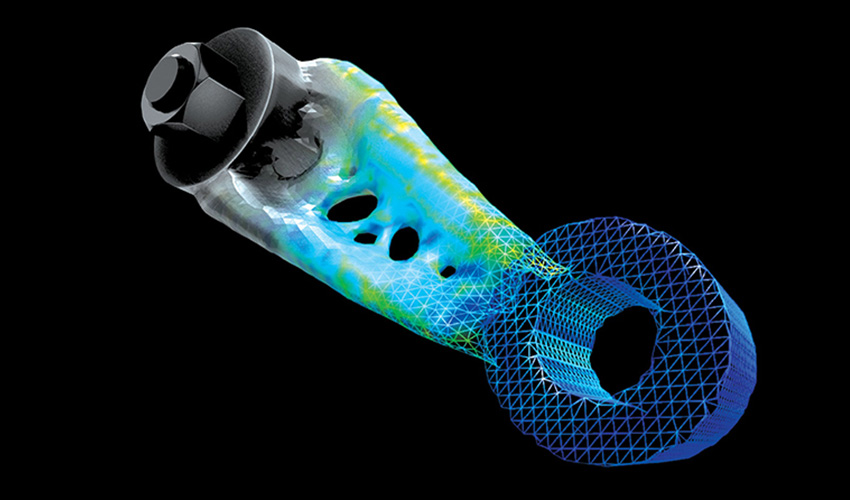
In industrial sectors and product design, SOLIDWORKS is a CAD solution many rely on. The software has been around since the mid 90s and the latest figures estimate that there are around 9.3 million active users across 80 countries. It is based on parametric modeling and is primarily used to create 3D models and assemblies. SOLIDWORKS has also been adopted in the world of additive manufacturing, as it enables engineers to save their models in an STL format; the format needed for a 3D model to be processed by 3D printing software.
SOLIDWORKS was developed back in 1993 when John Hirschtick, a member of the MIT Blackjack Team, recruited a team of engineers to create the first accessible and affordable 3D modeling solution. At the time, AutoCAD, which had been released in 1989, was limited to the creation and editing of 2D geometry. Therefore, SOLIDWORKS was the first software to bring an accessible 3D modeling solution to the market. For many engineers, 3D modeling truly changed the way they could bring creations to life.
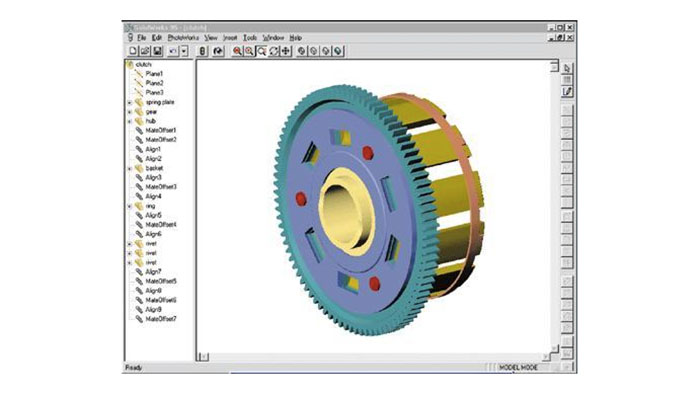
One of the first versions of the software
Soon enough the software became extremely popular and Dassault Systèmes decided to acquire it in 1997 for $320 million in stock. At the time, Dassault Systèmes was known for its CATIA solution, a product lifecycle management suite, which combines design, engineering, and manufacturing features used for automotive, aerospace and aeronautics. Essentially, SOLIDWORKS is a lighter version of CATIA.
More from the desk
Six other notes from the rest of the bench.
 GuidesVapor Smoothing vs. Vibratory Finishing: Which Surface Finishing Process Should you Choose?In order to achieve a polished and refined surface on 3D printed parts, engineers use a broad range of industrial finishing techniques including coating, sandblasting and hand finishing methods. Although 3D printing allows for the production of intricate and complex…
 MaterialsIs PLA filament actually biodegradable?There is a reason why the most popular and widely used 3D printing material for FDM printers is PLA. It’s a very easy to print plastic compared to other materials, which makes it the ideal filament for amateurs. Also, there…
 GuidesTCT Show 2017 Open their doors this September in BirminghamTCT Show is one of the largest 3D printing events in the world and will be taking place in Birmingham, England in only a couple weeks. This event is known for both wowing their visitors and bringing together some of…
 NewsThe Complete Guide to Laser Powder Bed Fusion in 3D PrintingLaser powder bed fusion (LPBF) is a group of metal additive manufacturing methods that use a powder bed and a laser to fuse metal powder together, layer by layer, into a solid part. The best-known example is direct metal laser…
 SoftwareThe Top AI Software Solutions for 3D PrintingIt seems that nowadays artificial intelligence, or AI as it is more commonly known, is on everyone’s lips. And though there is significant discourse centering on ethical issues with the technology, it is undeniable that AI could be a great…
 NewsWorld’s first 3D printed community project aims to be a solution to homelessnessVulnerable populations are usually the last to benefit from innovation” writes Fuseproject, the design studio based in San Francisco. In fact, they recently announced they have joined New Story on their mission to end global homelessness. According to the studio,…