Applications
Singapore Launches 3D Printed Component Into Space for the First Time
We often hear of the major 3D printing projects in space from companies like SpaceX and NASA, but the space race does not just include the USA. Singapore has proved itself part of the industry, with the launch of its…
- 3 min read
- Applications
- Six more stories
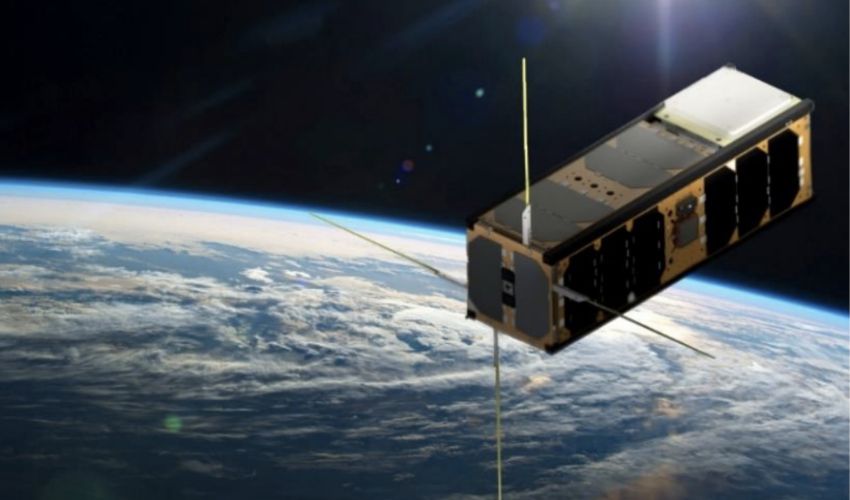
We often hear of the major 3D printing projects in space from companies like SpaceX and NASA, but the space race does not just include the USA. Singapore has proved itself part of the industry, with the launch of its first 3D printed component into space. The Zeus-1 satellite was launched on December 18th from Cape Canaveral, Florida, a common site from which space-bound capsules are launched. The satellite was on board the Falcon 9 rocket from SpaceX.
The project was led by Qosmosys, an international private spacetech company with headquarters in Singapore. They collaborated with NuSpace and Creatz3D Singapore to launch the first locally developed 3D printed part. The use of additive manufacturing was an obvious choice for the team: with the usual method being CNC/metal sheet forming, which involves cumbersome folding and sawing, the 3D printing is more cost effective and offers faster results.
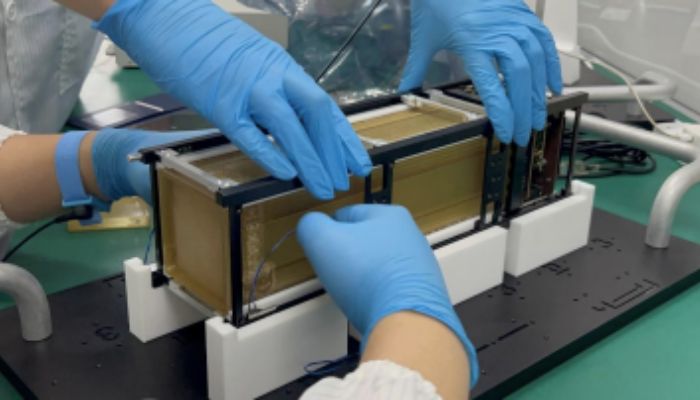
The team designed a gold plate which was added to the satellite
“The proposed original design was a sheet material, which could cost up to $4,000 to $5,000 and requiring a long lead time of at least three weeks for a machine manufactured component to reach us, whereas 3D-printed parts took only 2 to 3 days,” said Ng Zhen Ning, CEO & Co Founder of NuSpace.
More from the desk
Six other notes from the rest of the bench.
 Applications3DExpress: A Mini Camper Van 3D Printed From Recycled BottlesThis week, we’re taking you on a journey with a rather unusual trailer camper van designed in part by 3D printing. It’s compact and easily transportable, practical and functional, and made from over 7,000 recycled plastic bottles! We’ll also introduce…
 NewsRAPID + TCT 2026: What to Know Before You GoThe largest additive manufacturing event in North America is back! Taking place in Boston, Massachusetts for the first time, the Conference Program kicks off RAPID + TCT 2026, starting April 13 and the exhibition runs April 14–16. Bringing together the…
 ApplicationsPitch 3D from 3DHEALS in In (3D) ustry, boosting the medical sector3DHEALS is a platform for 3D printing and bioprinting specialised in the health sector. This platform is already known for its different events in the USA and has joined up with partners like IN (3D) USTRY. Several European countries has also…
 ApplicationsWake Forest Teams Win NASA Challenge with Functional 3D Printed Liver TissuesThe first and second place winners in NASA’s Vascular Tissue Challenge have created 3D printed lab-grown human liver tissues. The two teams of scientists, both from the Wake Forest Institute for Regenerative Medicine (WFIRM) in Winston-Salem, North Carolina were able&hellip
 NewsItalian City Implements 3D Printed Benches Made From Recycled PlasticIn recent years, more and more environmentally friendly projects are being developed in many countries all around the world. Similar to earlier successful projects, like for example the Netherlands-based Print your City, R3direct from Italy is now also starting to…
 GuidesAkira Science on 3D Printing Biomaterials for Tissue RegenerationAs 3D printing continues to revolutionize the healthcare field, more and more companies are exploring its applications in the development of innovative medical solutions. This technology, which excels in customization and precision, is transforming the way devices and materials a