Software
Shapeshift 3D on developing AM software for mass customization
Shapeshift 3D develops software to streamline and digitize the production process from 3D scanning to 3D printing of customized wearables. One of the main benefits of additive manufacturing is that it enables a great degree of design freedom, meaning that…
- 3 min read
- Software
- Six more stories
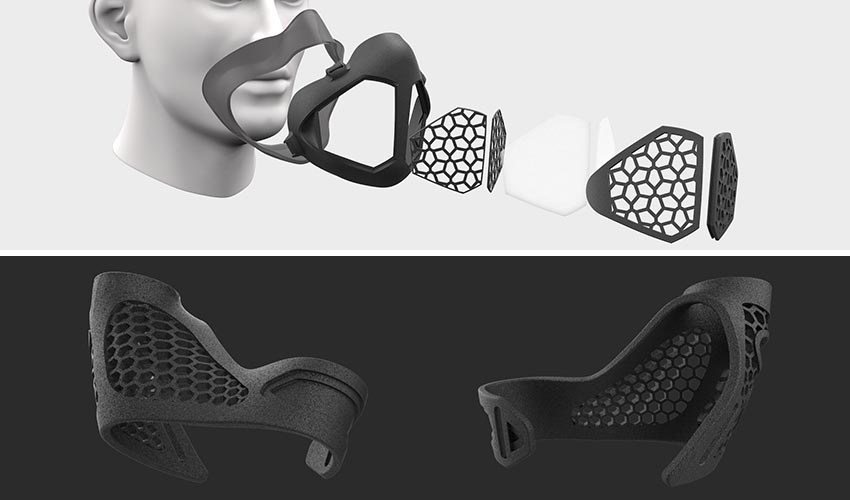
Shapeshift 3D develops software to streamline and digitize the production process from 3D scanning to 3D printing of customized wearables. One of the main benefits of additive manufacturing is that it enables a great degree of design freedom, meaning that objects can be personalized and custom-made to fit the different needs of customers. Having understood this need for mass customization, Shapeshift 3D provides the tools to produce compliant, high performing, and aesthetically appealing wearables. We spoke to Founder Jonathan Borduas to learn more about Shapeshift 3D and how the company aims to offer mass customization.
Can you present yourself and tell us about your relationship with 3D printing?
During my undergraduate studies in physics engineering, I led many technical initiatives in line with my passion for hands-on high-tech development. My fascination for digital fabrication and mass customization traces back to when I built my first 3D printer in 2009, when I was the first individual in Quebec (Canada) to have one at home. While pursuing a postgraduate degree in Innovation Management, I cofounded my first venture where I was focused on developing solutions for 3D printed custom-fit orthotics.

Jonathan Borduas
Shapeshift 3D is a comprehensive software solution that supports the entire digital value chain, from initial scanning to additive manufacturing, while ensuring that the resulting product meets manufacturing, functional and performance standards without imposing any design constraints. Both 3D scanning and 3D printing are enabling technologies for Shapeshift 3D. Any new advances in those fields opens new doors for us. For example, we are excited about the potential of non-planar 3D printing by Kupol to maximize the absorption efficiency of football helmets.
More from the desk
Six other notes from the rest of the bench.
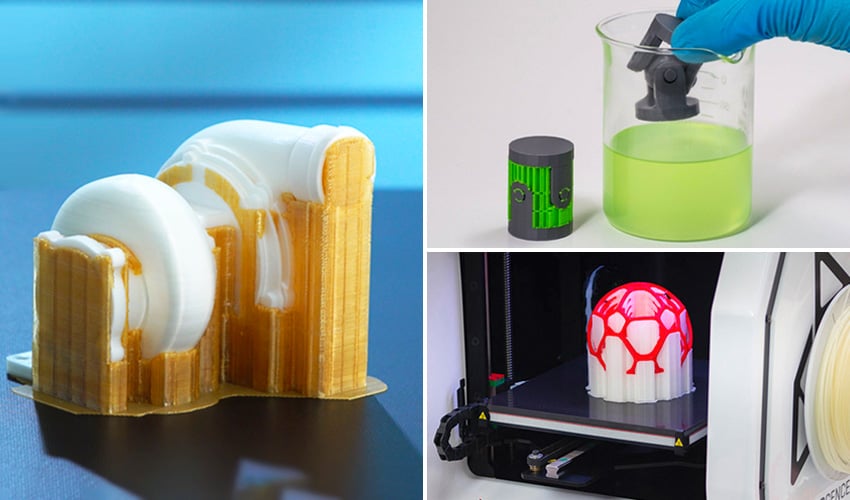 MaterialsWhat Are the Soluble Support Materials Available for 3D Printing?Support removal can be an annoying part of post-processing in 3D printing. However, it does not have to be. If you have a dual-extruder 3D FDM 3D printer, or any other process that allows multi-material printing, you can take advantage…
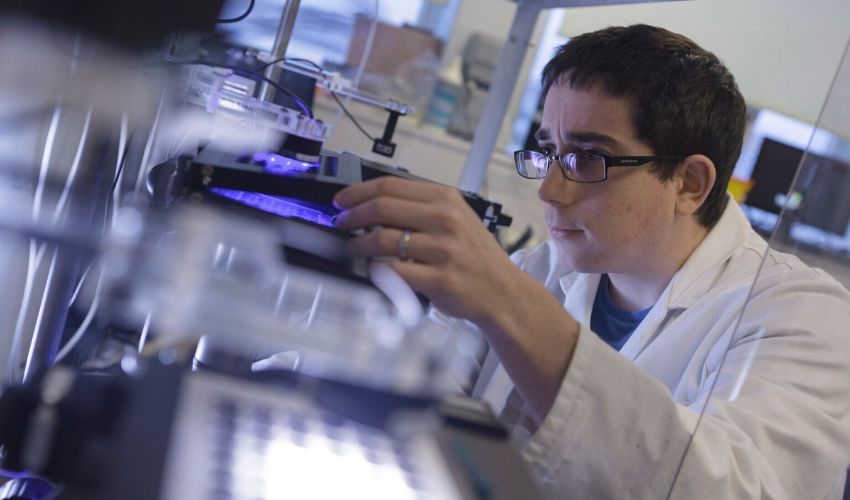 Applications3D Printed Robot Can Assess Embryonic DevelopmentEmbroyonic development, or more simply the development and formation of an embryo mostly through cell division and cellular differentiation, is one of the most important biological processes on Earth. This basic step is the cornerstone of all multicellular life on…
 ApplicationsRelativity Space’s Terran 1 Successfully Lifted Off But Did Not Reach OrbitA few years ago, we introduced you to the Terran 1, Relativity Space’s almost entirely 3D printed rocket. Built using directed energy deposition (DED) and powder bed fusion, this spacecraft was an industry first. Moreover, according to the manufacturer, it…
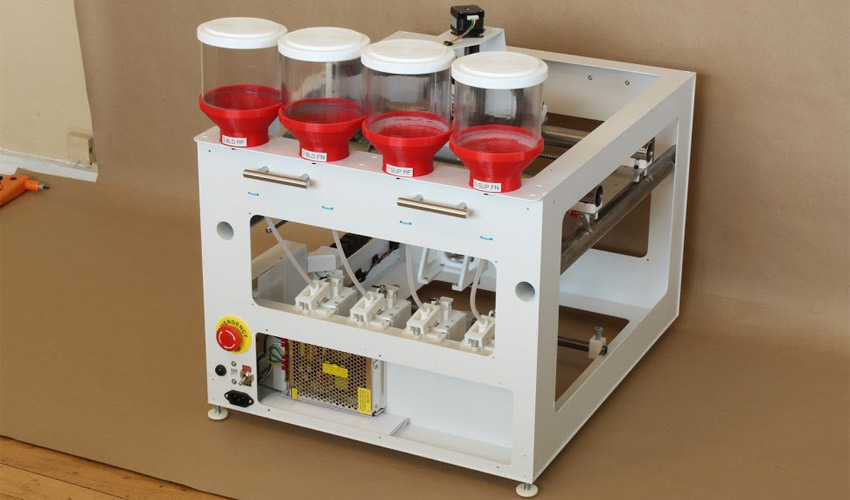 PrintersIro3d lowers the cost of 3D metal printing with a $ 5,000 machineThe US start-up iro3d has begun shipping its first low-cost metal 3D printers, machines now available starting at $ 5000. This is a relatively low price in the metal additive manufacturing market when compared to solutions developed by 3D Systems or EOS.…
 NewsTop 5 Videos: 3D Printing With CoffeeAs the sun sets on another week of September living, we gather together a selection of handpicked videos for your viewing pleasure. Like a digital vineyard, we roam the hills and valleys of the internet to bring you the most…
 PrintersVaporFuse Surfacing, a green solution for improved part propertiesWhen it comes to the additive manufacturing workflow, we often discuss different printing technologies and modeling software, but it seems like post-processing is not being talked about enough. Yet the subsequent treatment of prints is a crucial step as it…