Applications
Relativity Space’s Terran 1 Successfully Lifted Off But Did Not Reach Orbit
A few years ago, we introduced you to the Terran 1, Relativity Space’s almost entirely 3D printed rocket. Built using directed energy deposition (DED) and powder bed fusion, this spacecraft was an industry first. Moreover, according to the manufacturer, it…
- 3 min read
- Applications
- Six more stories

A few years ago, we introduced you to the Terran 1, Relativity Space’s almost entirely 3D printed rocket. Built using directed energy deposition (DED) and powder bed fusion, this spacecraft was an industry first. Moreover, according to the manufacturer, it is the tallest 3D printed metal structure ever built. The Terran 1 is initially intended to carry lightweight satellites into space. Now, it has reached its last stage as the rocket was able to takeoff on March 22nd from the LC-16 launch pad at the US Space Force facility in Cape Canaveral, Florida. Initially, a liftoff was scheduled for March 8. However, due to technical problems, bad weather and insufficient fuel pressure, its journey to space was delayed twice.
The mission nicknamed “GLHF” (for Good Luck, Have Fun) reached a milestone when the Terran 1 was able to lift off last night, at 11:30 pm US time. The rocket lit up the Florida sky for 3 minutes, before running out of power before reaching space orbit. That being said, the start did seem promising. The first stage of the rocket which is used for the thrust at the takeoff did its role and detached without complications once its fuel was dry. Following this stage, a motor intended to propel the remaining part did not ignite sufficiently, preventing the rocket from reaching orbit. Terran 1 launch director Clay Walker confirmed that there was an “anomaly” with the upper stage.

The Terran lifted off at 11:30 p.m. from Cape Canaveral (photo credit: Relativity Space)
A Big Step for Relativity Space and the Terran 1
Although the Terran 1 did not reach orbit, this first liftoff represents a significant advance for Relativity Space. Indeed, the Terran 1 succeeded in crossing the Max Q, the moment when the rocket passes the point of maximum atmospheric pressure during an orbital launch, a crucial point for Tim Ellis, the CEO of Relativity Space. Through this mission, the company wants to demonstrate the efficiency and reliability of their additive manufacturing process. It also mentioned that this launch was only a prototype, as no payload or satellite was placed inside the rocket. Following this “failure”, the company nevertheless stated that it would provide updates over the next few days to avoid encountering a similar problem on future launches.
More from the desk
Six other notes from the rest of the bench.
 NewsThe Industry Partners That Make RAPID + TCT the Most Relevant AM Event in North AmericaAs we know, 3D printing, along with other disruptive technologies, plays a key role in Industry 4.0 and helping society move towards smart production. This is why events and trade shows are so important for bringing together experts and exhibitors…
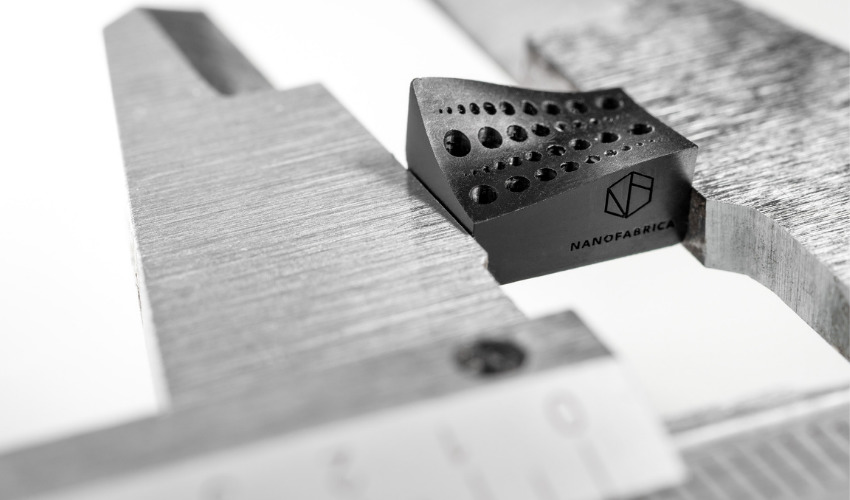 GuidesThink big, print small: Nanofabrica on the benefits and applications of microscale 3D printingOne of the major benefits that additive manufacturing has over traditional manufacturing is its ability to be customized for individual use, no matter how big or small the part may be. Never is this more evident than with microscale 3D…
 NewsUnleashing the Future: Exploring the 3D Printing Market Forecast for 2030The global 3D printing market is experiencing remarkable growth, driven by technological advancements, expanding applications across various industries and increasing demand for customized products. According to a recent article published on MarketWatch, a website specializing in
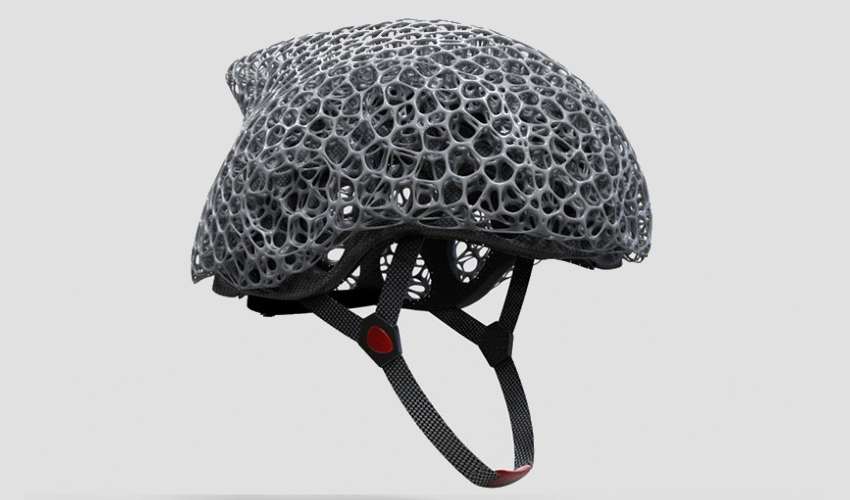 NewsVoronoi 3D printed bicycle helmet, safer and lighter?Different kinds of protective helmets are used for various physical activities and sports games. Invented for the first time many decades ago, this type of protective gear is re-developed whenever there is a new technology that is disruptive enough to…
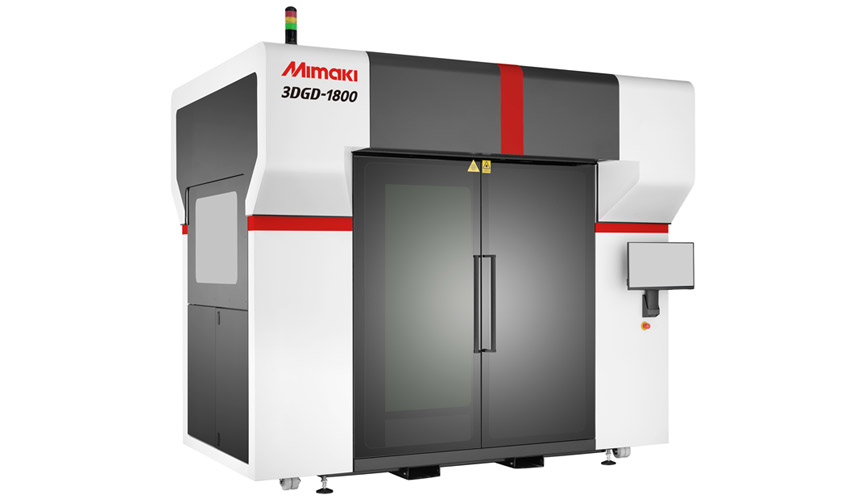 PrintersNew Mimaki 3D printer combines color and large format 3D printingIn September 2017, the Japanese manufacturer Mimaki, a specialist in 2D printing, revealed a 3D machine capable of creating parts with 10 million colours. The 3DUJ-553 met many professional requirements, especially in the design industry. Three years later, Mimaki has…
 News3D Knitwear: How 3D Printing Is Revolutionizing the Fashion IndustryIn recent years, 3D printing has become growingly everpresent. From medicine, aerospace, to design, and construction — every day there’s news about breakthroughs, innovations, and developments in the additive manufacturing industry. However, in one particular industry, it&#