Applications
Rock Island Arsenal Uses 3D Printing to Reinvent Military Manufacturing
Rock Island Arsenal in Illinois is blending centuries-old forging traditions with modern 3D printing technology to keep the U.S. Army’s supply chain strong. Inside its historic foundry, workers still pour molten steel into molds, much as they did more than…
- 3 min read
- Applications
- Six more stories

Rock Island Arsenal in Illinois is blending centuries-old forging traditions with modern 3D printing technology to keep the U.S. Army’s supply chain strong. Inside its historic foundry, workers still pour molten steel into molds, much as they did more than a century ago. A short distance away, the hum of robotic arms and printers signals a new era. The site is becoming a key hub for advanced manufacturing, where old and new techniques work side by side.
One of the most transformative changes is the introduction of sand 3D printing for mold production. Previously, creating a traditional wooden mold could take months of careful work. With the new system, molds can be printed in as little as 24 hours and poured the following day. This ability to iterate rapidly allows the Army to deliver critical parts in days instead of months, improving both flexibility and readiness.
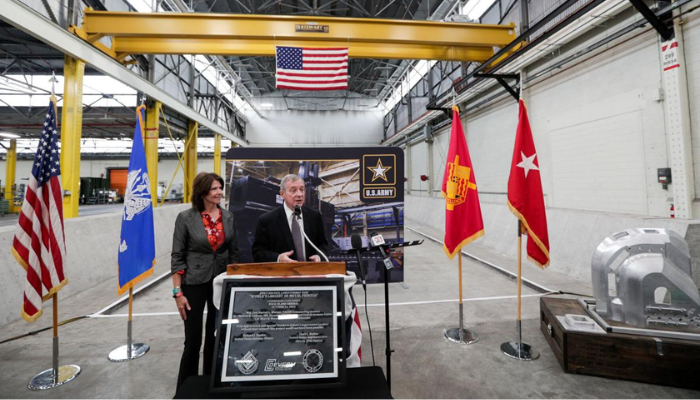
Rock Island Arsenal is also home to the world’s largest 3D metal printer. (Photo Credit: US Army)
The benefits of additive manufacturing extend far beyond speed. Rock Island has been experimenting with new alloys and more precise mold techniques, making production more efficient and adaptable. The arsenal recently achieved AS9100 certification, which positions it to produce aerospace-grade components and support both Army and Air Force aviation programs. This certification opens doors for high-precision applications that demand strict quality standards.
More from the desk
Six other notes from the rest of the bench.
 Applications3D Printed Heart Can Beat With New Fiber-Infused InkHeart disease is one of the leading causes of death worldwide. It is so widespread that according to the Centers of Disease Control and Prevention (CDC), one person dies every 33 seconds in the United States from cardiovascular disease with…
 ApplicationsScientists Create New Technique for 3D Printing in MicrogravitySpace has always fascinated humanity, and the colonization of Mars and the Moon remains a major goal. To achieve this, it is necessary to process local resources under the conditions present there. 3D printing shows impressive potential in this area,…
 ApplicationsSatair produces the first certified 3D printed metal flying spare part for AirbusSatair, an Airbus services company, recently provided one of its airline customers with one of, if not the first, certified 3D printed metal flying spare part in the world. The part is actually a wingtip fence for an A320ceo aircraft…
 NewsSuperstrata ships first 3D printed carbon fiber bikeIn July, we drew your attention to the Californian bicycle manufacturer Superstrata. At that time, the company had just launched a funding campaign, receiving more than USD 1 million within a day. Since, the company raised more than USD 5.8…
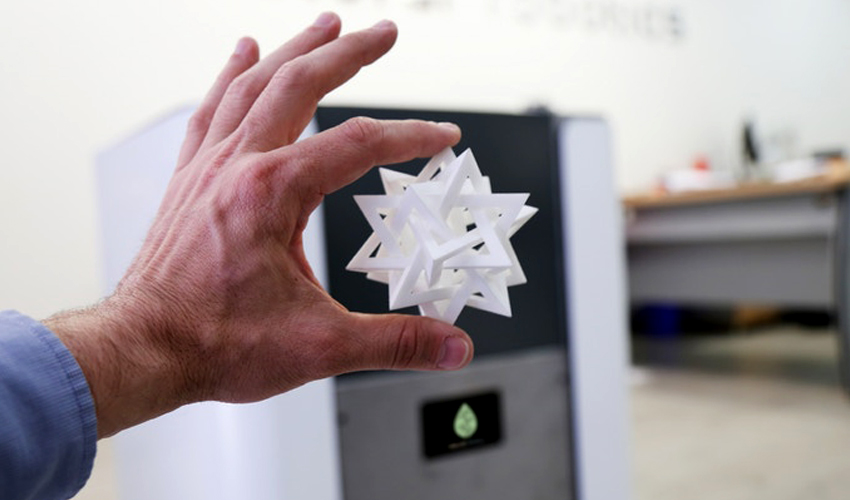 PrintersBenefits of an SLS 3D Printer: with Natural RoboticsThe technology of selective laser sintering involves creating objects via a powder material. It was developed in the 80s, but in its early years it was inaccessible to most because of its high price. In 2014 the patent expired, opening…
 News3DExpress: Etsy Tightens Rules on Selling 3D Printed GoodsDo you consider a 3D printed object handmade? The online global marketplace Etsy sells unique items that are “unique items made, designed, handpicked or sourced,” but the website hosts many 3D print shops selling mass-produced, unoriginal designs. To address this, the