Applications
Scientists Create New Technique for 3D Printing in Microgravity
Space has always fascinated humanity, and the colonization of Mars and the Moon remains a major goal. To achieve this, it is necessary to process local resources under the conditions present there. 3D printing shows impressive potential in this area,…
- 3 min read
- Applications
- Six more stories
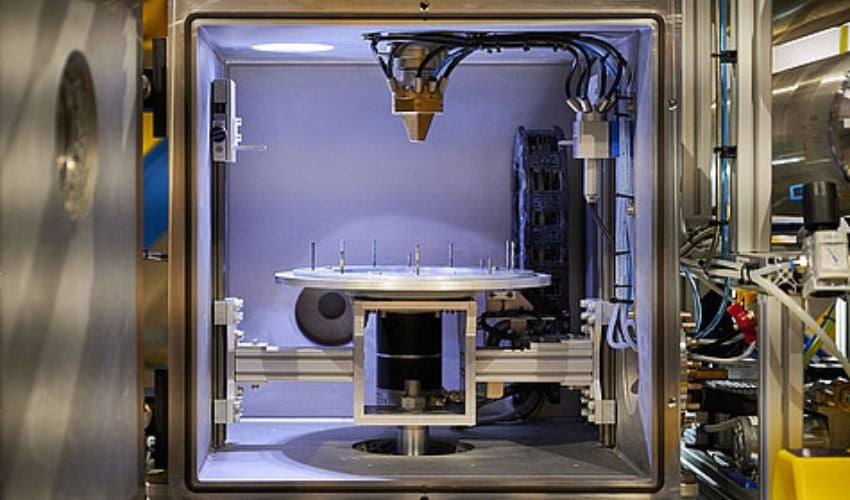
Space has always fascinated humanity, and the colonization of Mars and the Moon remains a major goal. To achieve this, it is necessary to process local resources under the conditions present there. 3D printing shows impressive potential in this area, as repairs can be carried out directly with minimal material usage, avoiding the need for expensive spare parts. Numerous projects and research efforts are exploring 3D printing in microgravity, each advancing space exploration and the use of additive manufacturing in orbit. Now, two German universities have contributed by developing a flexible method for laser additive manufacturing in microgravity.
An interdisciplinary research team from Leibniz University Hannover (LUH) and Otto von Guericke University Magdeburg collaborated on the project “Additive Manufacturing in Microgravity Using Laser Metal Deposition”, funded by the German Research Foundation. As part of the project, the researchers developed a flexible 3D printing method for producing and repairing metal components under microgravity conditions. The process uses laser metal deposition with metal powder, where a laser selectively melts the powder, building up the component layer by layer. The method can also be used to repair existing parts by printing directly onto the damaged area.
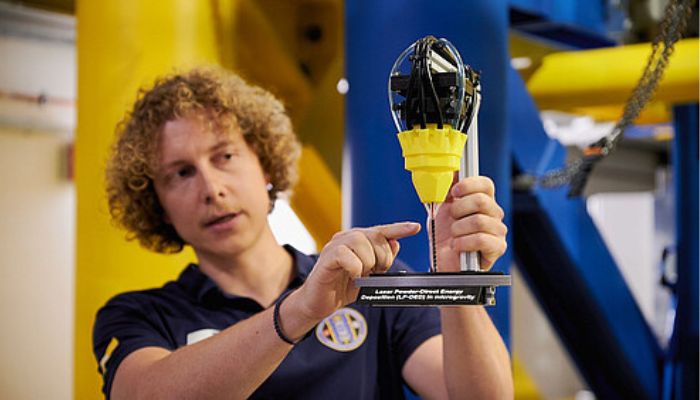
Marvin Raupert, project engineer, pictured with a model demonstrating the 3D printing process.
The team’s biggest challenge was handling the powder and processing it in microgravity. To simulate these conditions, the Einstein Elevator was used. This large-scale research device, located at the Hannover Institute of Technology, allowed the researchers to test the printing process under different gravitational conditions. These conditions ranged from weightlessness to the intense forces experienced during a rocket launch. The powder delivery system and the laser system were installed in a gondola and adapted to the microgravity environment of space. The researchers tested laser metal deposition with various materials, including titanium and nickel alloys, both popular in additive manufacturing for aerospace applications.
More from the desk
Six other notes from the rest of the bench.
 MaterialsADDITIV Metals Returns June 10! A Virtual Summit Tackling the Biggest Bottlenecks in Metal AMMetal additive manufacturing is no longer a technology in waiting. The global metal AM market is projected to grow from $6.02 billion to $7.02 billion in 2026 alone (Research And Markets). According to the 2026 Wohlers Report, metals revenue (including…
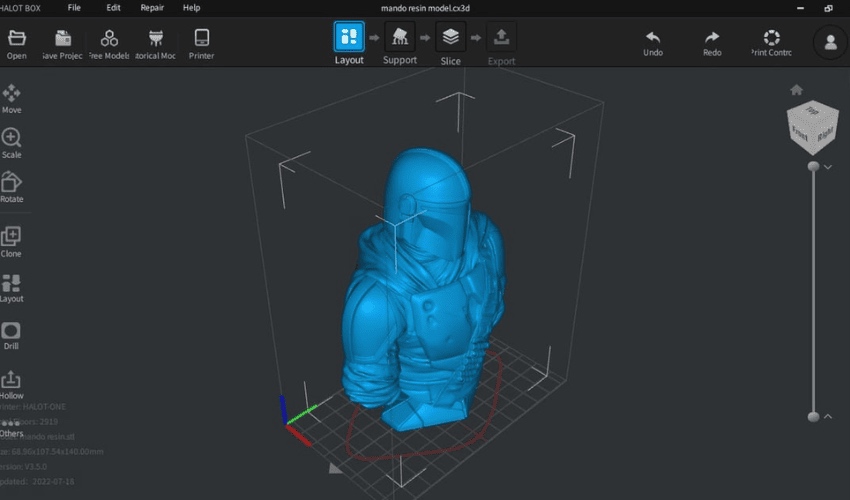 SoftwareAll You Need to Know About Halot Box From CrealityHalot Box is a slicer developed by Creality, a well-known affordable 3D printer manufacturer. This software has been specially designed to optimize the use of the brand’s range of resin 3D printers. Previously, we mentioned another Creality software, Creality Print,…
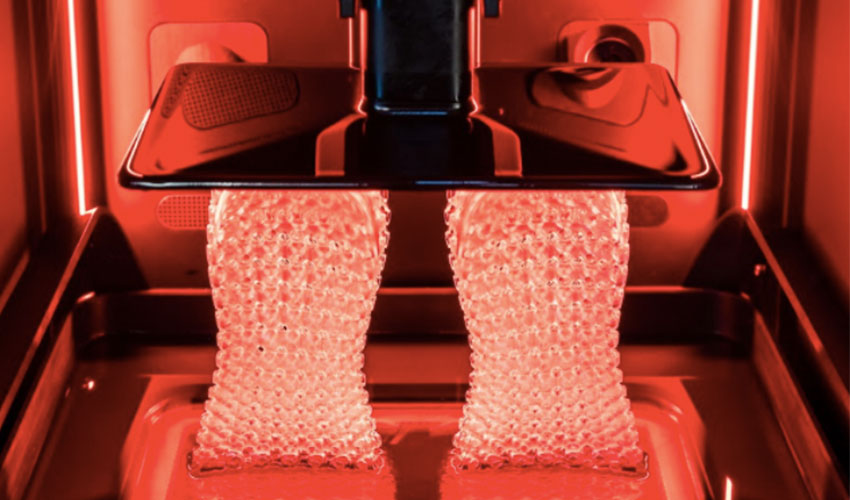 PrintersOrigin to begin shipping new Origin One 3D printerWe’ve been expecting the Origin One platform to start shipping for a while now. The US startup Origin announced the launch of its new machine back in May – it’s an open additive platform based on Programmable Photopolymerization technology. The…
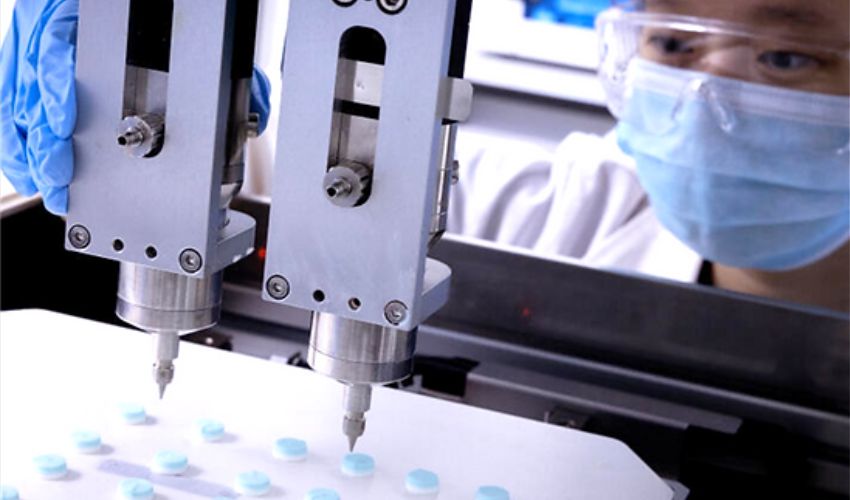 ApplicationsPharmaTher Partners with Craft Health to Personalize 3D Printed PeptidesThe Toronto-based PharmaTher Holdings Ltd. has launched Personaliz3D Peptides™, a division built to develop and commercialize personalized peptide products using 3D printing and artificial intelligence. Two days later, the specialty pharmaceutical company announced a collaboratio
 ApplicationsMercedes-AMG Launches CONCEPT AMG GT XX, Feautring 3D Printed Seat PadsLast week, Mercedes-AMG revealed CONCEPT AMG GT XX: a pioneering technology program that offers a look into a forthcoming four-door series-production sports car. A subsidiary of Mercedes-Benz AG, Mercedes-AMG creates high-performance vehicles, typically with better handling and s
 ApplicationsMoorhuhn bike: competing with carbon fibre frames?The purmundus challenge was presented for the eighth time on November 2020 as part of the digital Formnext Connect exhibition. This annual competition invites designers and engineers from around the world to participate in a theme-based 3D printing design contest.…