News
How Does Pollen AM technology Foster Innovation at Decathlon?
The French group Decathlon is constantly looking for innovations in the field of sports and leisure: who out there has not heard of the 2 second tent, diving masks or its windsurfing kit? The company has surrounded itself with a…
- 3 min read
- News
- Six more stories
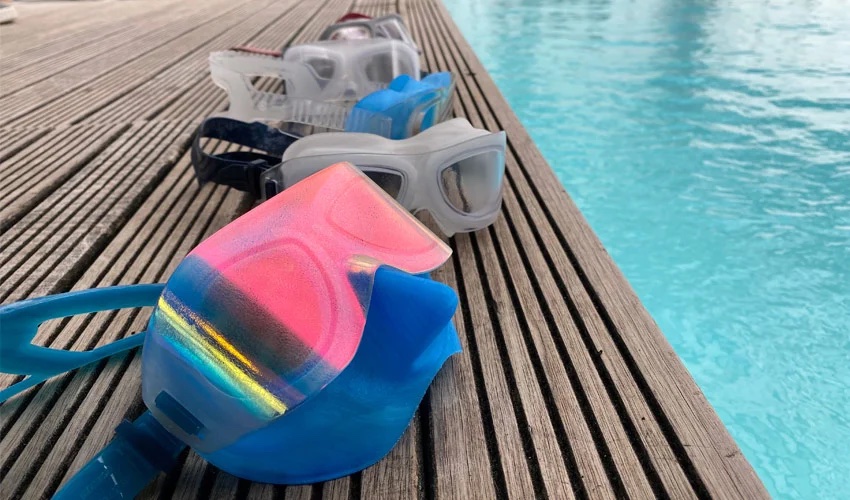
The French group Decathlon is constantly looking for innovations in the field of sports and leisure: who out there has not heard of the 2 second tent, diving masks or its windsurfing kit? The company has surrounded itself with a solid team of engineers and designers, with more than 65 patents filed in 2019. Added to this is the “AddLab,” its laboratory dedicated to additive manufacturing, which allows both prototypes and finished parts to be imagined more quickly thanks to a complete machine park, with solutions ranging from FDM to Multi Jet Fusion. Among Decathlon’s 3D printers is Pollen AM’s technology, in which the group has invested since the opening of the AddLab more than six years ago. Today, it has two PAM Series P machines that allow it to produce “right material” prototypes, i.e. functional prototypes close to the real material of the final product that will allow the users to validate its characteristics and functionalities. Decathlon’s designers and engineers rely on Pollen AM’s technology and the range of materials offered to quickly validate innovations, no matter their complexity.
Historically, additive manufacturing has always been used for rapid prototyping: with a 3D printer, a company can quickly get a first visualization of its product and make the necessary iterations. While the technology allows for this preview, it does not necessarily offer material characterization: how to test the mechanical characteristics of a future part? Its chemical properties? And how can users be sure that the results obtained on a 3D printed prototype will be the same as on a cast part? This is where pellet 3D printing processes are interesting because the material undergoes fewer transformations than a filament, for example, and therefore has characteristics more similar to those of injection molding. This is one of the reasons why Decathlon chose Pollen AM technology: the goal was to print prototypes with the material used in large-scale production to obtain properties that were as close as possible to the final part.
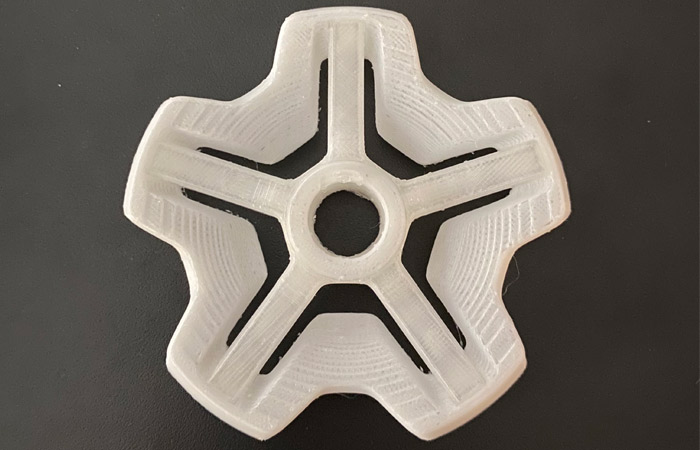
A prototype 3D printed ski pole basket (photo credits: Decathlon)
Right Material Prototyping With Pollen AM technology
Jimmy Gantier is the Right Material Prototyping Manager of the AddLab at Decathlon. He is in charge of the prints made on the Pollen AM machines. He explained to us: “My job is to manage the material and the way of printing. In concrete terms, a designer or engineer comes to see me and provides me, beyond his 3D file, the material that will be used in large-scale productions. I will then characterize the material to print it on the Pollen. This allows me to design prototypes that will be used for use tests or in the laboratory to directly study the behavior of the part with the right material. For certain product categories, we will then be able to modify the product more quickly, without going through molding steps that are time-consuming, expensive and represent a certain energy cost.” Today, PAM Series P machines 3D print a lot of prototypes using TPE, TPU or SEBS, especially for water sports such as diving masks or different types of soles. The quantity of prototypes designed varies according to their size, but one thing is certain: the rate is controlled.
More from the desk
Six other notes from the rest of the bench.
 NewsWhat will the market for industrial lasers in the AM industry look like in the next years?In its latest report, the research firm SmarTech Analysis identifies the economic opportunities industrial lasers bring to the 3D printing and AM market. In fact, the industry of lasers has opportunities in established technologies, notably SLA (Stereolithography) and PBF (Powder
 NewsA 3D Printed Ultrasonic Sensor to Warn About Hazardous Weather ConditionsThe University Corporation for Atmospheric Research (UCAR) is behind a project called 3D-PAWS (3D Printed Automatic Weather Station), which uses 3D printing to design tools and instruments to enable earlier detection of high-impact weather events. The teams are presenting their&h
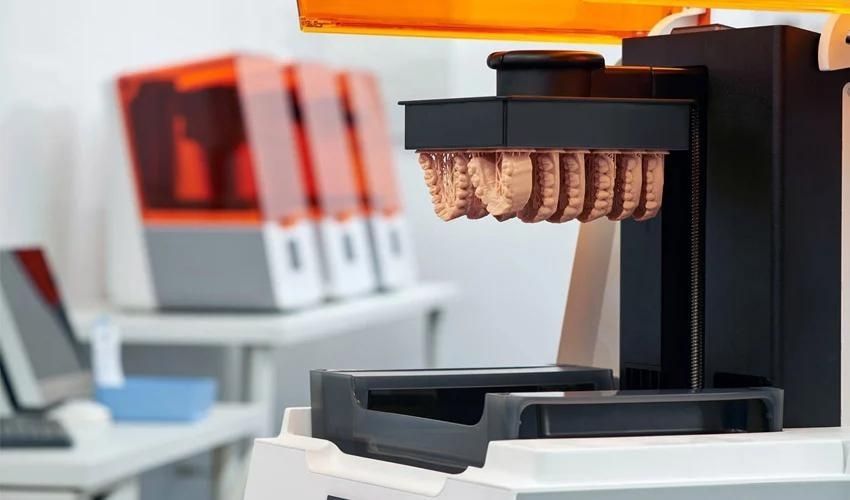 ApplicationsDental 3D Printing To Be Valued at $7.9 BillionResearch firm Markets and Markets recently released its new report on dental 3D printing, which is expected to generate $7.9 billion by 2027, growing at an annual rate of 20.2% from this year. This study is divided into the most…
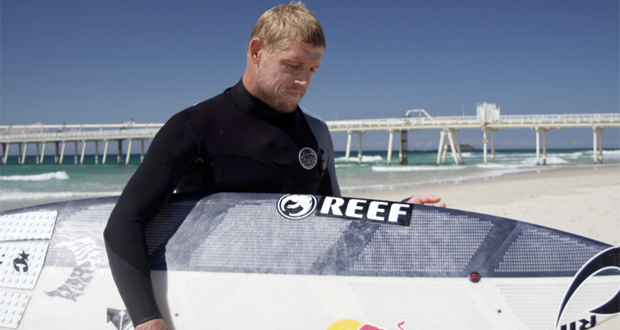 NewsMick Fanning surfs on a 3D printed surfboardWhile the automobile and aerospace industries have typically been the dominate leaders in 3D printing technology, new industries are beginning to take notice of this technology’s capabilities. The sporting industry is now a contender within the 3D printing technology race,
 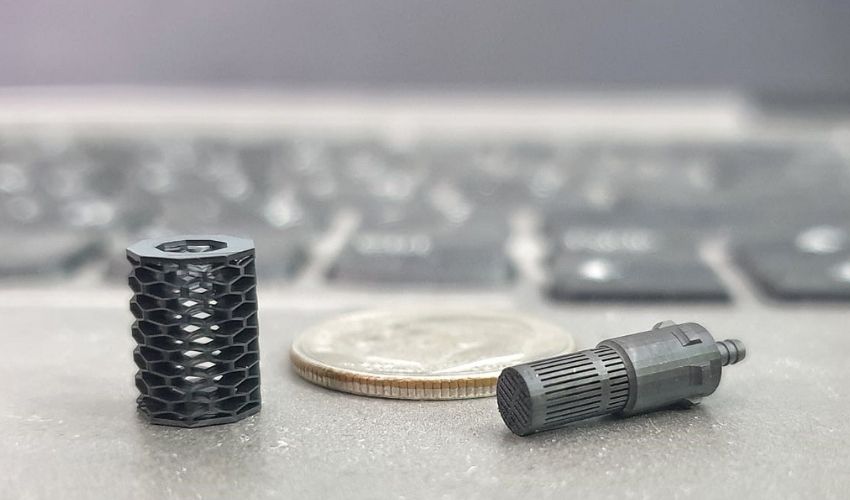 GuidesWhat’s Next For Fabrica Group After Acquisition by Nano Dimension?Never has it been clearer that the field of additive manufacturing never sleeps. Though many countries have still been struggling with lockdowns and resurgences of COVID-19, AM manufacturers have stayed busy. This is evident especially in the numerous acquisitions and…
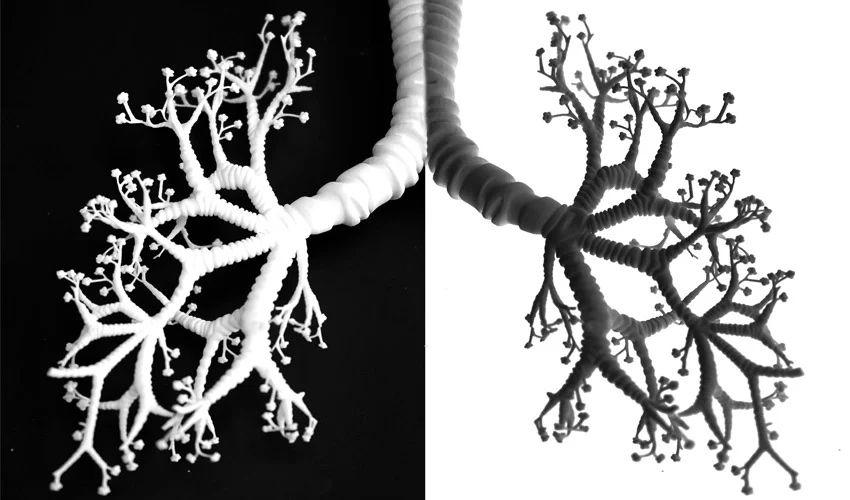 GuidesFrontier Bio on Overcoming the Organ Shortage With 3D-Printed Human Tissue3D printing has profoundly transformed the medical field, bringing significant changes to the way we think about healthcare. At the heart of this transformation, Frontier Bio is exploring the opportunities offered by 3D printing and tissue engineering to grow human…