Materials
Resins vs Powders: Which Material Family Should You Choose for 3D Printing?
Depending on the intended application and the preferred 3D printing process, different materials can be used, only makes the selection more difficult for the user due to the wide range. Whether plastics, ceramics or even metals, the 3D printing material…
- 3 min read
- Materials
- Six more stories
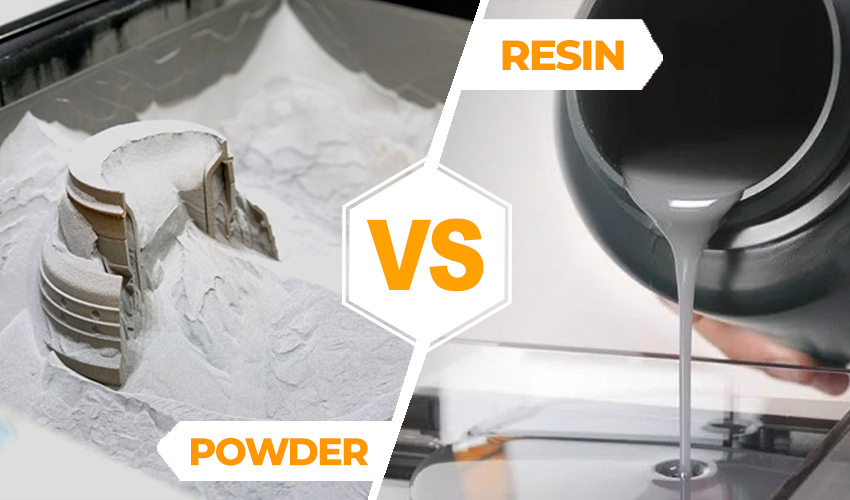
Depending on the intended application and the preferred 3D printing process, different materials can be used, only makes the selection more difficult for the user due to the wide range. Whether plastics, ceramics or even metals, the 3D printing material portfolio can be long and confusing. Therefore, we would like to give a detailed overview that directly compares two families of polymer materials: resins and powders. It should also be noted that although there are a number of powders and resins on the market today, such as metal powders or even ceramic resins, today we will focus only on polymers.
There are two types of 3D printing plastics: thermosets and thermoplastics, with the main difference between these two families being their different behavior when exposed to heat. On the one hand, thermoset plastics decompose when cured and do not reform after cooling. On the other hand, thermoplastics are the most commonly used, and when heated they can assume the desired shape and undergo various melting and solidification processes, with their properties changing slightly each time they are reheated.
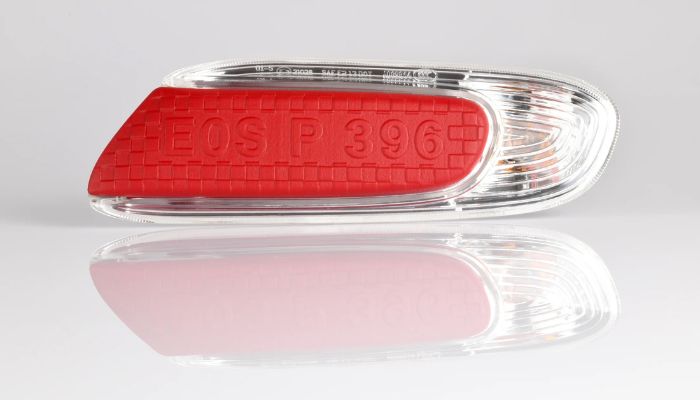
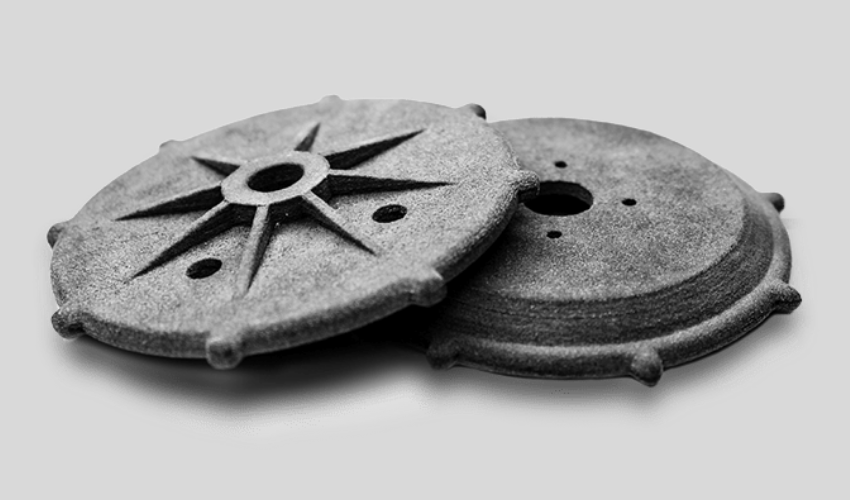
Plastic powders can be used in many areas, e.g. in the automotive industry (photo credits: EOS)
These two families of materials are among the most used in additive manufacturing. For plastic powders, the market is expected to reach $3 billion by 2029 according to the Linker report, and for resins, this value is even estimated to be over $750 billion according to Fortune Business Insights. As you might expect, each family of materials is compatible with different 3D printing processes such as SLS or Multi Jet Fusion for powders, and material jetting or photopolymerization for resins; we’ll go into more detail on these in our article, as well as post-processing, pricing, material characteristics, manufacturers and more!
More from the desk
Six other notes from the rest of the bench.
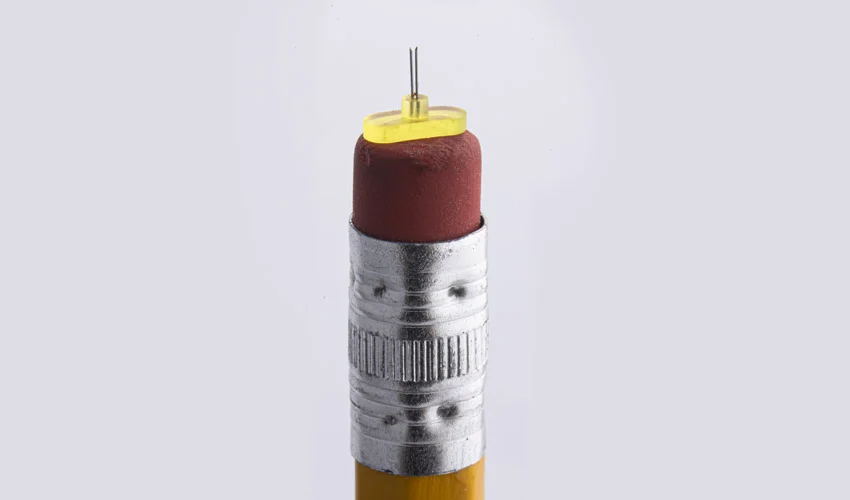 ApplicationsIMcoMET Fights Skin Cancer With Micro 3D PrintingRotterdam-based startup IMcoMET works in the medical sector, specializing in the development of solutions to fight cancer, particularly skin cancer. To do this, the company extracts interstitial fluid, filled with biomarkers, from the skin in a localized manner, to study…
 ApplicationsATU Discovers New Method for Printing on Flexible TextilesResearchers at the Atlantic Technological University (ATU) in Ireland have recently developed a new 3D printing method that could impact the future of wearable technology. Dr. Aswathy Babu, the head of the team, alongside Professor Suresh C. Pillai, has created…
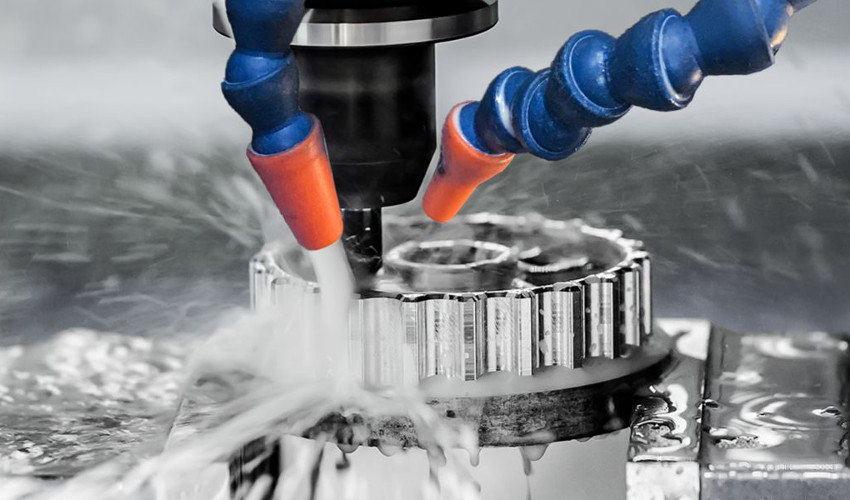 Materials3D Printing vs CNC Machining: Which is best for prototyping?3D printing is a rapidly growing technology with many advantages over traditional manufacturing methods. It however has its problems, including that 3D printing cannot be effectively used for mass production, and is limited in speed and accessibility. Another manufacturing techni
 NewsSLICE: Used Tennis Balls Turned into SneakersSoroosh Riazi Isfahani, a design student at the Royal College of Art and Imperial College London, submitted his SLICE project to the James Dyson Award 2026 this summer. The system turns discarded tennis balls into footwear. Manufacturers produce between 300…
 NewsWhat Can You Expect from AMUG 2026?AMUG 2026 is on the horizon! As an organization, the Additive Manufacturing Users Group (AMUG) continues its mission to “educate and advance the uses and applications of additive manufacturing technologies.” This upcoming event will take place March 15th – 19th,…
 MaterialsImpossible Objects and Owens Corning Join Forces to Develop Stronger, Cheaper 3D Printing MaterialsEarlier this week, Impossible Objects announced that it would be joining a development agreement with Owens Corning targeted at developing new materials for Impossible Objects’ revolutionary composite-based additive manufacturing (CBAM) process. While Impossible Objects is both a