News
Researchers develop 3D printing method for milk
Additive manufacturing has infiltrated almost all industries, including food! In fact, 3D printed food was first studied by NASA in 2006: the space organization was researching how to feed astronauts during longer space missions. Fourteen years later, researchers are still&hellip
- 3 min read
- News
- Six more stories
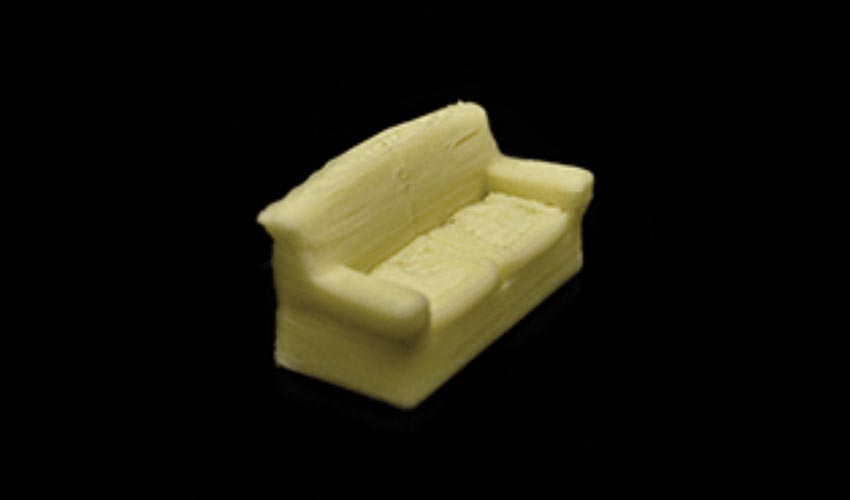
Additive manufacturing has infiltrated almost all industries, including food! In fact, 3D printed food was first studied by NASA in 2006: the space organization was researching how to feed astronauts during longer space missions. Fourteen years later, researchers are still interested in using 3D printing technologies to create nutritious dishes from different types of foods. This is the case of researchers at the Singapore University of Technology and Design (SUTD), who developed a 3D printing method to print milk structures at room temperature. The scientists used a Direct Ink Writing (DIW) 3D printing technique with a simple milk ink formulation.
Direct Ink Writing is an extrusion-based additive manufacturing method that is mostly used for meso and micro scale structures. In DIW, the liquid-phase ink is dispensed out of small nozzles under controlled floor rates and deposited along digitally defined paths to fabricate 3D structures layer by layer. The scientists develop an ink milk from a single ingredient: milk.
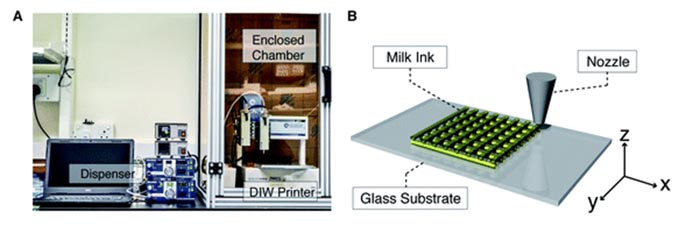
Given the versatility of the demonstrated method, the team from SUTD envisions that cold extrusion of food inks will be applied in creating nutritious and visually appealing food, with potential applications in formulating foods with various needs for nutrition and materials properties, where food inks could be extruded at room temperature without compromising the nutrients that would be degraded at elevated temperatures.
More from the desk
Six other notes from the rest of the bench.
 NewsRedefine Meat Introduces 3D Printed Flank Steak To European SupermarketsIn 2023, the average European consumed 64.2 kg of meat. Despite a five-year decline reported by Agrarmarkt Informations-Gesellschaft, meat consumption remains disproportionately high amidst pressing environmental concerns, with beef farming notably contributing to climate change.
 ApplicationsNASA’s 3D Printed Circuits Reach New Heights in Space ExplorationIn recent years, the field of additive manufacturing, also known as 3D printing, has been rapidly gaining popularity across various industries. Its ability to offer customization, innovative design, and improved performance has led to its widespread adoption in diverse fields. Am
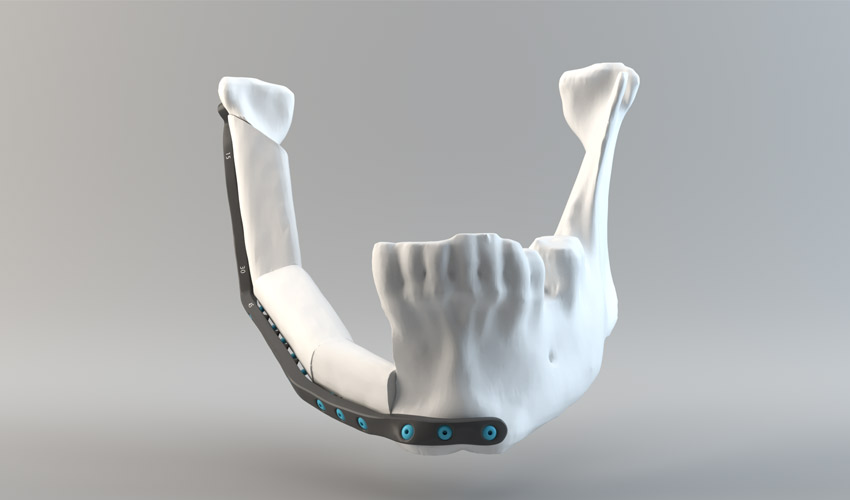 ApplicationsCRIQ develops custom 3D printed jaw implantsThe Industrial Research Center of Quebec (CRIQ) recently acquired an Arcam EBM Q10plus 3D printer. It is an industrial machine based on electron beam melting technology. This acquisition should allow researchers to accelerate the development of lower jaw implants. Plus further tr
 GuidesThe Most Surprising 3D Printing Applications at TCT Asia 2025TCT Asia 2025 has wrapped up, but there’s still plenty to talk about! As one of the biggest additive manufacturing events in Asia, this year’s edition showcased some of the industry’s most innovative 3D printing applications. Our team at 3Dnatives…
 ApplicationsApplication of the Month: Lamborghini Uses 3D printing for the SC63 Hypercar at the 24 Hours of Le Mans 2024The use of 3D printing in motor racing has become increasingly common. The ability to rapidly produce, customize and select the most appropriate materials for each application has led many automakers to adopt this technology. In Formula 1, for example,…
 NewsThe Best 3D Printing Videos From 20242024 was an extraordinary year for 3D printing, with breakthroughs revolutionizing fields as diverse as medicine, automotive and aerospace. In this article, we’ve put together a selection of our favorite videos of the year, where creativity and technology collide to…