Applications
CRIQ develops custom 3D printed jaw implants
The Industrial Research Center of Quebec (CRIQ) recently acquired an Arcam EBM Q10plus 3D printer. It is an industrial machine based on electron beam melting technology. This acquisition should allow researchers to accelerate the development of lower jaw implants. Plus further tr
- 3 min read
- Applications
- Six more stories
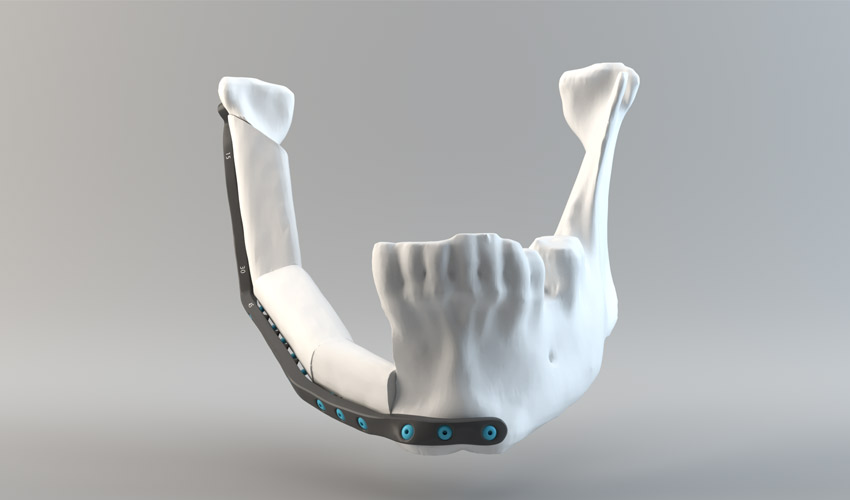
The Industrial Research Center of Quebec (CRIQ) recently acquired an Arcam EBM Q10plus 3D printer. It is an industrial machine based on electron beam melting technology. This acquisition should allow researchers to accelerate the development of lower jaw implants. Plus further transform the way they are now designed to more easily deliver tailored solutions.
CRIQ has been working for some time in collaboration with the CHU de Québec, particularly with cranio-maxillofacial surgeons. The Canadian government invested $ 3 million Canadian in their 3D printing center. Together, they are applying 3D technologies to improve the implant manufacturing process, proving once again that the medical sector is a pioneering industry in the use of additive manufacturing. Stephan Zeidler from the Business Development Department at GE Additive confirms: “Additive manufacturing enables companies to manufacture patient-specific implants and customised devices in small batch production, but still in a cost-effective, industrial process. This way, the technology perfectly serves the trend for more individualised treatments in healthcare.“
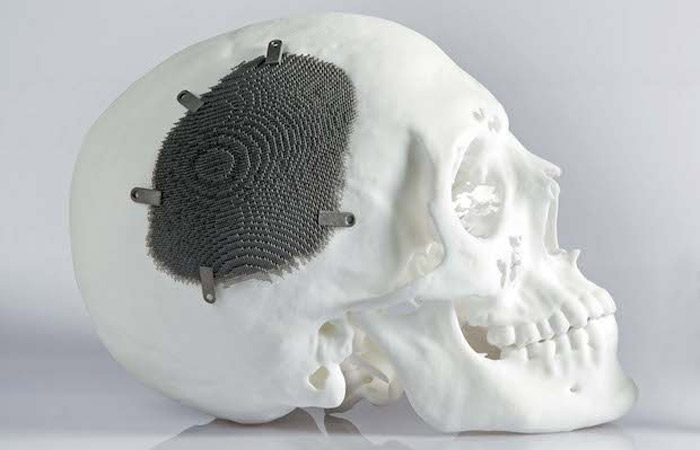
The medical sector makes a lot of use of additive manufacturing (photo credits: Arcam)
Reduced process and cost with better patient care
Since the beginning of their partnership in 2016, CRIQ and CHU de Quebec have reduced the concept process and validation of an implant from 6 to 3 weeks only. All thanks to additive manufacturing. The EBM technology developed by Arcam – now owned by GE Additive – is indeed considered ideal for the medical sector. Particularly in implant design, not only in terms of cost but also when it comes to long-term durability. The EBM Q10plus has therefore been installed in the medical 3D printing center in Quebec and will play a key role in this project. CRIQ should be able to manage the entire supply chain for the additive manufacturing of these implants. Including everything from design to printing, through post-processing, cleaning and sterilization.
More from the desk
Six other notes from the rest of the bench.
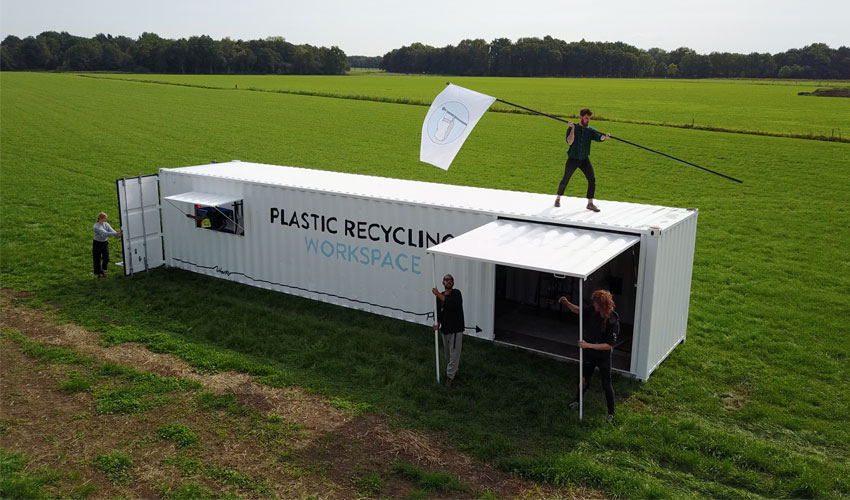 GuidesPrecious Plastic values recycling plastic waste with new technologiesPrecious Plastic is a community that started in the Netherlands with the main goal of fighting “plastic pollution”. For this, they created a network of workspaces where all the tools and machines give a second life to plastics, either directly…
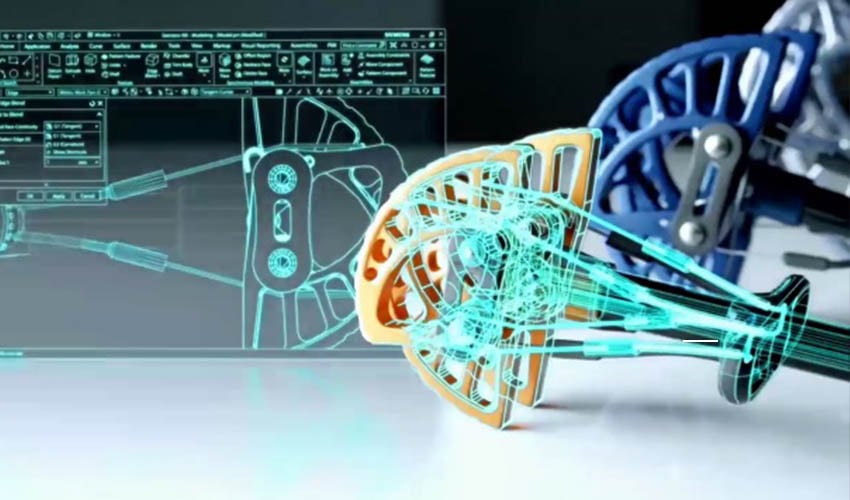 SoftwareIs generative design changing additive manufacturing?Generative design is an iterative design process that generates multiple design outputs that meet predefined constraints. This process is used in various fields such as art, architecture, and product design to produce outputs from sounds, images to CAD models. One…
 ApplicationsA student’s low-cost 3D printed prosthetic arm provides tactile feedbackLorenzo Spreafico, a student at the University of Leeds, has designed a 3D printed prosthetic arm with vibro-tactile feedback, allowing amputees to feel when they are touching something. This kind of device is usually very expensive, but additive manufacturing could…
 NewsGE Patents Blockchain Technology for Additive ManufacturingUS giant General Electric, one of the largest 3D printer vendors with its subsidiary GE Additive, recently filed a patent to use Blockchain technology to validate and verify 3D printed parts in its supply chain. This technology makes it possible…
 NewsZero-waste 3D printed skirtWe met with designer Julia Daviy recently, we had the pleasure of discussing with her the benefits that 3D printing technologies bring to the fashion industry in terms of design opportunities and sustainability. Recently, she launched a new piece, it’s…
 News3D Printing with Holograms to Speed Up the ProcessA study conducted by the Lawrence Livermore National Laboratory (LLNL) in collaboration with MIT, the University of Rochester and UC Berkley, demonstrates how the use of holograms in the 3D printing process can dramatically speed it up. 3D volumetric printing…