Applications
Researchers Used 3D Printing to Solve PPE Shortage in Nigeria
A recent academic paper has revealed that researchers from the University of Sussex and the Olabisis Onabanjo University in Nigeria turned to 3D printing and open-source designs to help deal with a shortage of personal protection equipment (PPE). Like many…
- 3 min read
- Applications
- Six more stories
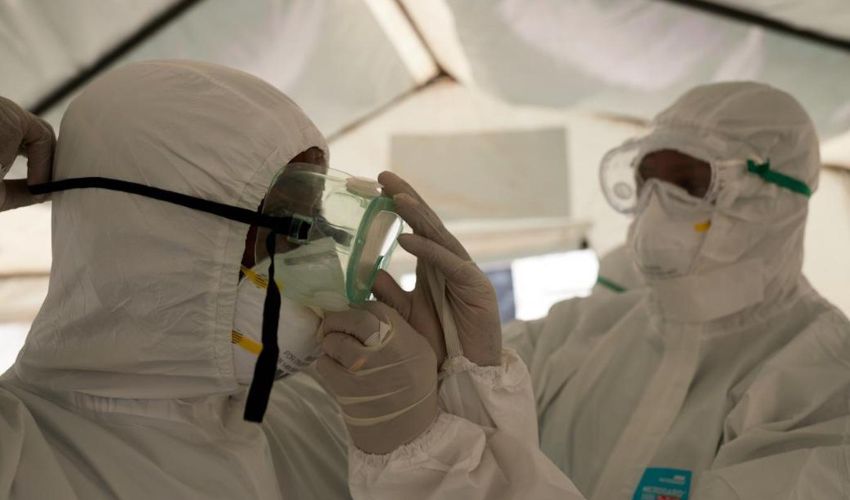
A recent academic paper has revealed that researchers from the University of Sussex and the Olabisis Onabanjo University in Nigeria turned to 3D printing and open-source designs to help deal with a shortage of personal protection equipment (PPE). Like many countries, this shortage arose in Nigeria during the Covid-19 pandemic. Andre Maia Chagas from the University of Sussex, and Dr. Royhaan Folarin from the Olabisi Onabanjo University in Nigeria explained the project in an article that was published in the latest issue of the monthly scientific journal PLOS Biology.
The Covid-19 pandemic hit the entire world without a warning and caused damage that still affects our everyday lives. However in times like now, when the pandemic seems to be coming to a state where everyone can slowly start to recover and process all that has been turning our lives upside down, we start to learn how the challenging situation impacted other parts of the planet. When the coronavirus found its way to Africa, more precisely Nigeria, it didn’t take long for the situation to turn problematic. The African country, given its population’s poverty and its unstable economy, quickly ran short on personal protection equipment (PPE) for its medical staff, which, as you know, is very important when dealing with the contagious virus.

Researchers Dr. André Maia Chagas and Dr. Royhaan Folarin (photo credits: Ralf Rebmann / scicomnigeria)
In an effort to solve the problem as quickly as possible, Dr. Andre Maia Chagas and Dr. Royhaan Folarin together searched for a possible solution. The researchers turned to additive manufacturing, which presented a great opportunity to not only produce 400 pieces of urgently needed PPE on time but also enabled cheaper and more sustainable production. The team managed to obtain the approved PPE designs via open-source, and without hesitation, 3D printed equipment for the local community to use, which turned out to cost less than half of what the usual equipment would have cost.
More from the desk
Six other notes from the rest of the bench.
 NewsTop 5 Videos: EnvisionTEC success story, and moreThis week we found the top 5 videos about 3D printing and the way additive manufacturing is changing production. The technology has infiltrated many sectors, from medical to automotive – check our selection of the week to keep up with the innovations! If you enjoy these, you&hell
 Software#3DStartup: Exponential Technologies (xT) Optimizing Production Processes With AIOptimization of printer parameters is an area in additive manufacturing that is currently experiencing a surge of innovation. This is because in order for companies to scale production and add additional printers to their fleet, consideration must be given to…
 NewsWill We Soon See 3D Printed Solar Batteries?The researchers at Oak Ridge National Laboratory (ORNL) have made a new discovery! This time, the scientists were interested in perovskites, a mineral originally considered to be a crystal composed of calcium, titanium and oxygen, but now referring to other…
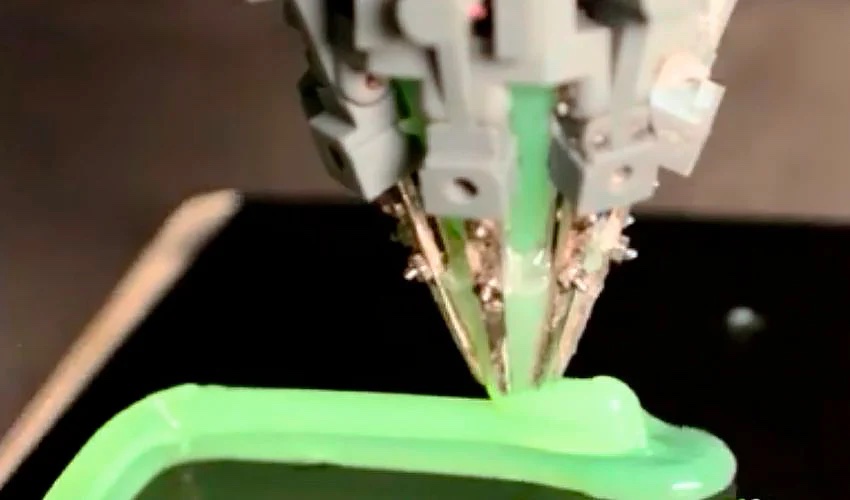 NewsAn Adaptive Nozzle for Both Fast and Accurate 3D Printing From Johns HopkinsWhen it comes to 3D printing, many users find themselves facing a choice of either a high resolution or a high speed. It is indeed challenging to reconcile both without compromising. Printing nozzles with a small diameter enable intricate details…
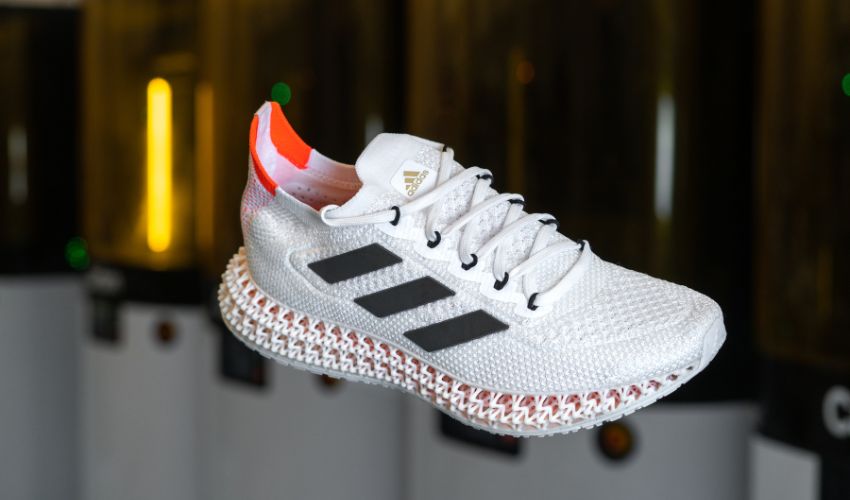 MaterialsCarbon on Developing More Innovative Materials and the Importance of Sustainability in AMWhen Carbon was founded in 2013, it set about to radically change product development and manufacturing with its ultra-fast photopolymerization printing process, Digital Light SynthesisTM (DLS). Since then, the company has continued to make waves as companies like adidas, Ford&he
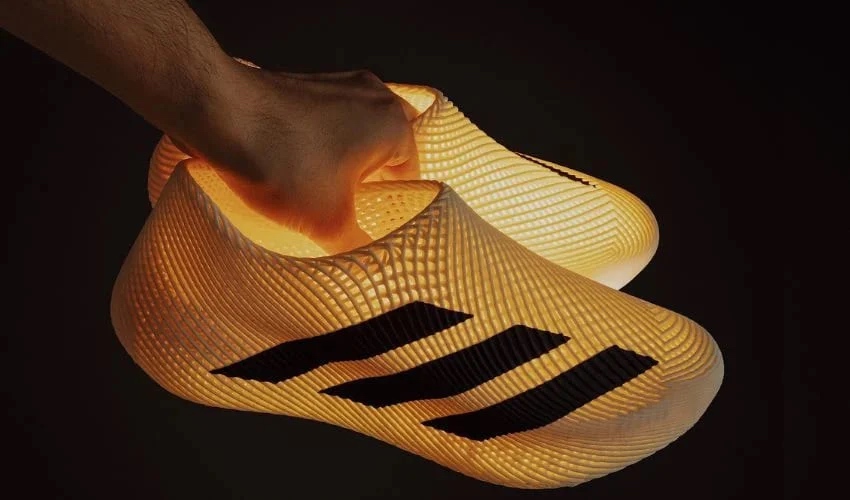 NewsWill Adidas Launch a Completely 3D Printed Sports Shoe With “Climamog”?New launches are often accompanied by a mixture of excitement and uncertainty. In this case, it’s the uncertainty that prevails, fueling a good deal of speculation. On Friday, September 13, photographer Tyler Mansour posted intriguing images on social networks of…