Applications
Relativity Space’s Launch Attempts of 3D-Printed Terran 1 Rocket Fail Due to Technical Issues
‘More info to follow on cause of aborts today’. Space launches do not always go off without a hitch. It has been disappointment for American company Relativity Space in recent days, who hoped to launch the first 3D-printed rocket on…
- 3 min read
- Applications
- Six more stories
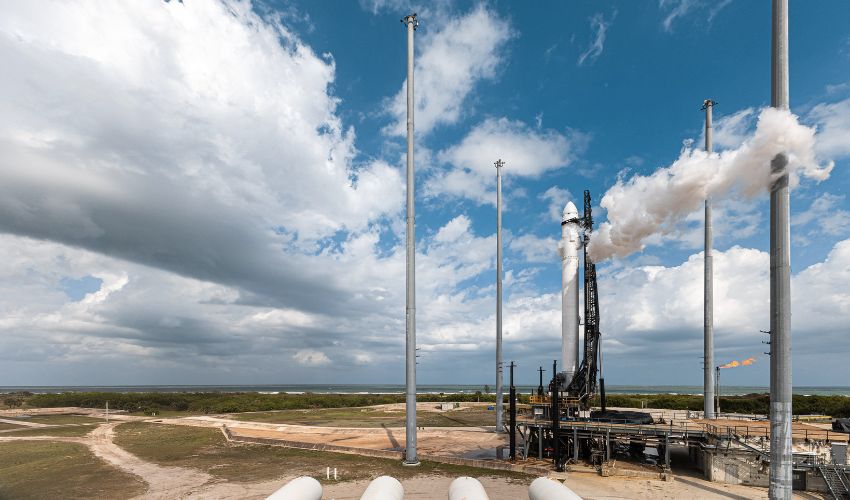
‘More info to follow on cause of aborts today’. Space launches do not always go off without a hitch. It has been disappointment for American company Relativity Space in recent days, who hoped to launch the first 3D-printed rocket on March 8th from Cape Canaveral, Florida on an unmanned mission called GLHF (Good Luck, Have Fun). This initial launch and the subsequent one this past Saturday 11th were scrubbed for technical reasons in the few seconds before liftoff. However, the rocket in question – the Terran 1 – remains healthy and the next launch date is in sight, according to the company.
The initial launch on March 8th was much anticipated in the industry, with people hoping for it to prove the capabilities of the metal 3D printing for rocket manufacture. As the clock ticked down, the propellant’s thermal conditions on the second stage (the Aeon vac engine) exceeded the limit needed for space flight, leading it to be abandoned. Subsequently, the second launch attempt on March 11th was scrubbed, first due to a corner case in the stage separation automation which aborted at T.5 seconds – essentially meaning that a problem occurred outside of normal operating parameters, causing the launch to halt in the last half a second. The second attempt was scrubbed due to another technical issue, this being low fuel pressure; it was under the minimum limit by one Pound per Square Inch (PSI).

Cape Canaveral, Florida, is the launch base for many rocket missions (Photo credit: NASA)
The Terran 1 was built using 3D printing technologies, and 90% of the dry mass of the final product was created using 3D printing, combining large-scale metal printing with Stargate printers with DMLS for small, geometrically complex parts. The end result is a 35 metre tall vehicle powered by natural gas and liquid oxygen, with nine Aeon-1 engines on the first stage and one Aeon Vacuum engine on the second stage. According to the company, the use of 3D printing technology resulted in a 100 percent reduction in part count, as well as a lower lead time and overhead; the final result is reportedly more reliable.
More from the desk
Six other notes from the rest of the bench.
 MaterialsAustralian Scheme Recycles PPE for 3D Printing FilamentThe COVID-19 pandemic devastated communities all over the world, and we are still feeling the social and medical effects today. One aspect which sometimes goes unmentioned is the excess of PPE (Personal Protective Equipment) waste: this includes masks, gloves, and…
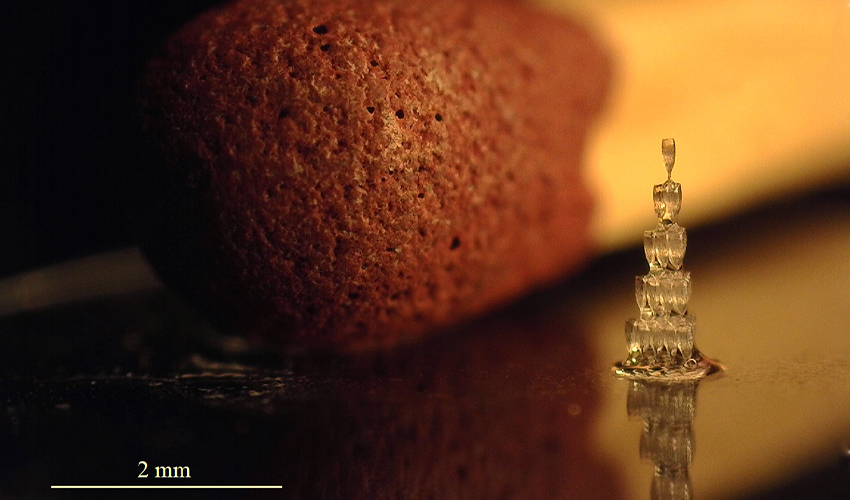 PrintersThe smallest champagne pyramid ever 3D printedUsing its microfabrication 3D printing technology, Microlight3D created a 2-millimeter high champagne pyramid, consisting of 35 micro glasses. The French company has a great deal of experience in microprinting; with this creation it has managed to design the smallest pyramid&hell
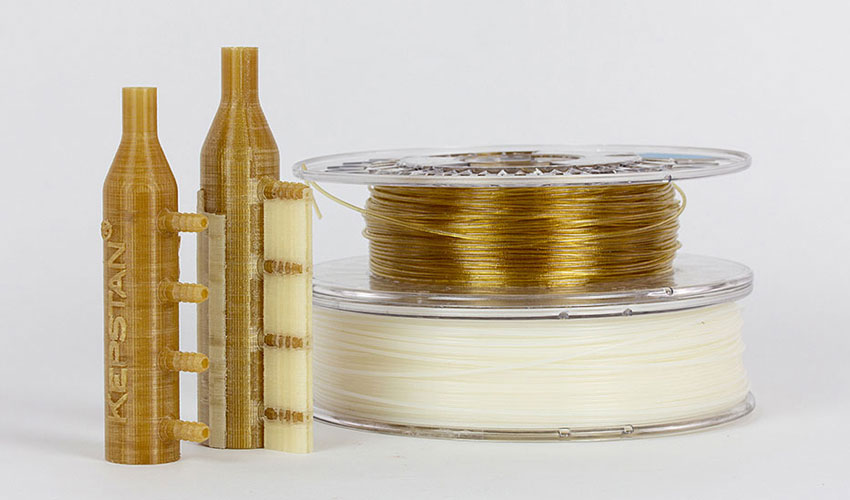 MaterialsAll You Need to Know About PEKK for 3D PrintingPolyetherketoneketone, better known by its acronym PEKK, is a semi-crystalline thermoplastic that is increasingly used in the additive manufacturing market. Often compared to PEEK, it belongs to the same family – the PAEK family – known for its mechanical and…
 News3D Printing Magic Meets Box Office Realities With Disney Pixar’s ‘Elemental’Amidst the buzz surrounding the remarkable 3D printed characters of Disney Pixar’s “Elemental,” there’s an underlying cloud of skepticism lingering in the air. The film, set in the imaginary Element City, where fire, water, land, and air residents coexist,
 NewsFast Complexity: Efficient and customizable concrete 3D printingAdditive manufacturing is starting to play a very important role in the construction industry. Concrete 3D printing keeps gaining more and more popularity among architects and construction firms for two main reasons – it is cheaper and faster than the…
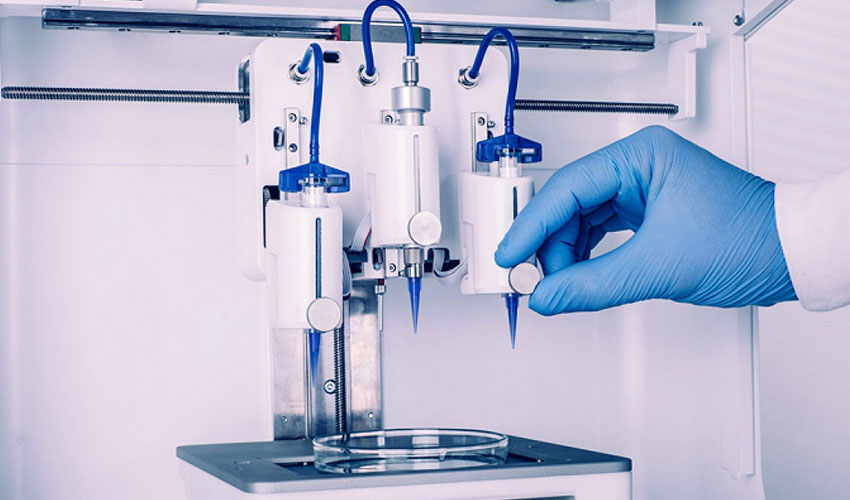 PrintersCELLINK, providing researchers with affordable bioprinting technologyRecently, CELLINK, based in Boston, launched the BIO X6 bioprinting platform. This six-printhead bioprinting platform enables users to combine more materials, cells and tools than other systems currently available on the market. In fact, the company specialises in designing and&h