News
Fast Complexity: Efficient and customizable concrete 3D printing
Additive manufacturing is starting to play a very important role in the construction industry. Concrete 3D printing keeps gaining more and more popularity among architects and construction firms for two main reasons – it is cheaper and faster than the…
- 3 min read
- News
- Six more stories
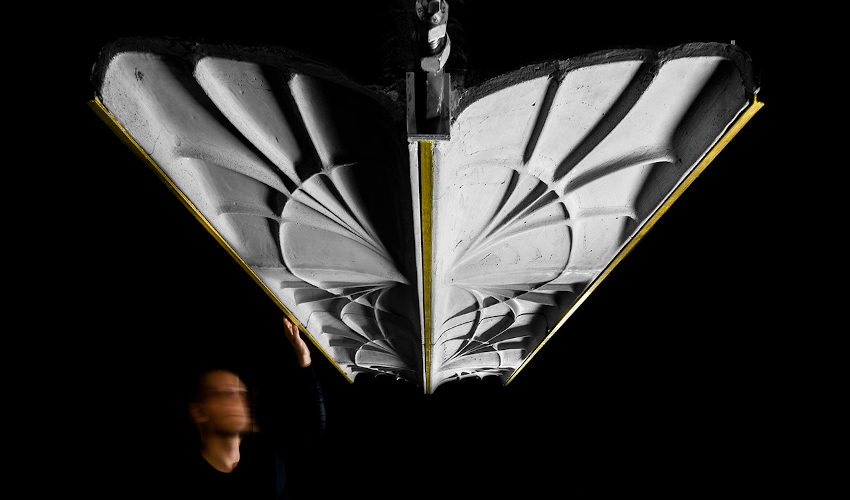
Additive manufacturing is starting to play a very important role in the construction industry. Concrete 3D printing keeps gaining more and more popularity among architects and construction firms for two main reasons – it is cheaper and faster than the conventional processes. Plus, as concrete contributes 8% to the global carbon footprint, it is vital to use it as efficiently as possible, and the existing optimization algorithms allow to cut the amount of material needed in half! But architects have been facing a problem: fabrication technologies are quite limited when it comes to building quickly and at low costs. The conventional formworks (a mold into which concrete is poured) allow to build only predefined geometries with limited customization. That’s where project Fast Complexity comes into play – ETH Zurich introduced an automated solution that combines the fabrication speed with the geometric precision of concrete 3D printing.
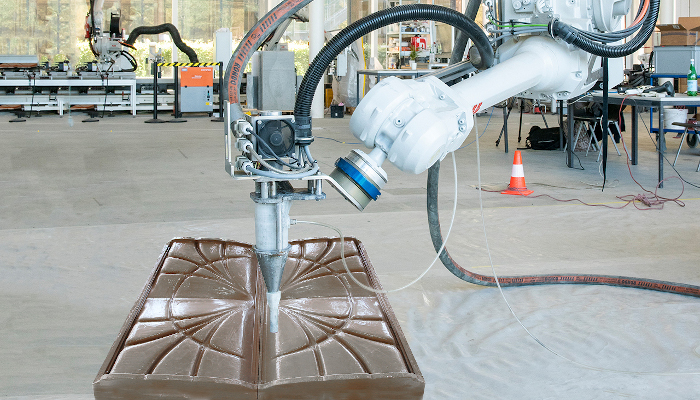
Image credit: Digital Building Technologies
Concrete 3D printing
Technically, concrete 3D printing is not drastically different from FDM 3D printing, only the size of the printer is much bigger and instead of a filament, concrete is used. Both concrete 3D printers and FDM printers are controlled via g-code, a machine language that directs the print head of the 3D printer until the desired 3D model is produced. The similarity between plastic FDM printers and concrete printers can be summed up in two words: material extrusion.
Project Fast Complexity
To demonstrate their new method Digital Building Technologies, ETH Zurich used a highly optimized structural slab prototype. A slab is a structural element made of concrete, it’s used to create horizontal surfaces such as floors, ceilings, etc. ETH Zurich’s unique process allows to dynamically control the setting rate of the 3D printed concrete. In other words, builders can “extrude a fluid concrete that perfectly emulates the complex surface of the formwork, and a fast setting concrete that does not need any additional formwork for the upper structure”.
More from the desk
Six other notes from the rest of the bench.
 PrintersAn Introduction to Bed Leveling in 3D PrintingWhen it comes to 3D printing, one of the most daunting aspects for all levels, whether absolute beginners or professionals, is print failures. One technology which is particularly notorious for this is FDM 3D printing as so many different aspects…
 NewsPeter Lang’s 3D Printed ‘Silent Orchestra’Sound absorbers, as the name suggests, are used primarily to silence certain noises in a room, helping to ultimately improve the acoustics by reducing unwanted sound. They are used by many different interested parties, but especially musicians. At the same…
 ApplicationsProject Chaos: when an ultracar meets 3D printingSpyros Panopoulos is a Greek racing car enthusiast who has given his name to his company: he recently unveiled the new project he has been working on for the past two years. Project Chaos is a ultracar with very high…
 NewsTop 5 Videos: Using FDM to Print Ceramic and Metal FilamentsIn this week’s top 5, check out the latest webinar from 3Dnatives, “How Can You Use FDM to Print Ceramics and Metals?” Though ceramic and metal filaments are becoming increasingly common, especially for those using FDM for industrial purposes, there…
 MaterialsResearchers reproduce the surface of a human tongue thanks to 3D printingResearchers at the University of Leeds, in collaboration with Edinburgh University, have 3D printed soft synthetic surfaces with the same texture as a human tongue. Made of silicone, they could mimic the topology, elasticity and wettability of this complex organ.…
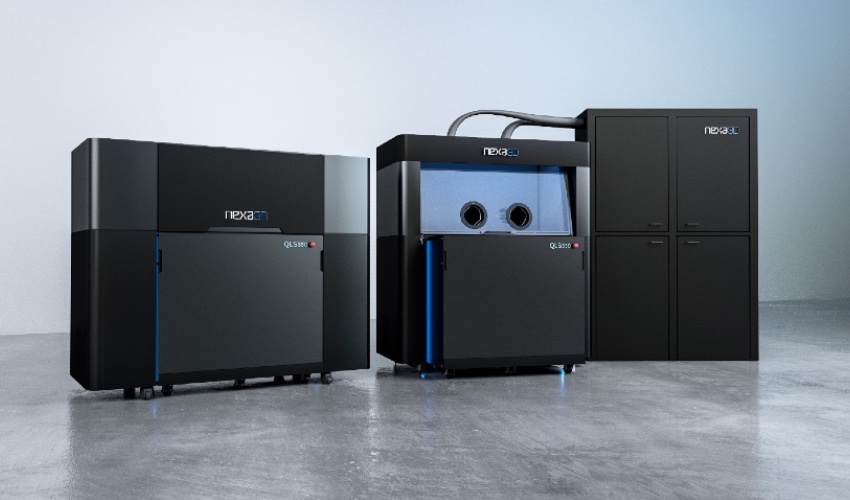 NewsNexa3D announces partnership with Siemens, releases a new polymerNexa3D is a California-based startup that manufactures industrial grade 3D printers and develops materials, mainly resins. Lately, the company has been rather active on the additive manufacturing arena expanding its portfolio of products and forming strategic partnerships. For in