Printers
LLNL is able to reduce metal powder spatter during fabrication
At the Lawrence Livermore National Laboratory (LLNL), a team of researchers has developed a technique to reduce the defects that can occur during the metal 3D printing process, particularly during laser powder bed fusion. Using a computer model, they were…
- 3 min read
- Printers
- Six more stories
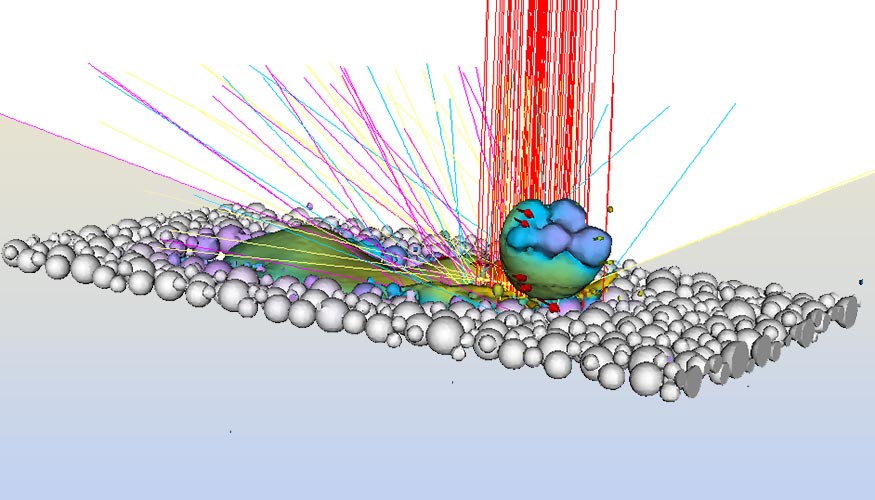
At the Lawrence Livermore National Laboratory (LLNL), a team of researchers has developed a technique to reduce the defects that can occur during the metal 3D printing process, particularly during laser powder bed fusion. Using a computer model, they were able to carry out various construction experiments on a microscopic scale, simulations which led to the definition of a stability criterion and a power map. This could help to reduce printing defects caused by powder particles ejected from the laser trajectory that fall back onto the workpiece – these are called spatters or projections.
Laser powder bed fusion (LPBF) is a metal additive fabrication process that uses a laser to solidify the powder layer by layer until the desired part is achieved. During the printing process, a number of parameters must be taken into account to avoid errors – laser power, part orientation, temperature management, etc. – and to ensure that the laser is always in the right position. Despite this, it is not uncommon to obtain a part with large cavities and pores – the laser can sometimes dig a hole in the metal due to too much energy being focused on a particular point.
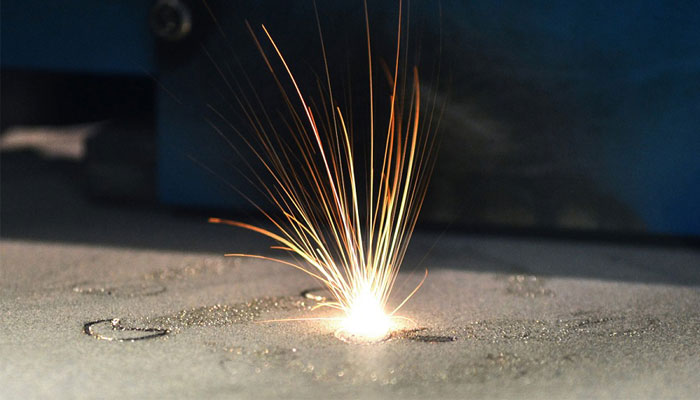
Metal powder spatter could increase defects
Reducing metal powder spatters
Researchers at the LLNL have pinpointed another type of problem: the LPBF process can cause powder spatters. The powder is deflected from its original trajectory and deposited on the workpiece without being fused. Pores and defects appear, reducing the quality of the final part. Saad Khairallah, lead author of the study and computer physicist at LLNL, explains: “Spatter is the enemy of beautiful parts; it is not just small particles that fly, it can create powder aggregates that can then affect the print in various ways and under different scenarios.”
More from the desk
Six other notes from the rest of the bench.
 Printers3Dnatives Lab: Testing the Go!SCAN 3D scanner from CreaformFounded in 2002 in Quebec, Creaform is one of the pioneering manufacturers of metrology solutions. Acquired in 2012 by AMETEK Inc., a leading group in measuring instruments, over the years the company has developed several professional 3D scanners for industries…
 NewsStriatus, The First 3D Printed Bridge Made From Unreinforced ConcreteArchitects and engineers from ETH Zurich, in collaboration with Zaha Hadid Architects and Incremental3D, among others, have designed a 3D printed bridge made of unreinforced concrete. The 12 x 16-meter arched bridge is being installed in a park in Venice…
 GuidesStartup of the month, Xometry: The one-stop shop for manufacturing on demandEach month the 3Dnatives team searches across the globe for the latest startups in 3D printing that are helping to revolutionize the industry as we know it. This month, we have chosen Xometry, a one-stop shop for manufacturing on demand for engineers…
 NewsTop 5 Videos: 10 ways to upgrade your 3D printer in 2021This week we found the top 5 videos about 3D printing and the way additive manufacturing is changing production. The technology has infiltrated many sectors, from medical to automotive: check our selection of the week to keep up with the innovations! If you enjoy these, you&helli
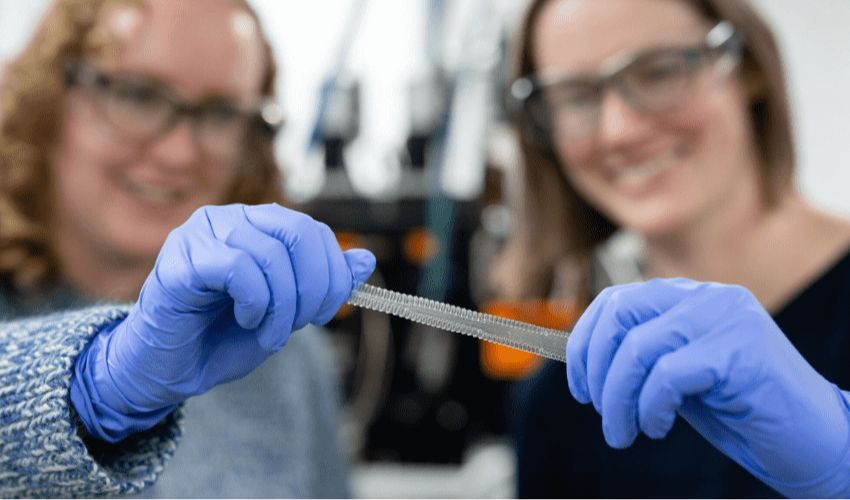 MaterialsRigid or Elastic? The Plastic Material that Changes Properties Thanks to 3D PrintingIn recent years, many university research projects have been developing multifunctional materials through additive manufacturing. In the medical field, for example, it is important to create fabrics capable of regenerating organs or bone structures and design advanced biomedical
  Materials3D Printed Cellulose Nanocrystals Are as Hard as Aluminum AlloysAt MIT, a team of researchers has developed a composite material from a synthetic polymer and cellulose nanocrystals. Designed in the form of a gel, it was used to 3D print different shapes, including a tooth, in order to demonstrate…