Materials
3D Printed Cellulose Nanocrystals Are as Hard as Aluminum Alloys
At MIT, a team of researchers has developed a composite material from a synthetic polymer and cellulose nanocrystals. Designed in the form of a gel, it was used to 3D print different shapes, including a tooth, in order to demonstrate…
- 3 min read
- Materials
- Six more stories

At MIT, a team of researchers has developed a composite material from a synthetic polymer and cellulose nanocrystals. Designed in the form of a gel, it was used to 3D print different shapes, including a tooth, in order to demonstrate the possible future applications of this material. This includes the possibility of producing dental implants with interesting properties when it comes to strength and durability.
Cellulose is a component found in plants, trees and other living species such as algae or bacteria. It is a very abundant natural structure on our planet, which makes it a particularly interesting subject of study for many researchers. Last year, we introduced you to the European project NOVUM which is looking into transforming cellulose into 3D printing material. It would be a greener alternative to petroleum-based products that could have a strong environmental impact on many different industries, including additive manufacturing.
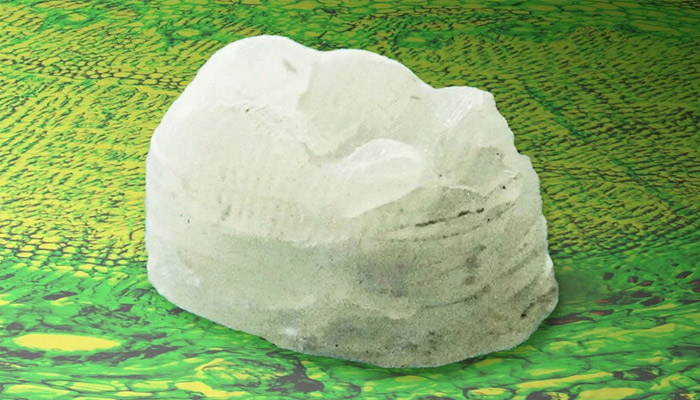
The team succeeded in reproducing the shape of a tooth using this composite material (photo credits: MIT)
The MIT team looked at nanocrystalline cellulose (CNC), which the researchers describe as organic polymer chains arranged in near-perfect crystal patterns that can be extracted from cellulose fibers by acid hydrolysis. These CNCs have unique properties including high strength, thermostability and high chemical reactivity. And just so, the team wanted to build on its strength and understand how they could exploit this abundant material.
More from the desk
Six other notes from the rest of the bench.
 ApplicationsMini Electric Pacesetter, A Partially 3D printed Formula E Safety CarThe MINI Electric Pacesetter (built in the image of the MINI Cooper from John Cooper Works, or JCW) has become the new safety car for the ABB FIA Formula E World Championship races. This new vehicle embodies the manufacturer’s desire…
 NewsRepairing Bridges with 3D Printing? UMASS Amherst Looks to Cold Spray AMBridge maintenance is a critical yet labor-intensive task, particularly due to the vulnerability of materials like steel to corrosion. According to the 2025 Report Card for America’s Infrastructure, only 49% of U.S. bridges are rated in “fair” condition, while 6.8%…
 News3D Systems: New Strategy Leads to Decline in Sales3D Systems, an American manufacturer of 3D printers, materials and scanners, is known to be one of the biggest players in the additive manufacturing industry. However, based on the company’s recently published financial report, it has become apparent that the…
 NewsSolidworks World 2018 Recap: Industrial RenaissanceHaving spent 4 days in Los Angeles, Solidworks World 2018 ended on Wednesday. The event brought many users of Dassault Systèmes’ software, Solidworks, together. These range from companies in the virtual reality, CAD, augmented reality and 3D printing industries, eager&helli
 SoftwareChiTuBox, the Slicer Designed for Resin 3D PrintingWhen it comes to 3D printing software, one of the most critical are slicers, which are used to prepare a 3D model for printing. These intermediaries convert the 3D model into a series of thin layers and generates a G-code…
 ApplicationsUniversity of Minnesota Medical School Receives 3D Printers to Better Study the HeartBoth education and medicine are sectors that have continuously seen the value of additive manufacturing. Now, Stratasys has combined the two, donating Stratasys J750™ Digital Anatomy™ 3D printers, as well as MakerBot METHOD X® and MakerBot SKETCH® 3D printers to the Visible Heart