Materials
Rigid or Elastic? The Plastic Material that Changes Properties Thanks to 3D Printing
In recent years, many university research projects have been developing multifunctional materials through additive manufacturing. In the medical field, for example, it is important to create fabrics capable of regenerating organs or bone structures and design advanced biomedical
- 3 min read
- Materials
- Six more stories
In recent years, many university research projects have been developing multifunctional materials through additive manufacturing. In the medical field, for example, it is important to create fabrics capable of regenerating organs or bone structures and design advanced biomedical devices. At the same time, other sectors are creating new 3D printable materials, offering a wide range of potential applications.
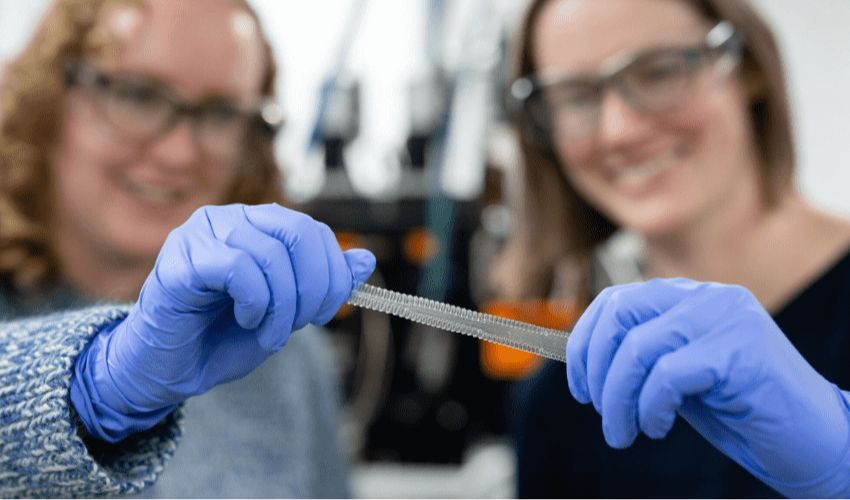
To demonstrate this, Alice Fergerson and a team of engineers from Princeton University, led by Emily Davidson, have developed a plastic material capable of adopting different levels of flexibility. The material, composed of a class of polymers known as TPEs, enables the design and manufacture of flexible 3D-printed structures whose rigidity can be adjusted. Thanks to 3D printing, engineers have been able to control the physical properties of this material, enabling the fabric to stretch and bend repeatedly in one direction while retaining rigidity in another.
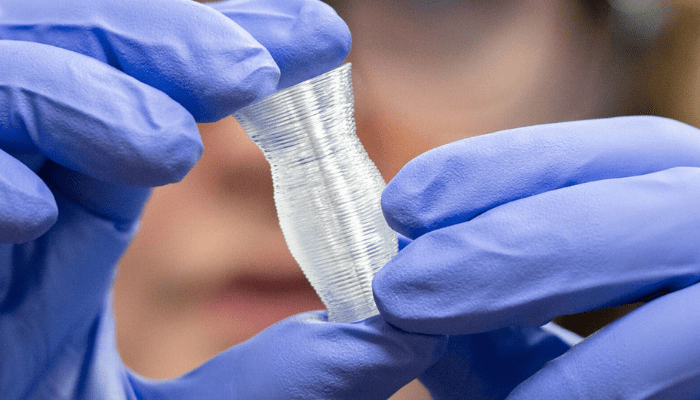
The Characteristics of Plastic Material
The thermoplastic elastomer selected by the Princeton University engineering team is a block copolymer that can be molded when molten. As it cools, it solidifies to form an elastic structure. This phenomenon is explained by the behavior of the copolymer’s internal components, composed of homopolymers, which separate like oil and water rather than mixing. The researchers used this characteristic to create a material consisting of rigid cylinders dispersed in an elastic matrix, enabling the material to remain flexible while retaining its internal properties.
More from the desk
Six other notes from the rest of the bench.
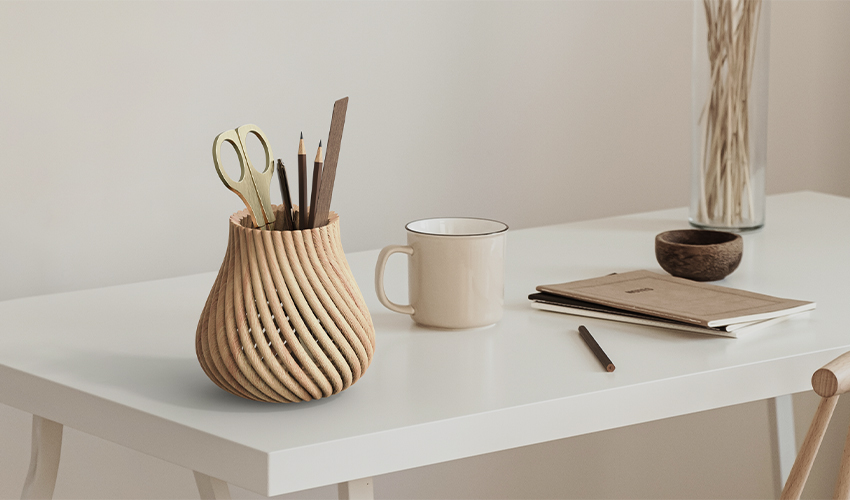 MaterialsWith Forust, Desktop Metal Invests in Wood 3D PrintingAt the start of the year, Desktop Metal expressed its desire to tackle the resin additive manufacturing market with the acquisition of EnvisionTEC, one of the historical leaders in resin 3D printing. But the plans of the American giant do not…
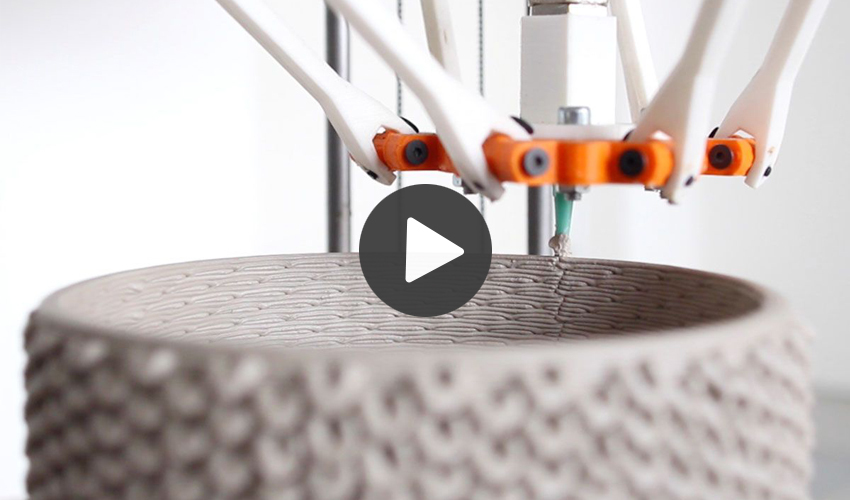 NewsTop 5 Videos: The opportunities of ceramic 3D printingThis week we found the top 5 videos about 3D printing and the way additive manufacturing is changing production. The technology has infiltrated many sectors, from medical to automotive – check our selection of the week to keep up with the innovations! If you enjoy these, you&hell
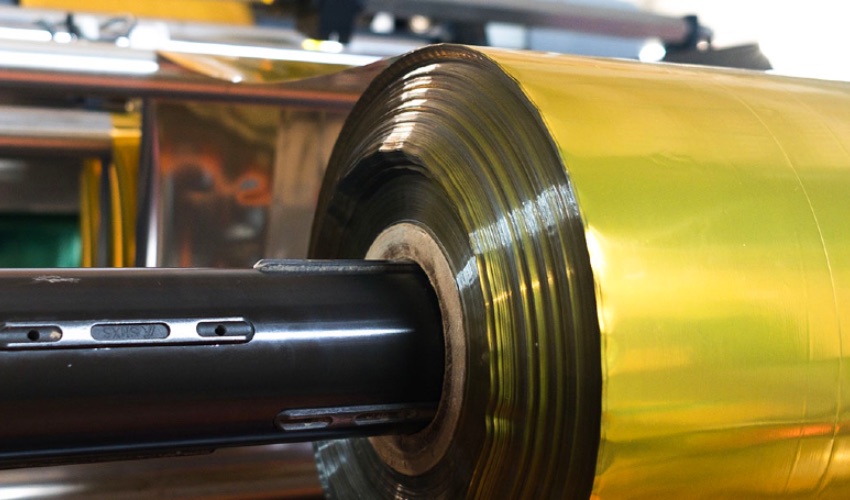 MaterialsThe US Army invests up to $11 million in the development of new polymersThe US Army keeps exploring the wide range of possibilities provided by additive manufacturing technologies. Recently, the Army allocated $11 million in total for the research and development of new high-performance polymer materials. Who will be conducting the research? The&hell
 NewsSongBird: The 3D Printable Vinyl Turntable KitAs surprising as it may sound, 3D printing has over time become a major technology in the music world. Whether it’s to create and customize instruments or to improve sound quality , additive manufacturing offers many benefits to the music industry. And following in…
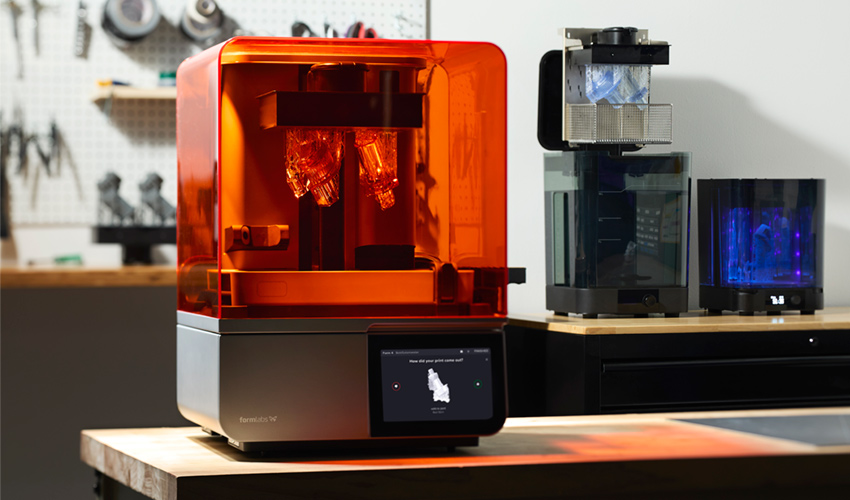 PrintersWhat New Products Will Formlabs Present This Year at RAPID + TCT?With the 2024 edition of RAPID + TCT just around the corner, many companies that will be present at the event are already preparing everything they need. Many of them are taking advantage of this opportunity to showcase their technology…
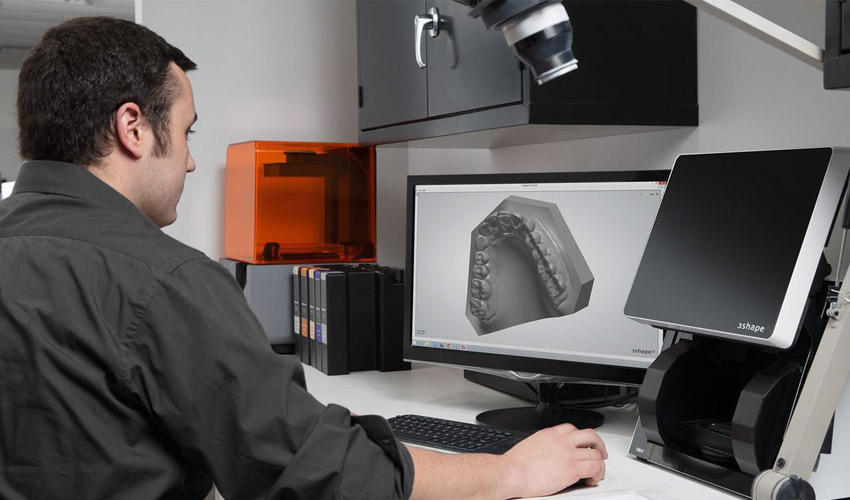 ApplicationsDental 3D Printing: how are 3D technologies revolutionising this sector?Additive manufacturing has reached a significant number of sectors and industries, subsequently offering important advantages in terms of productivity, costs, customisation and lead times. In the field of dentistry the technology creates solutions adapted to the needs of each pat