Materials
Reciflex, the new TPU filament made out of 100% recycled material
We have all heard it before, the classic mantra of “Reduce, reuse, recycle.” Well, Spanish company Recreus has put the concept into action with their newly introduced Reciflex, a TPU filament for 3D printing that is made 100% out of…
- 3 min read
- Materials
- Six more stories
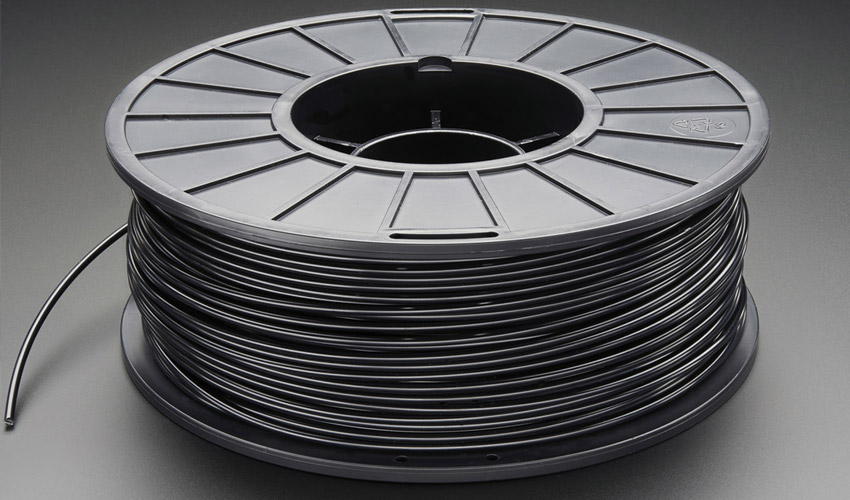
We have all heard it before, the classic mantra of “Reduce, reuse, recycle.” Well, Spanish company Recreus has put the concept into action with their newly introduced Reciflex, a TPU filament for 3D printing that is made 100% out of recycled products. This innovative thermoplastic has been manufactured from waste from the footwear industry and Recreus’ own in-house production. The company is known for the different filaments it develops and, specifically, for its flexible FilaFlex material. On this occasion, Recreus has taken this to the next level, offering a solution that is just as reliable as their other products, but created entirely from recycled material. In this way, they have demonstrated their commitment to the environment and their resilience to the current climate crisis.
The expansion of Recreus’ product portfolio with the launch of Reciflex, aims to promote the circular economy, going a step further in terms of sustainability and meeting the demands of its customers. Ignacio García, CEO of the company, says: “This is a project that was very much on our minds at Recreus and we were eager to tackle it. The community, customers and the industry were also demanding it, and thanks to the research and testing work we have done in recent months in the company, we have achieved a great material as a result”.
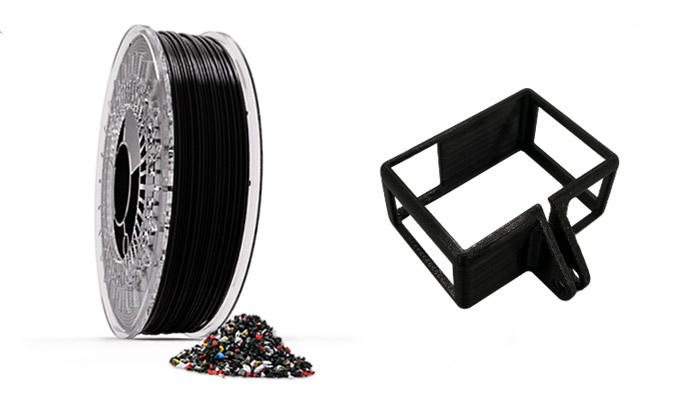
Photo Credits: Recreus
Characteristics of Reciflex
Even though it is made from recycled products, Recreus remains committed to the creation of quality filaments. In this case, Reciflex filament is carefully selected and magnetically screened for production. This is done in order to prevent metallic residue, thus guaranteeing that the material will perform correctly during the printing process. It has a hardness ranging from 96A to 98A SHORE “A”, due to variations that can be attributed to its origin as a recycled material, but which are practically imperceptible in the final 3D printed parts. The filament is ideal for the manufacturing of parts with demanding mechanical requirements, such as phone cases, drone protections, wheels for radio control cars and robots, or parts that are in contact with solvents.
More from the desk
Six other notes from the rest of the bench.
 News#TOP5 videos: 3D Printed Skaterbot and much more!We found the TOP 5 videos of the week about 3D printing and the way additive manufacturing is shaping and changing our society. 3D printed skaterbot, micro structures, biomedical implants, metallic dental parts and more! If you enjoy these, you can…
 PrintersA new 3D printer aboard the International Space Station?The European Space Agency (ESA) is currently testing a 3D printer capable of operating in zero gravity, designed by various international partners; it will be designed to print technical polymers with high mechanical and thermal properties. Although it is still…
 NewsIntroducing Cacao Eco Village, a Sustainable Village Made from 3D Printed Cocoa WasteThe architecture studio Valentino Gareri Atelier has imagined a new concept for a sustainable and smart village. Called Cacao Eco Village, it has been conceived as a hub of technologies, a space for the innovators of tomorrow, a place of…
 ApplicationsNTU Has Developed a 3D Printed ‘Active’ Fabric for Flexible, Made-to-Measure Limb Supports3D printing is increasingly transforming the medical sector. Whether it’s to develop exoskeletons, cancer-fighting devices or tailor-made medicines, additive manufacturing has proven its worth time and time again. Today, we turn our attention to Singapore, where researchers
 ApplicationsKAV Has Launched a Kickstarter Campaign For 3D Printed Bike HelmetsFor quite a few years now, 3D printing has been used in sports. Used for various applications, mainly to manufacture protective gear, additive manufacturing has repeatedly demonstrated the vast possibilities that it can offer to athletes. In American football, cycling…
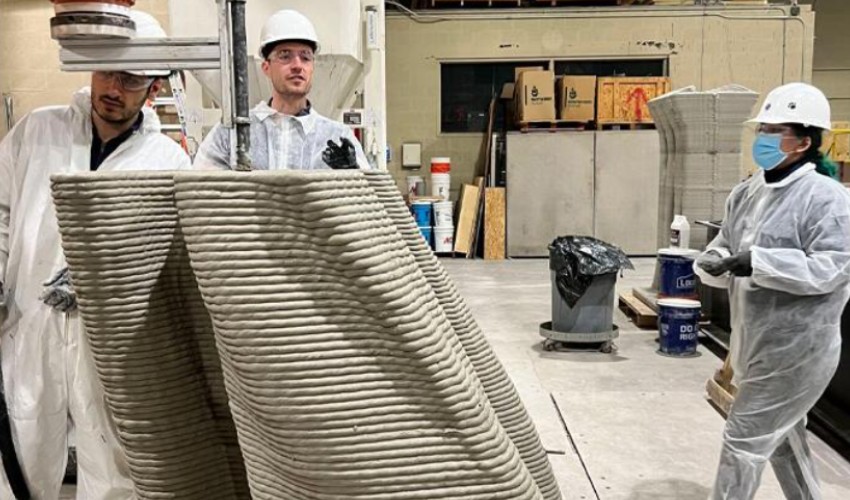 NewsPenn State Tackles Alaska’s Housing Shortage with 3D Printed Homes InitiativeIn Alaska, where rugged landscapes and harsh winters have exacerbated the housing crisis , researchers at Penn State have developed a promising solution to alleviate the state’s housing shortage. Led by Professor José Pinto Duarte, Stuckeman Chair in Design Innovation&helli