News
Penn State Tackles Alaska’s Housing Shortage with 3D Printed Homes Initiative
In Alaska, where rugged landscapes and harsh winters have exacerbated the housing crisis , researchers at Penn State have developed a promising solution to alleviate the state’s housing shortage. Led by Professor José Pinto Duarte, Stuckeman Chair in Design Innovation&helli
- 3 min read
- News
- Six more stories
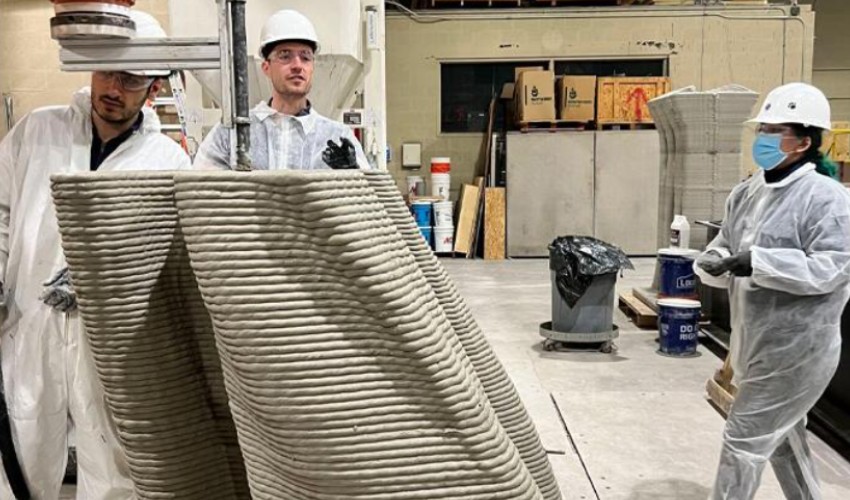
In Alaska, where rugged landscapes and harsh winters have exacerbated the housing crisis , researchers at Penn State have developed a promising solution to alleviate the state’s housing shortage. Led by Professor José Pinto Duarte, Stuckeman Chair in Design Innovation and Director of the Stuckeman Center for Design Computing in the College of Arts and Architecture’s Stuckeman School, the research team at Penn State University has turned to 3D printing technology to address the state’s critical need for affordable housing. Their vision? To build sustainable, warmer, and more cost-effective homes for Alaskan residents in need.
Alaska faces a pressing demand for new housing, with current estimates suggesting a need of 27,500 units over the next ten years to combat overcrowding and unsanitary living conditions. In recent years, traditional construction methods have struggled to meet this growing demand, particularly in remote areas where rugged terrain and far distances pose significant transportation and infrastructural challenges. However, with a $376,000 grant from the US Department of Housing, Penn State University seeks to alleviate Alaska’s housing crisis by 3D printing affordable concrete homes.
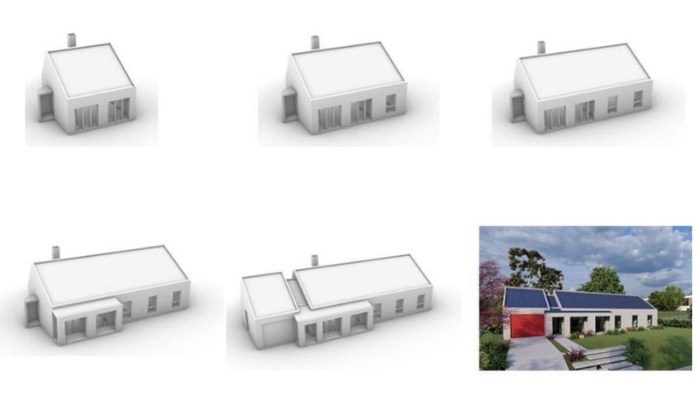
Renderings of the 3D printed concrete houses.
At the core of this project lies a collaboration between Penn State’s Additive Construction Laboratory (AddConLab) and the Xtreme Habitats Institute (XHI), a non-profit organization dedicated to exploring innovative technologies that may enhance living conditions for Alaskan residents. Partnering with XHI, Penn State is deploying a mobile 3D concrete printer that promises to address various challenges unique to Alaska’s housing landscape. This system will enable rapid construction while reducing costs, and will utilize local materials to help mitigate environmental impact and enhance sustainability.
More from the desk
Six other notes from the rest of the bench.
 NewsAerial Additive Manufacturing: Architecture with 3D Printing DronesTypically, standard 3D printing is limited by a maximum print volume. 3D printing with robotic arms offers somewhat of a solution, with a greater range of motion and volume, but even here, the technology has a restricted capacity. A research…
 NewsADDLAB, the 3D printing laboratory at the heart of Decathlon innovationA few days ago, the French brand Decathlon inaugurated its first store concept of the future, which integrates an ADDLAB laboratory and is located in Villeneuve d’Ascq, the north of France. Called Decathlon DX, the 800 square meter store shows…
 NewsSteakholder Foods Unveils Its New, Highly Marbled 3D Printed Beef CutsRecently, international deep-tech food company Steakholder Foods Ltd announced the release of a new, 3D printed meat cut called Omakase Beef Morsels. The richly marbled structured meat product is the first of its kind and was created using a specific 3D-bioprinting…
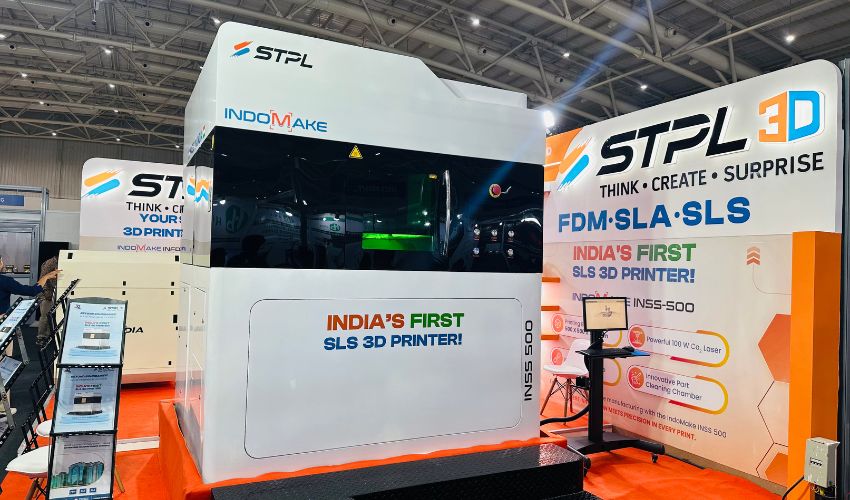 PrintersThe First Made-in-India SLS 3D Printer Makes its DebutThough we hear most often about the major additive manufacturing markets, namely the United States, Europe and China, that does not mean the technologies are not expanding elsewhere in the globe. One that seems primed in particular for expansion is…
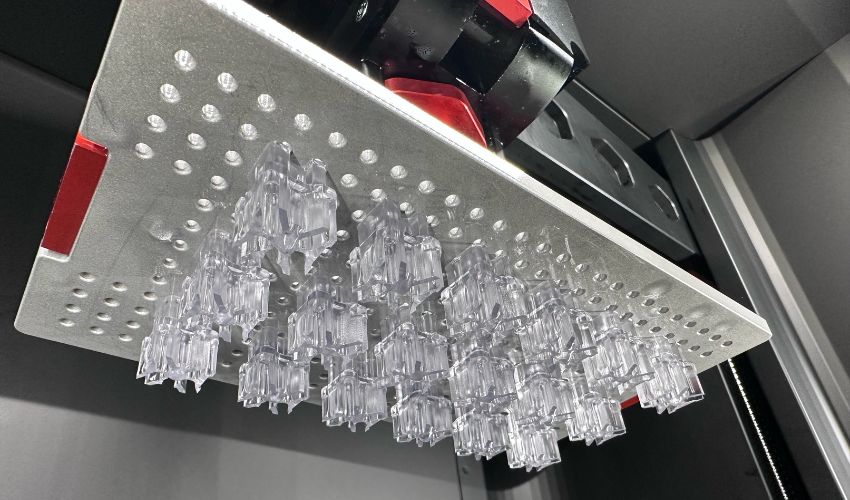 PrintersThe Lumia X1 Is Overcoming Limitations in Resin 3D Printing With an Innovative Hybrid ProcessSince stereolithography, the first additive manufacturing technology, was invented in the early 80s, there has always been a place for resin 3D printing in the sector. Currently, a number of different variations exist but the two most common remain DLP…
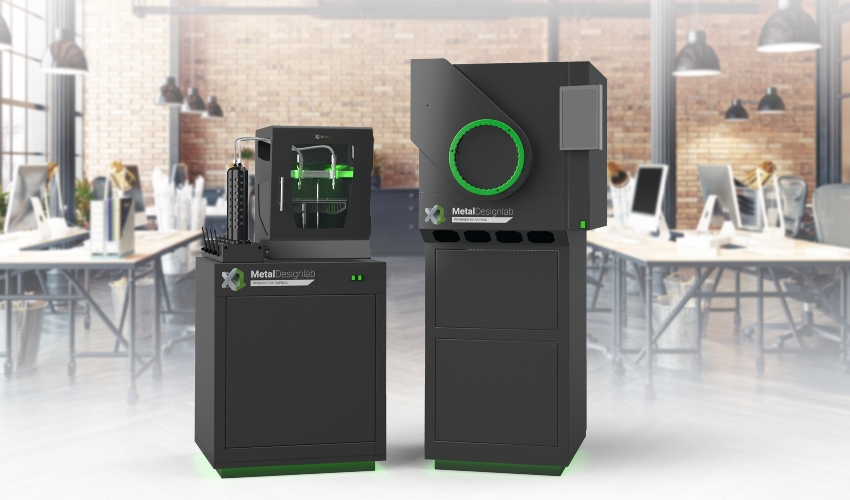 NewsExOne and Rapidia launch the world’s fastest, office-safe, metal 3D PrinterPartnering with Rapidia, ExOne has just launched the world’s fastest, office-safe, metal 3D printer. In an exclusive collaboration, the companies have released a complete metal 3D printing system comprising the ExOne Metal Designlab™ and X1F advanced furnace. The novel solution&h