News
Introducing Cacao Eco Village, a Sustainable Village Made from 3D Printed Cocoa Waste
The architecture studio Valentino Gareri Atelier has imagined a new concept for a sustainable and smart village. Called Cacao Eco Village, it has been conceived as a hub of technologies, a space for the innovators of tomorrow, a place of…
- 3 min read
- News
- Six more stories
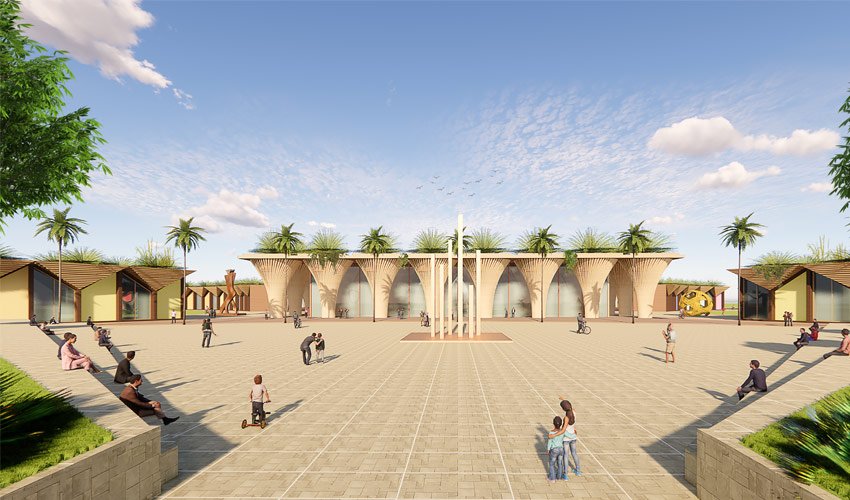
The architecture studio Valentino Gareri Atelier has imagined a new concept for a sustainable and smart village. Called Cacao Eco Village, it has been conceived as a hub of technologies, a space for the innovators of tomorrow, a place of co-creation respectful of the planet. The studio has decided to rely on local and natural resources to create the village, notably cocoa beans, with which it will 3D print some of the infrastructure. This architectural design, whose construction starts this year in Ecuador, is based on 5 pillars: modularity, connectability, functionality, sustainability and access to tech .
The village is planned to be in Pedernales, Ecuador, in the middle of panoramic beaches, in an idyllic setting. The studio is creating this infrastructure for the chocolate manufacturer MUZE Cacao and the association Avanti and was largely inspired by the concept of circular economy. Valentino Gareri, founder of the eponymous architecture firm, explains, “We have pushed the circular economy core principles so much that they informed the design philosophy of the entire project. The cacao waste, result of the chocolate production process, will be re-utilized for 3d-printing parts of the village. Waste is not only turned into a resource, but into architecture. In the not-too-distant future, we will be able to design buildings entirely made of natural materials and recycle them at the end of their life cycle in order either to create new ones, or to return them back to nature.”

The village will be located in Ecuador (photo credits: Valentino Gareri Atelier)
It is thus from cocoa waste that some of the buildings will be made, more particularly 3D printed. The shells of the fruit are intended to be transformed into bioplastic, material which is then extruded by the printer. It is not specified exactly what will be 3D printed, but it is in any case a production method that fits into the pillar of sustainability. The firm does not stop at additive manufacturing; it has in fact imagined a rainwater collection system in the roofs, a ventilation method and uses local materials like wood and bamboo.
More from the desk
Six other notes from the rest of the bench.
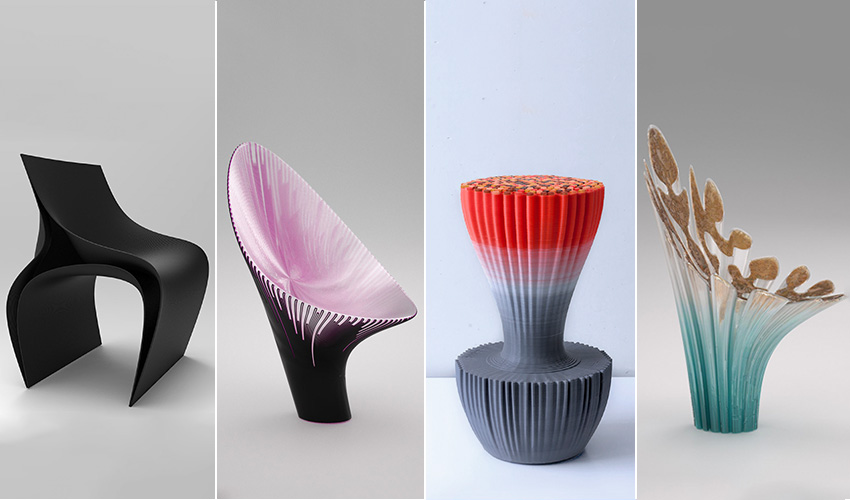 NewsNagami presents avant-garde 3D printed chairsThe Milan Furniture Fair will be held from 17 to 22 April and will be an opportunity to see some pretty original 3D printed chairs. They will be presented by the Spanish design firm Nagami, which specialises in large scale 3D…
 NewsEuropean Hyperloop Week, Innovative 3D Prototypes for the Transport of the FutureHave you heard of the Hyperloop project? The construction of this mode of transport consists of large tubes close to the vacuum through which capsules move. The initiative proposed by Tesla and SpaceX aims to transport people or goods at speeds…
 NewsHow Light Reflections Could Revolutionize 3D Metal PrintingMost people have probably never heard the term caustics, yet we encounter this phenomenon every day. You can see it in the dancing patterns of light at the bottom of a swimming pool or on shiny metal surfaces. But behind…
 News3D printed communities to be built by LTG Lofts & Black Buffalo 3DThe architecture and construction sectors have been enjoying the benefits offered by 3D printing technologies for a while now. From houses 3D printed in just a few days to military structures to bridges, additive manufacturing is being embraced by more and…
 ApplicationsFleet Space Has Launched its Centauri 5 SatelliteYou may remember Fleet Space, the Australian company that plans to send fully 3D printed satellites, named Alpha, to the Centauri constellation. Though those satellites are not yet ready for launch, the company recently made a significant step forward. On…
 GuidesHow Is 3D Printing Used in the Tourism Industry?Additive manufacturing, with its sustainability benefits and capacity for customization, has found its place in the travel industry. The use of 3D printing has expanded beyond just consumer goods, with aircraft parts being additively manufactured to improve sustainability and red