Applications
NTU Has Developed a 3D Printed ‘Active’ Fabric for Flexible, Made-to-Measure Limb Supports
3D printing is increasingly transforming the medical sector. Whether it’s to develop exoskeletons, cancer-fighting devices or tailor-made medicines, additive manufacturing has proven its worth time and time again. Today, we turn our attention to Singapore, where researchers
- 3 min read
- Applications
- Six more stories
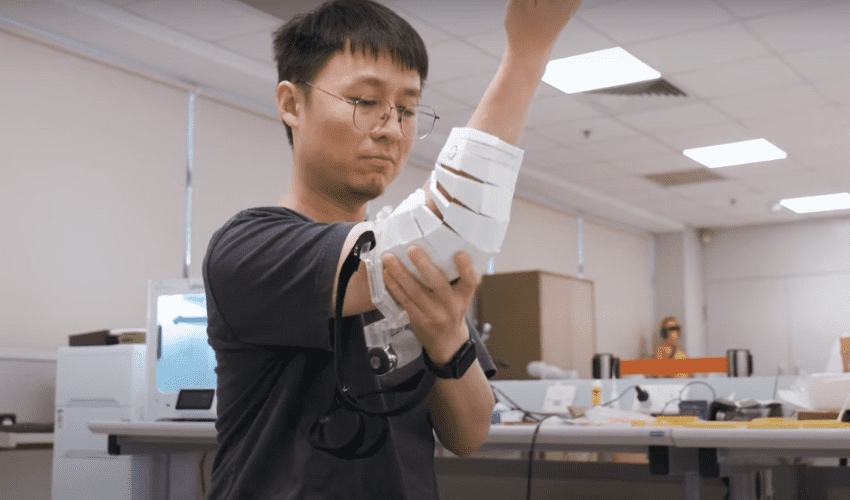
3D printing is increasingly transforming the medical sector. Whether it’s to develop exoskeletons, cancer-fighting devices or tailor-made medicines, additive manufacturing has proven its worth time and time again. Today, we turn our attention to Singapore, where researchers at Nanyang Technological University (NTU) have developed an innovative 3D printed ‘active’ fabric using this technology.
Called RoboFabric, this adaptable, flexible fabric can stiffen at will, making it particularly useful for medical devices and flexible robotics. NTU researchers have designed an elbow brace with RoboFabric, enabling it to support heavier loads, as well as a prototype wrist support designed to stabilize joints, helping Parkinson’s patients manage their tremors.
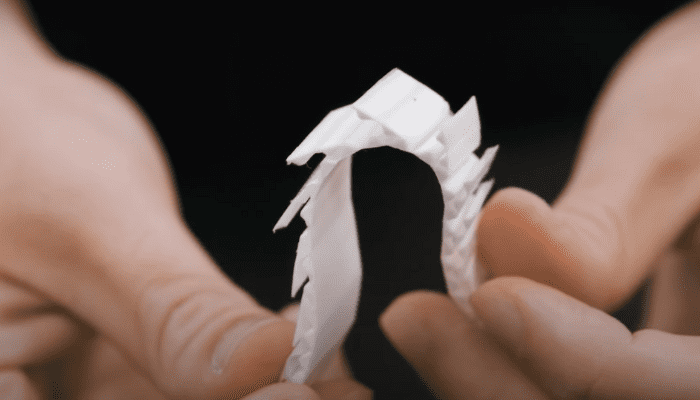
RoboFabric: A 3D Printed Fabric That Reduces Muscular Effort
The innovative new fabric, inspired by the natural structures of the pangolin and octopus, is designed by a mathematical algorithm to create interlocking tiles. These tiles, produced by 3D printing, are connected by metal fibers. When the fibers contract, they cause the tiles to interlock, increasing the rigidity of the RoboFabric by more than 350 times.
More from the desk
Six other notes from the rest of the bench.
 MaterialsResearchers Unveil Breakthrough 3D Bioprinting Method Using Plant Cells3D printing has proven to be a versatile technology, expanding its applications across various fields, from manufacturing to medicine. It has become an indispensable tool in many sectors due to its ability to customize products and create complex, unique structures…
 Guides3D Evaluate: Assessing industrial 3D printing solutions, and moreFounded by Gil Lavi, a veteran of the additive manufacturing field, 3D Alliances is a successful consulting firm that focuses on helping startups in the 3D printing domain. After the COVID-19 crisis hit the world, the company realized that the…
 SoftwareWhat is a G-Code and What is its Use in 3D Printing?As we know, additive manufacturing goes far beyond simply turning on the machine and pushing a button. There are many steps behind this process, from the design of a part to its final post-processing, and all the steps in-between. One…
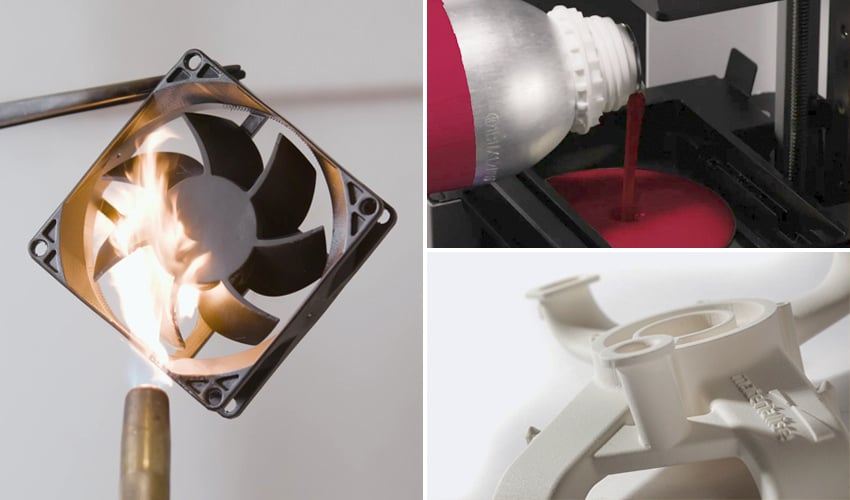 MaterialsWhat Flame-Retardant Materials Are Available for 3D Printing?As defined by Merriam-Webster, if a material is flame retardant, it is “made or treated so as to resist burning.” Or in simpler words, in contrast to flame resistance, where something can operate as normal within fire conditions, anything that is…
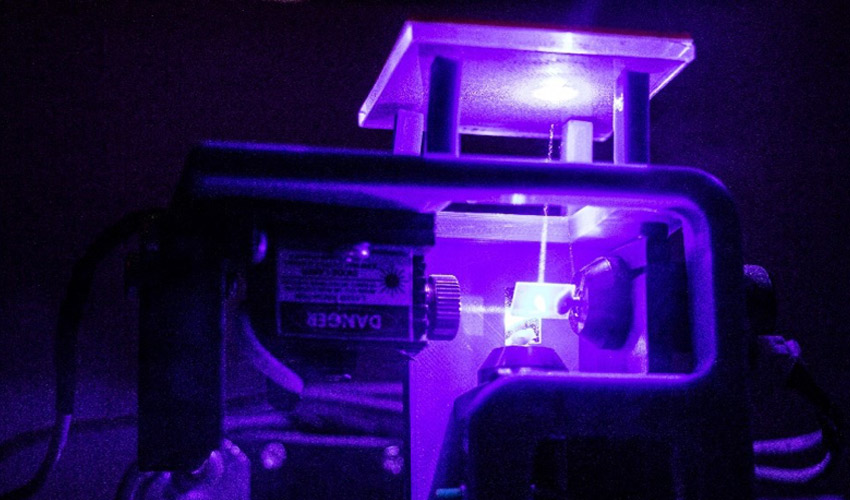 NewsInverted SLS process to 3D print with multiple materials at onceSelective laser sintering technology is one of the most widely used processes in additive manufacturing, where plastic particles heated by a heat source, usually a laser, are bonded together. One of the limitations of this technology today is the impossibility…
 NewsTop 5 Videos: HandsOnMetrology 3D Scanning Sprays Plus Atlas RobotsOn this week’s top 3D printing videos, we present the latest video from HandsOnMetrology, which thanks to 3D scanning sprays, can scan difficult surfaces, such as windshields. Next, discover the Atlas robots made by Boston Dynamics. Equipped with 3D printed…