News
QR codes to avoid piracy in 3D printing
Currently anyone with the necessary knowledge of 3D printing could reproduce almost anything. In relation to this, intellectual property in additive manufacturing is an issue that worries more and more within the industry. Companies like Disney have released patents to attack pir
- 3 min read
- News
- Six more stories
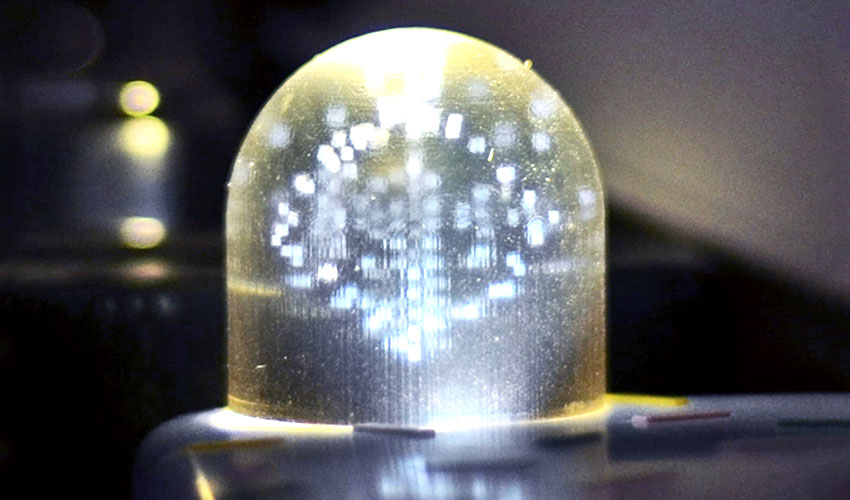
Currently anyone with the necessary knowledge of 3D printing could reproduce almost anything. In relation to this, intellectual property in additive manufacturing is an issue that worries more and more within the industry. Companies like Disney have released patents to attack piracy in 3D printing and prevent the reproduction of their products. To protect the research models of the New York University, based in Tandon and Abu Dhabi, they developed QR codes to avoid duplication.
The new method developed by the researchers consists of the introduction of QR codes within the models. It would be almost invisible to the counterfeiters but would be identifiable by a reader. There for it would be able to confirm the legitimacy of the 3D printed piece.
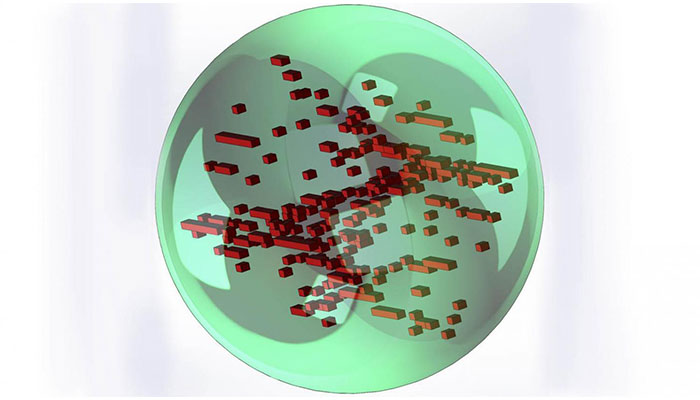
Credits: NYU Tandon School of Engineering
Nikhil Gupta is an associate professor of mechanical engineering and part of the project on piracy in 3D printing. He explained, “To create typical QR code contrasts that are readable to a scanner you have to embed the equivalent of empty spaces” and continues “But by dispersing these tiny flaws over many layers we were able to keep the part’s strength well within acceptable limits.“
More from the desk
Six other notes from the rest of the bench.
 NewsCan bio-printing tumour cells, become a treatment against cancer?A student from the University of Waikato in New Zealand, Shalini Guleria, is now seeking to identify the best treatment for all breast cancer patients. She turned to bio-printing to 3D print tumour cells. It would be possible to collect cells in a…
 Materials3D Printing Bacteria: the New 3D Printing MaterialResearchers at the Zurich Institute of Technology (ETH Zurich) have developed a bio-ink for 3D printing bacteria. This breakthrough could lead to the production of biomedical cellulose or biological materials capable of destroying toxic substances. Researchers have developed a 3D
 SoftwareSPEE3DCraft: SPEE3D’s New Game/Simulator for Metal 3D PrintingMetal additive manufacturing company, SPEE3D have just announced that they will launch a free ground-breaking metal 3D printing simulator called SPEE3DCraft later this April. The idea came about last year in the midst of the pandemic, during which the company…
 NewsThe State of Women in 3D Printing: study on women in the industryA few days ago we reported on The State of 3D Printing 2020, Sculpteo’s annual report on the state of the 3D printing industry. Among other things, this report shows that 3D printing is becoming more and more common in…
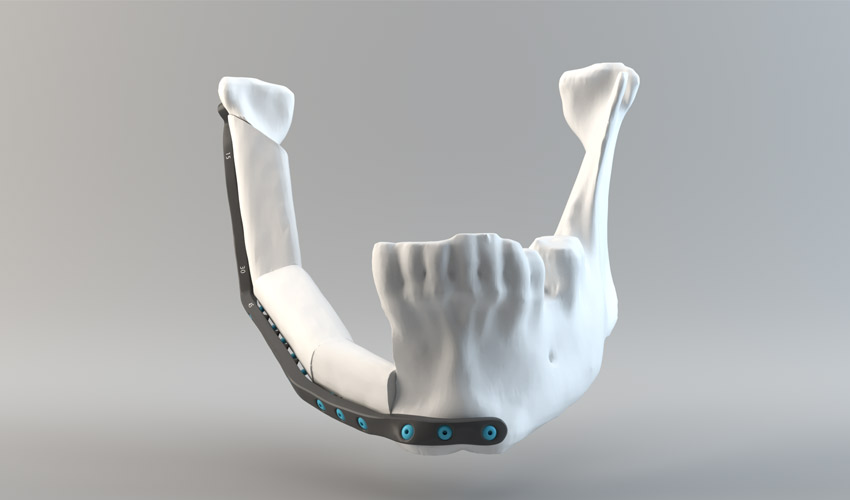 ApplicationsCRIQ develops custom 3D printed jaw implantsThe Industrial Research Center of Quebec (CRIQ) recently acquired an Arcam EBM Q10plus 3D printer. It is an industrial machine based on electron beam melting technology. This acquisition should allow researchers to accelerate the development of lower jaw implants. Plus further tr
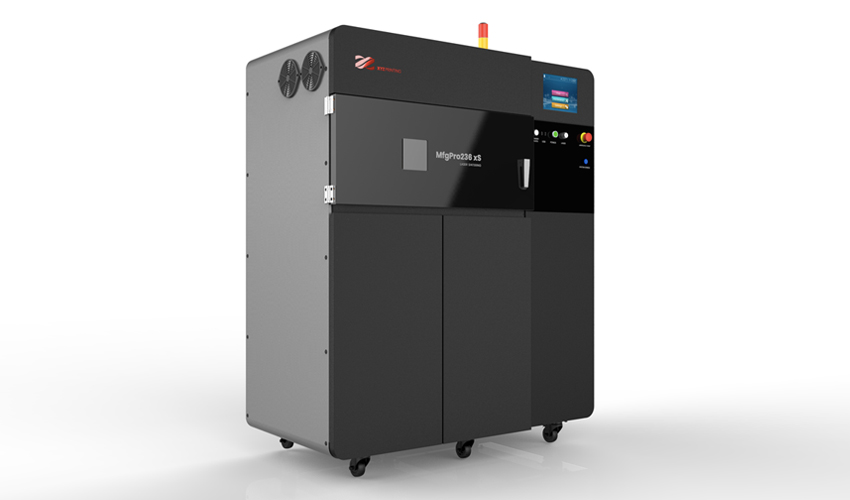 PrintersXYZprinting Cements its Commitment to Industrial Printing With Next-Generation SLS 3D Printer, MfgPro236 xSIn 2019, Asian 3D printer manufacturer XYZprinting took a big leap into industrial additive manufacturing with the launch of different professional technologies, including Selective Laser Sintering (SLS). Two years after this launch and after an extremely positive reception of th