Materials
3D Printing Bacteria: the New 3D Printing Material
Researchers at the Zurich Institute of Technology (ETH Zurich) have developed a bio-ink for 3D printing bacteria. This breakthrough could lead to the production of biomedical cellulose or biological materials capable of destroying toxic substances. Researchers have developed a 3D
- 3 min read
- Materials
- Six more stories

Researchers at the Zurich Institute of Technology (ETH Zurich) have developed a bio-ink for 3D printing bacteria. This breakthrough could lead to the production of biomedical cellulose or biological materials capable of destroying toxic substances.
Researchers have developed a 3D printing platform able to print living bacteria to give 3D printed structures useful functional properties. This study is surprisingly similar to the research carried out by the Technological University of Delft, which 3D printed structures as solid as graphene from bacteria.
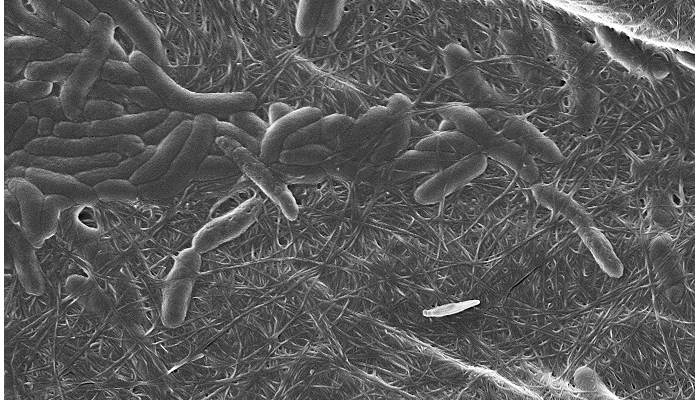
Complex bacteria structures.
Flink: 3D Printing Bacteria
‘Flink,’ or “functional living ink”, is the platform’s name. Researchers say Flink will offer significant opportunities in the biochemistry and biomedicine sectors. Researchers can create what they call microscopic plants from which they have previously selected the species of bacteria to print, affecting their physical properties. This opens the door for creating complex structures, such as artificial skin.
More from the desk
Six other notes from the rest of the bench.
 NewsTOP 5 videos of the week bioprinting, robots, space and more!A new selection of the best 3D printing videos of the week, just for you! Find our TOP 5 videos of the week below and tell us what your favorite video is in a comment or on our Facebook and Twitter page.…
 NewsWhat impact does 3D printing have on the world of cinema?The applications of 3D printing are extremely diverse: from food to automotive parts, this technology is used to create a wide variety of shapes from various materials. The world of filmmaking is another area where 3D printing shows its full…
 SoftwareDyeMansion and Stratasys Jointly Create Reference Architecture for Production-Scale Additive ManufacturingThe additive manufacturing industry never sleeps. This has been proven again by Stratasys and DyeMansion, who, after unveiling new machines and solutions within the last two months, have now announced that they are working together on a new project. Leading…
 NewsGE Uses Binder Jetting to Design the World’s Largest Offshore Wind TurbineThe American giant General Electric (GE) has announced the signing of a partnership with Fraunhofer IGCV and Voxeljet to develop a new 3D printer capable of designing the molds of certain key components of the Haliade-X offshore wind turbine. The…
 Printers3D Printed Houses the Cure to the Housing Crisis?Austin, capital of Texas, is now home to its first 3D printed house. This house was created specifically to show how concrete 3D printing can help developing countries create affordable housing. This project, a collaboration between charity New Story and…
 NewsTop 5 Videos: 3D Printed Homes in Texas, Coral Reefs and More!In this week’s selection of top 5 videos about 3D printing, a look behind the scenes of 3D printing company Icon’s project to build four 3D printed homes in Texas. Next, an update on the terracotta 3D printed coral reef…