News
Safeguarding Māori Heritage with 3D Printing
With the development of 3D technologies, additive manufacturing has been a revolutionary medium for the creation of parts and objects that have previously been limited in availability, material and construction time. Not least among these has been 3D printed musical…
- 3 min read
- News
- Six more stories
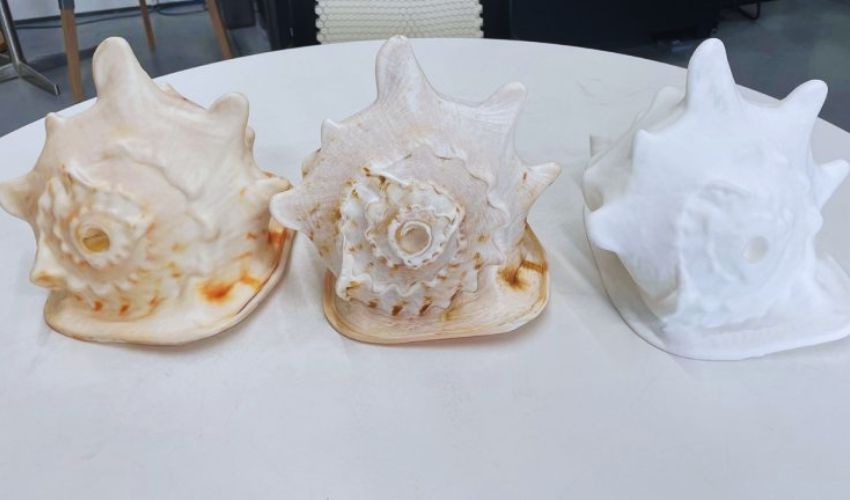
With the development of 3D technologies, additive manufacturing has been a revolutionary medium for the creation of parts and objects that have previously been limited in availability, material and construction time. Not least among these has been 3D printed musical instruments, for example, which can provide creative, inexpensive alternative forms of expression than their traditionally made counterparts. Moreover, often times 3D scanning has been used to model the shapes and architectures of instruments which enables AM engineers to recreate similar tones with a printed version.
At the crossroads of 3D printing and cultural heritage stands Professor Olaf Diegel, head of the Creative Design and Additive Manufacturing Lab at the University of Auckland in New Zealand. Diegel and his team have been working with the Māori community to create 3D printed replicas of traditional Māori instruments which hold great cultural significance. This is not the first time that 3D technologies have been used for the mission of cultural heritage preservation either; from the digitization of Easter Island to the recreation of famed works of art for the visually impaired, 3D printing is proving to be a means to increase accessibility and cultural awareness around the world.

Professor Olaf Diegel holding a replica of the pūtātara conch shell horn (Photo credits: Chris Loufte)
These unique traditional instruments (taonga pūoro) represent a great deal of cultural importance to the Māori people. The two instruments chosen to be recreated were the pūtātara, a conch shell trumpet, and a pūkāea, or long trumpet, which is traditionally carved from wood. After scanning the instruments via CT scan, the high-definition 3D images were used to form the shapes necessary to recreate the necessary shapes to accurately recreate the instruments’ sound as they are played.
More from the desk
Six other notes from the rest of the bench.
 ApplicationsUC Berkeley’s SpaceCAL 3D Printer Demonstrates Success in OrbitA team of UC Berkeley researchers, spearheaded by Ph.D. student Taylor Waddell, has achieved a significant milestone in additive manufacturing with the development of the SpaceCAL 3D printer. Launched into suborbital space aboard the VSS Unity on June 8th as…
 GuidesRevopoint MIRACO, the 3D Scanner for Additive Manufacturing and InspectionRevopoint is a company that specializes in making innovative, professional 3D scanners equipped for high precision. Particularly user-friendly and user-inspired, Revopoint 3D scanners meet numerous needs while maintaining competitive prices. This has led the company to be an indu
 NewsThe ‘World’s Best Tiramisu’ Was Recreated With 3D PrintingYes, you read that right. The world’s best tiramisu can now be made using 3D printing. This incredible dessert was recreated as an exact replica of the winner the latest edition of the Tiramisù World Cup (TWC). This time, the…
 ApplicationsMass customization of a 3D printed electric vehicleIn the automotive industry, additive manufacturing has historically been used to create functional prototypes. Over the years, the automotive sector started leveraging the benefits of 3D printing technologies for end-use part applications too, to produce complex parts, or to allo
 ApplicationsFirehawk Oversubscribes $60 Million Investment, Securing Key European InvestorFirehawk Aerospace, a defense company specializing in advanced energetics and propulsion, has just secured investment from Presto Tech Horizons (PTH), a defense and resilience tech fund created through a partnership between European venture capital firm Presto Ventures and global
 NewsWohlers Report 2025: 9.1% Growth for the Global Additive Manufacturing MarketThe renowned Wohlers Report, the international market study that analyzes the health of the additive manufacturing sector, has officially been published for 2025. This 30th edition is once again marked by growth: according to Wohlers Associate, the industry will have…