Guides
Porsche on the use of additive manufacturing
A few weeks ago, the car manufacturer Porsche presented 3D printed pistons for the engine of its famous model 911 GT2 RS. Additive manufacturing allowed Porsche to reduce the overall weight of the part as well as the production lead…
- 3 min read
- Guides
- Six more stories
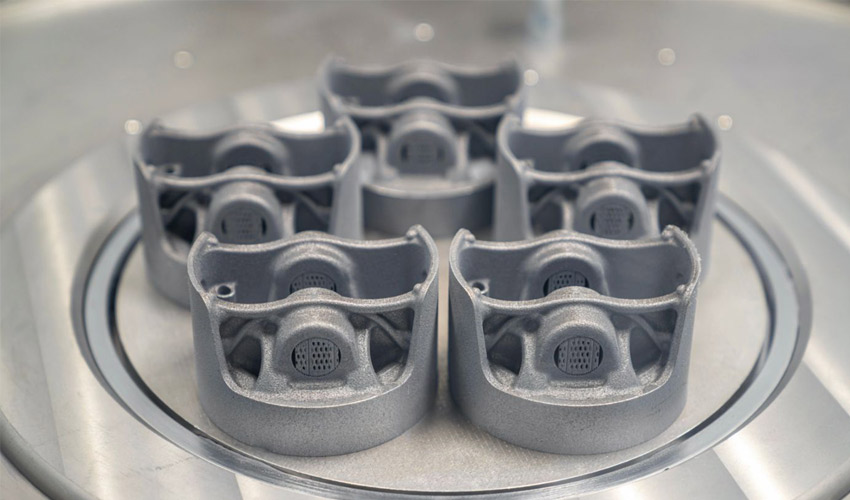
A few weeks ago, the car manufacturer Porsche presented 3D printed pistons for the engine of its famous model 911 GT2 RS. Additive manufacturing allowed Porsche to reduce the overall weight of the part as well as the production lead times and increase the final performance of the car. These are advantages that are highly sought-after in today’s automotive sector, which is increasingly oriented towards 3D printing as it offers significantly higher levels of complexity and innovation than traditional production methods. We wanted to meet with the Porsche team to find out more about how they use additive manufacturing today and what it brings to their daily business. Therefore, we discussed with Frank Ickinger, one of the members of Porsche’s advanced engine development department.
3DN: Can you introduce yourself and your link with additive manufacturing?
My name is Frank Ickinger and I work on the Advanced Powertrain Development part. I am responsible for the conceptual work on powertrains and in charge of all new development methods and technologies for powertrains. We are currently exploring the full potential of additive manufacturing at Porsche, especially for this part of our vehicles.
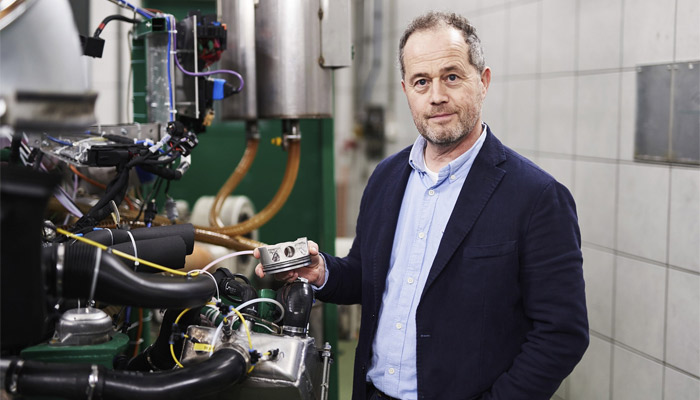
Frank Ickinger holding a 3D printed piston. (Image credits: Porsche)
3DN: Can you remind us how Porsche uses additive manufacturing today?
We have been using additive manufacturing technology since the early 1990s. At that time it was called Rapid Protoyping. Since then, we have been using it for our prototypes in the development process of plastics and metals. Today, it is a technology that is well on the way to being industrialized and we are thus hoping to realize its full potential at Porsche. We have three industry groups: product innovation, process innovation and new business models. Product innovation means that the focus is on the product, such as lightness, functional integration, etc., especially for our small series and special productions such as GT cars. Process innovation means agile development, decentralised production, etc. New business models include, for example, the fact that we print special products for our customers for the cars they have ordered, etc. We use all kinds of technologies and materials because we do not have our own in-house machine park. We simply have a small number of 3D plastic printers for the prototyping department. We follow the news and developments of the various processes on the market very closely.
More from the desk
Six other notes from the rest of the bench.
 NewsHow Boom Supersonic 3D printed parts for the XB-1Just a few months ago Boom Supersonic launched their XB-1 aircraft. The XB-1 is a high speed jet that has often been compared to the now extinct Concorde. The company have now released a detailed study into how the aircraft…
 NewsMichael Hansmeyer Presents Digital Grotesque: Additive Art Made From SandThere are already a large number of different art installations in which artists have turned to additive manufacturing in different forms. Whether it be different technologies or materials, this list includes works by artists such as Julia Körner and her…
 NewsScan the World Calls to Immortalize Cultural Heritage After Easter Island FireLast week, a fire on Rapa Nui, colloquially often referred to as Easter Island in English, damaged many of the more than 1000 Moai statues located there. The damage was extensive and cannot be undone, with more than 100 hectares…
 NewsPinocchio Movie Puppet Made By Belfast Firm With Laser Metal 3D PrintingHave you watched any movies lately? If so, you may have seen the new Pinocchio movie, released in December 2022 by director Guillermo del Toro – and if not, let us tell you why you should! The creation of the…
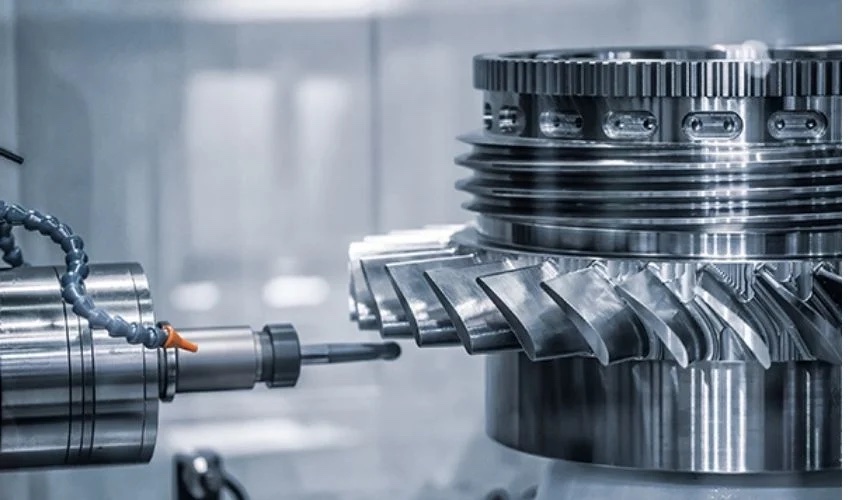 NewsAdditive and Subtractive Manufacturing: Complementary or Rivals?While more and more companies are opting for additive manufacturing, subtractive manufacturing is still the most widely used method in industry. Meanwhile, 3D printing is currently mainly used to complement subtractive manufacturing methods. However, as the name suggests, unlike
  NewsTop 5 Videos of the Week: 3D printing parts for a racecar steering wheelThis week we found the top 5 videos about 3D printing and the way additive manufacturing is shaping our society. The technology has infiltrated many sectors, from medical to automotive! Check out our selection of the week to keep up with the innovations! This week we…